Something Fresh in the State of Denmark
October 06, 2026






























The Technion’s story has been intertwined with Israel’s for more than a century, from laying the foundations for a new nation to shaping its future.

Step inside Israeli innovation at the David and Janet Polak Visitors Center. Experience our 360° immersive movie and tech exhibition. Open to individuals and groups.
Learn MoreProfessor Doron Melamed is a world-renowned expert in the areas of immunology and aging. His work throughout the years has focused on the development, selection, differentiation, and pathologies of B lymphocytes — cells that are produced in bone marrow and protect us from viruses and diseases. Seeking to understand why the elderly are more susceptible to severe cases of infectious diseases, such as the recent COVID 19, he recently discovered a mechanism that could help the body regenerate “flexible” B lymphocytes that are capable of adapting to reinfection with new (mutated) variants of the returning viruses. The research has implications…
Distinguished Professor Avram Hershko, renowned worldwide for his research in biochemistry, biophysics, and molecular biology, shared the 2004 Nobel Prize in Chemistry with Distinguished Technion Professor Aaron Ciechanover and the late Professor Irwin Rose of the University of California, Irvine, for finding and defining ubiquitin-mediated protein degradation. Their prize came two decades after the momentous discovery. In 1980, while most researchers were focused on how living beings build up proteins, Professor Hershko and his team were examining the flipside of the process — how the body rids itself of proteins that are no longer useful. His research resulted in the…
A member of the Schulich Faculty of Chemistry, Distinguished Prof. Marek directs the Stewart and Lynda Resnick Sustainability Center for Catalysis, which aims to develop new catalysts needed for the production of food, fuel, medicine, and other critical products. Through this research, the Center promises to enable humankind to meet its growing needs more efficiently while lessening the negative impact on nature. Distinguished Prof. Marek has pioneered new methodologies to connect carbon atoms that efficiently prepare highly sophisticated molecular backbones (the building blocks of life) found both in living creatures and in synthetic materials. The methods he develops dramatically minimize…
Prof. Tomer Michaeli’s research interests focus in the areas of computer vision; machine learning; signal processing, and image restoration, generation, and manipulation. Working with Technion researchers from biomedical engineering and nanotechnology, he helped develop DeepSTORM3D — a microscopic method that allows scientists to map the biological processes of living cells at super resolution. Microscopes as a rule produce two-dimensional images. Currently, 3D images are obtained through layer scanning and computerized integration, but the process is problematic and requires a long scanning time. DeepSTORM3D harnessed Prof. Michaeli’s expertise to develop an artificial neural network capable of producing 3D images from microscopy…
Daniel Orenstein is Associate Professor in the Faculty of Architecture and Town Planning at the Technion – Israel Institute of Technology and Faculty Advisor to the Technion’s Sustainability Hub. He holds a master’s degree in desert ecology from Ben Gurion University, and a Ph.D. in interdisciplinary environmental studies from Brown University. Prof. Orenstein is a social ecologist, studying human interactions with nature, cultural ecosystem services, and integrating scientific research with policy and management. He serves on the science committee and central coordinating committee of the European Long-Term Ecosystem Research Infrastructure, a network of over 800 ecosystem observation sites across Europe…
Mor leads a research group looking at topics at the intersection of technology, media and democracy. The group applies multidisciplinary techniques — from machine learning to qualitative social science — to study our information ecosystem and its challenges, with a special focus on AI-mediated communication and its impact on society. Previously, Mor was on the faculty at the Rutgers School of Communication and Information, led a research team at Yahoo! Research Berkeley, and received a Ph.D. in Computer Science from the Stanford University InfoLab. He also played professional basketball for Hapoel Tel Aviv. He is a former startup co-founder, and…
Prof. Kaminer is a physicist and electrical engineer who studies the frontiers of photonics, quantum optics, and laser-driven electron acceleration, using both theoretical and experimental methods. His AdQuanta Lab established the foundations of quantum electrodynamics with photonic quasiparticles, and his discoveries predict new phenomena that yield physical situations not encountered in natural settings. His research combines use of an electron microscope with a femtosecond pulsed laser, which is the first system of its kind in Israel and one of just a few in the entire world. The system’s spatial and temporal resolution is 10 times better than conventional microscopes, providing…
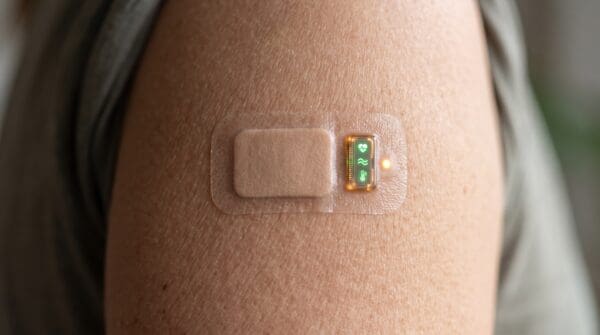
Prof. Haick’s research focuses on artificial olfactory systems based on nanosensors, the screening and diagnosis of disease via breath and tissue samples, volatile biomarkers, and molecule-based electronic devices and sensors. He has developed an artificially intelligent nanoarray that can sniff out more than 17 diseases in a person’s breath, including various types of cancer, chronic and acute kidney disease, Parkinson’s and Alzheimer’s diseases, and more. The technology aids in providing personalized diagnoses and helps to tailor personalized treatment. As a complementary tool, Prof. Haick and his team have developed “smart patches” that imitate human skin, simultaneously sensing pressure, humidity, and…
Dr. Meiri’s lab, the largest of its kind in academia with 44 researchers, investigates the therapeutic potential of cannabinoids, the naturally-occurring chemicals found in the cannabis plant. Researchers work on a variety of projects in the lab with its main focus on how cannabinoids affect various types of cancer, epilepsy, and diabetes. A man on a mission, Dr. Meiri aims to understand the cannabis plant thoroughly enough so that a doctor can prescribe the right treatment at the right dosage for a particular patient. To that end, he collaborates with cannabis growers, clinicians, major manufacturers, and distributors of medical cannabis…
Associate Professor Uri Lesmes heads the Lab of Food Chemistry & Bioactives and the Food and Health Innovation Center, both in the Technion Faculty of Biotechnology and Food Engineering. He is also the academic leader of Israel’s pan-European accelerator network, aimed at promoting food entrepreneurs and startups. Concerned with healthy, affordable, and eco-friendly food choices, Prof. Lesmes works on the rational design of foods, personalized food solutions, and the safety of food additives. One such project is the EU-funded EAT4AGE, which seeks to develop palatable, easily digestible, nutrient-dense foods tailored to the needs of the aging population. Prof. Lesmes is…
Prof. Lavie served as president of the Technion from 2009 to 2019, transforming the University into a global player. In New York City, he was instrumental in creating the Joan & Irwin Jacobs Technion-Cornell Institute. In China, he helped establish the Guangdong-Technion Israel Institute of Technology. Accelerating the ascent of the Technion to one of the world’s top institutes for science and technology, he recruited world-class faculty; forged international research collaborations; and advanced multidisciplinary learning with the establishment of the Technion Integrated Cancer Center and the Helen Diller Center for Quantum Science, Matter, and Engineering. Prof. Lavie is chairman of…
Professor Marcelle Machluf is a member of the Technion Faculty of Biotechnology and Food Engineering and head of the Carasso FoodTech Innovation Center. She is a member of the Affiliate Engineering Faculty of the Technion Integrated Cancer Center, former deputy executive vice president for research for the Technion’s Pre-Clinical Research Authority, and former dean of Faculty of Biotechnology and Food Engineering. She also works closely with the Russell Berrie Nanotechnology Institute at the Technion. Prof. Machluf is developing a targeted drug delivery system using modified stem cells called Nano-Ghosts to home in on tumors, unleashing its therapeutic load at the…