Something Fresh in the State of Denmark
October 06, 2026














The Technion’s story has been intertwined with Israel’s for more than a century, from laying the foundations for a new nation to shaping its future.
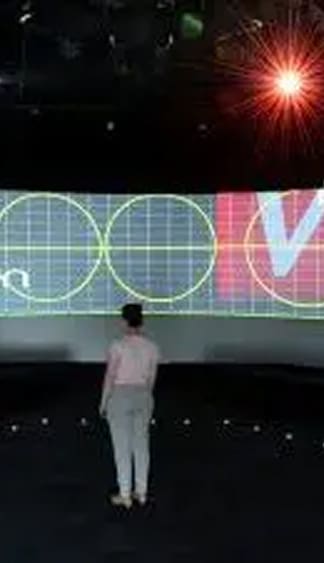
Step inside Israeli innovation at the David and Janet Polak Visitors Center. Experience our 360° immersive movie and tech exhibition. Open to individuals and groups.
Learn More
Distinguished Professor Avram Hershko, renowned worldwide for his research in biochemistry, biophysics, and molecular biology, shared the 2004 Nobel Prize in Chemistry with Distinguished Technion Professor Aaron Ciechanover and the late Professor Irwin Rose of the University of California, Irvine, for finding and defining ubiquitin-mediated protein degradation. Their prize came two decades after the momentous discovery.
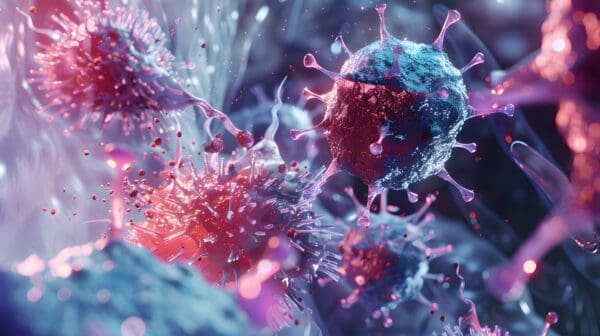
In 1980, while most researchers were focused on how living beings build up proteins, Professor Hershko and his team were examining the flipside of the process — how the body rids itself of proteins that are no longer useful. His research resulted in the Nobel Prize- discovery of the crucial role played by the protein ubiquitin in targeting abnormal proteins for destruction and escorting them to something akin to a cellular waste-disposal unit. The breakthrough has led to the drug Velcade, used in the treatment of multiple myeloma, and continues to yield insights into the prevention and treatment of cancer, leukemia, cystic fibrosis, and neurodegenerative conditions such as Alzheimer’s and Parkinson’s.
Prof. Hershko was born in Hungary and emigrated with his family to Israel at age 12 in 1950, settling in Jerusalem. He has said that upon graduating from high school, he was interested in so many subjects he did not know what studies to pursue in university. He said he chose medicine in part because his older brother was a med student, but soon “fell in love with biochemistry.”
He earned his medical degree (cum laude) and doctorate (summa cum laude) at the Hebrew University in Jerusalem — Hadassah Medical School, the only medical school in Israel at the time. He served in the Israel Defense Forces as a physician and went on to conduct postdoctoral work in the Department of Biochemistry and Biophysics at the University of California Medical Center in San Francisco. He returned to Israel in 1971 with plans to return to the Hebrew University but instead accepted a position at the fledgling Rappaport Faculty of Medicine at the Technion, established two years prior, as chairman of the Department of Biochemistry.
He and his wife, Judith, who is also a biologist, have three sons and several grandchildren.