Something Fresh in the State of Denmark
October 06, 2026























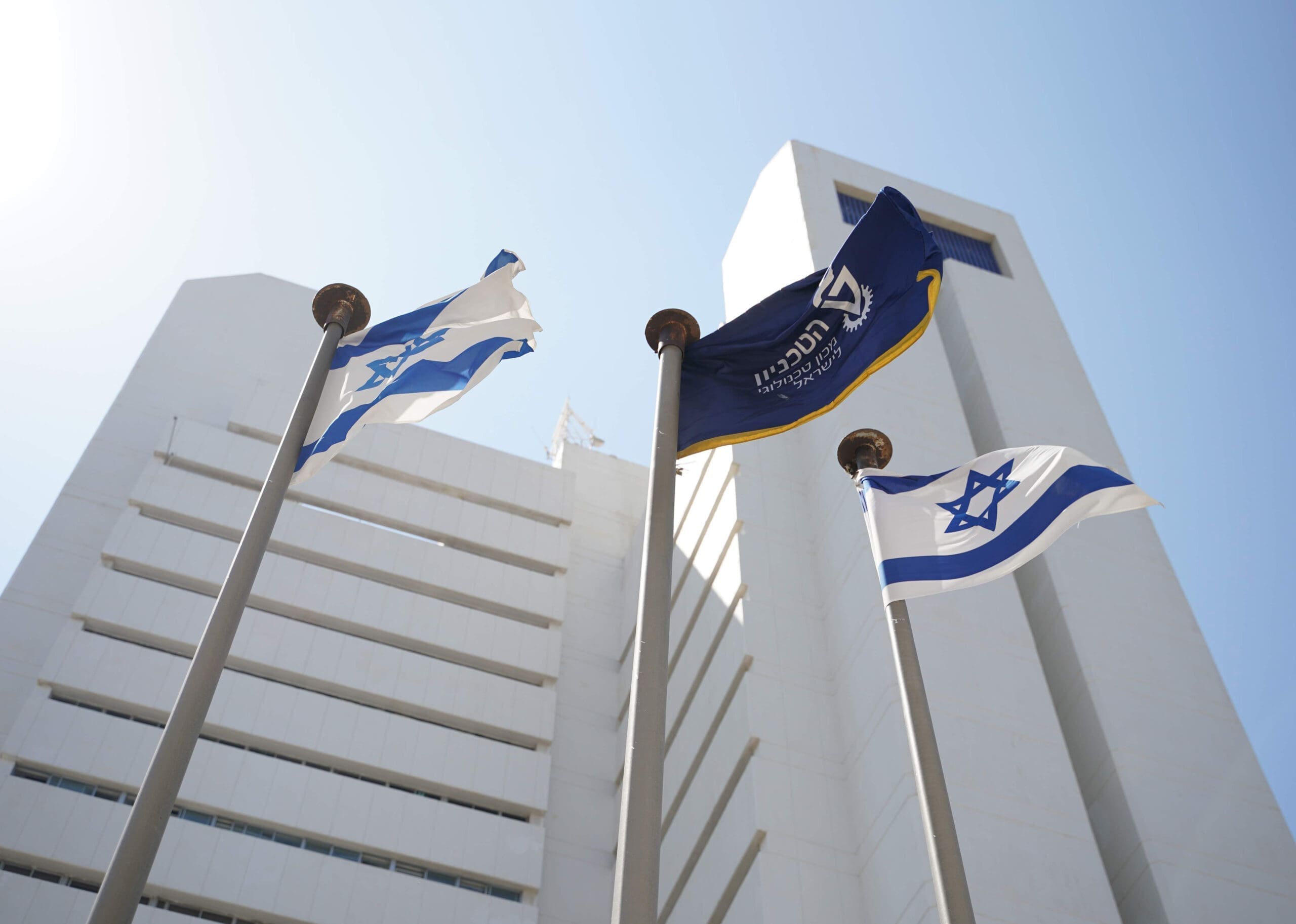






The Technion’s story has been intertwined with Israel’s for more than a century, from laying the foundations for a new nation to shaping its future.

Step inside Israeli innovation at the David and Janet Polak Visitors Center. Experience our 360° immersive movie and tech exhibition. Open to individuals and groups.
Learn MoreShai Shen-Orr, professor in the Ruth and Bruce Rappaport Faculty of Medicine at the Technion, heads the Laboratory of Systems Immunology & Precision Medicine. He is director of the Technion’s Healthy Aging Institute and the Zimin Institute for AI Solutions in Healthcare, and he serves as deputy vice president for fundraising strategy. The Technion Healthy Aging Institute tackles one of the most complex and urgent challenges in modern medicine: enabling individuals to maintain health and vitality in their later years, even as global life expectancy rises. By leveraging the expertise of researchers from across the University, the multidisciplinary Institute aims…
Dr. Kira Radinsky is a visiting professor at the Technion Department of Computer Science. She is also the chair and CTO of Diagnostic Robotics, which harnesses artificial intelligence technologies to make health care better, cheaper, and more widely available. She is the cofounder of SalesPredict, which was acquired by eBay in 2016, and has served as eBay’s director of data science since 2016. Dr. Radinsky specializes in the field of medical data mining. She has developed predictive algorithms that recognized the early warning signs of globally impactful events such as political riots and disease epidemics. As a visiting professor at…
Moti Segev is the Robert J. Shillman Distinguished Professor of Physics at the Technion. He received his B.Sc. and Ph.D. from the Technion in 1985 and 1990. After his postdoc at Caltech, he joined Princeton as an assistant professor in 1994, becoming associate professor in 1997 and professor in 1999. Subsequently, Prof. Segev went back to Israel, and in 2009 was appointed as Distinguished Professor. Prof. Segev’s interests are mainly in nonlinear optics, photonics, solitons, sub-wavelength imaging, lasers, quantum simulators, and quantum electronics. He has won numerous international awards, among them the 2007 Quantum Electronics Prize of the European Physics…
Professor Alon Wolf is founder and director of the Biorobotics and Biomechanics Lab at the Technion – Israel Institute of Technology. His lab is best known for creating robotic snakes for urban rescue. As co-founder of MedRobotics, he helped invent a medical snake for minimally invasive procedures on organs that are hard to reach. Prof. Wolf heads the Israeli Olympic Sports Research Center, a Technion collaboration with Israel’s Olympic Committee, and FIRST Robotics Israel. He also leads the Helping Hand project, a philanthropic initiative to provide 3D-printed robotic hands to children in need across the world. Prof. Wolf received all…
Professor Ezri Tarazi is the Chair of the Industrial Design Program at the Faculty of Architecture and Town Planning at the Technion. He is also the chair of t-Hub, a new center for innovation and entrepreneurship at the Technion, and chair of Design-Tech Lab, which seeks to foster design awareness and design thinking among science and engineering students. Prof. Tarazi’s work seeks to apply design thinking to solve industrial problems. He has developed and designed life support systems including nuclear, biological, and chemical masks for children, and cooling-vest systems for tank crews. He has worked with numerous technology startups focusing…
Prof. Segal leads a multidisciplinary research laboratory focused on developing advanced nanomaterials-based technologies for medical diagnostics. Her group designs sensitive biosensing platforms that can detect biological markers of disease with the goal of enabling earlier, faster, and more accessible diagnosis. The lab also applies its expertise in nanomaterials and biotechnology to therapeutic delivery, food safety, […]
Prof. Schroeder’s focus is on the development of targeted and more personalized medicines, including nanotechnology. His research group aims to improve patients’ quality of life and treatment by developing innovative medical technologies. He and his team focus on targeted drug delivery systems to treat neurodegenerative diseases of the brain. They utilize their technology to treat metastatic cancers, and they combine their technology with synthetic biology to develop artificial cells for therapeutic applications. Prof. Schroeder is the recipient of more than 30 national and international awards, including being named a KAVLI Fellow and recipient of the Intel Nanotechnology, TEVA Pharmaceuticals, and…