
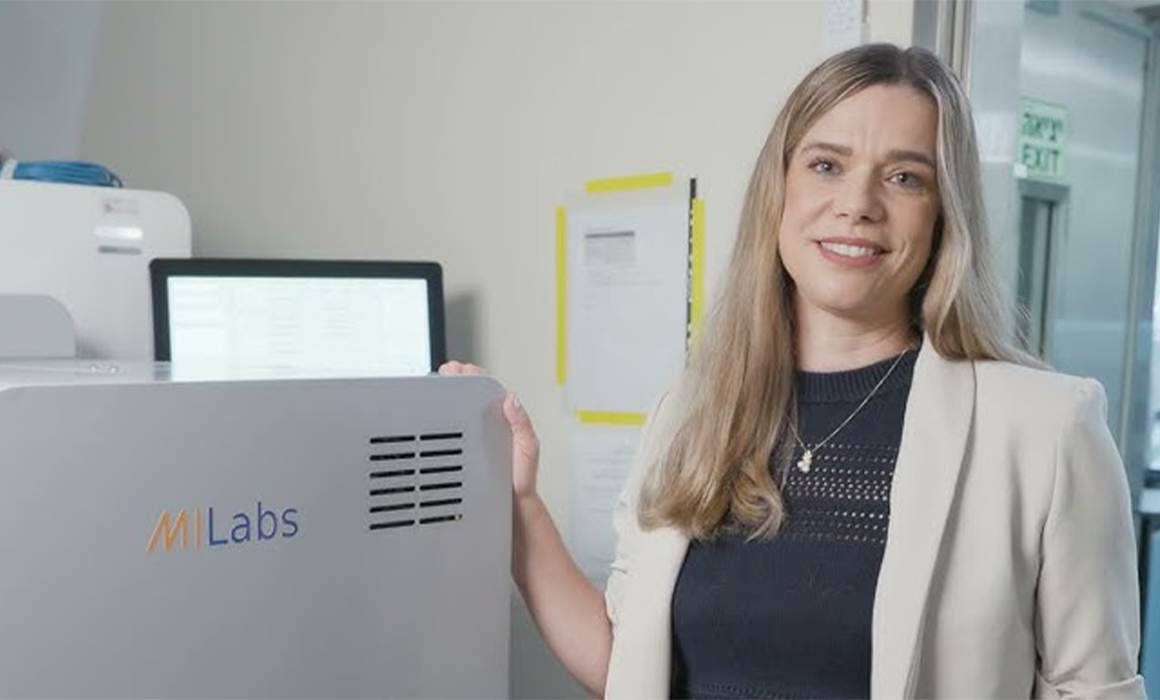
When Dr. Katrien Vandoorne first arrived in Israel to pursue her PhD at the Weizmann Institute of Science, she was struck by something that went far beyond laboratories and research facilities. “The people were very collaborative and warm and inspiring,” she recalled. “The science was really great for me, but also the Mediterranean climate, the food, all those things.”
Originally from Belgium, Vandoorne said the country’s scientific culture felt very different from the academic environment she had known in Europe. “In Belgium it’s very hierarchical,” she said. “The professor is very high up, and you should always be very polite and never question anything that is written in the book.”
How did you find Israel’s scientific culture in contrast?
“What I really like about Israel is that, as a master’s student, you can question the whole theory of your professor, and there is no problem with that,” she said. “Your professor will actually like it that the student is engaged and wants to make your theory fall.”
For Vandoorne, that openness was transformative. “No one will ever say, ‘That’s a stupid question,’” she said. “Everybody will say, ‘Hey, that’s a good question,’ and take it as a sport.” She believes this atmosphere encourages creativity and innovation. “The young people, they’re the ones with the, maybe, crazy ideas, but maybe also really solving things that the previous generations couldn’t solve.”
Continue reading at ynetnews.com.
Prof. Katrien Vandoorne is head of the In Vivo Multiscale Imaging Lab in the Faculty of Biomedical Engineering in the Technion – Israel Institute of Technology.