The Technion’s story has been intertwined with Israel’s for more than a century, from laying the foundations for a new nation to shaping its future.

From medicine to security, explore how the Technion is advancing Israel and improving lives around the world.
View All Impact Areas
Explore stories, news, insights, and data across articles, videos, and podcasts.
view all content types
of the student body are Arab Israeli
locations
in Europe and #21 in the world for aerospace engineering*
The Technion’s story has been intertwined with Israel’s for more than a century, from laying the foundations for a new nation to shaping its future.
Explore ATS, the Technion, and the people behind the breakthroughs redefining what's possible for Israel and the world.
Learn More About ATSATS is a community of supporters, innovators, and champions of possibility united by one mission: transforming Israel and the world through science and discovery.
Learn MoreFor more than 100 years, the Technion has been Israel's technological engine and leading driver of innovation, technology, and entrepreneurship, transforming ideas into impact.
Learn More
Step inside Israeli innovation at the David and Janet Polak Visitors Center. Experience our 360° immersive movie and tech exhibition. Open to individuals and groups.
Learn MoreFrom medicine to security, explore how the Technion is advancing Israel and improving lives around the world.
View All Impact AreasExplore stories, news, insights, and data across articles, videos, and podcasts.
view all content typesDiscover ways to support, connect, and help drive innovation.
Get InvolvedExplore ATS, the Technion, and the people behind the breakthroughs redefining what's possible for Israel and the world.
Learn More About ATS
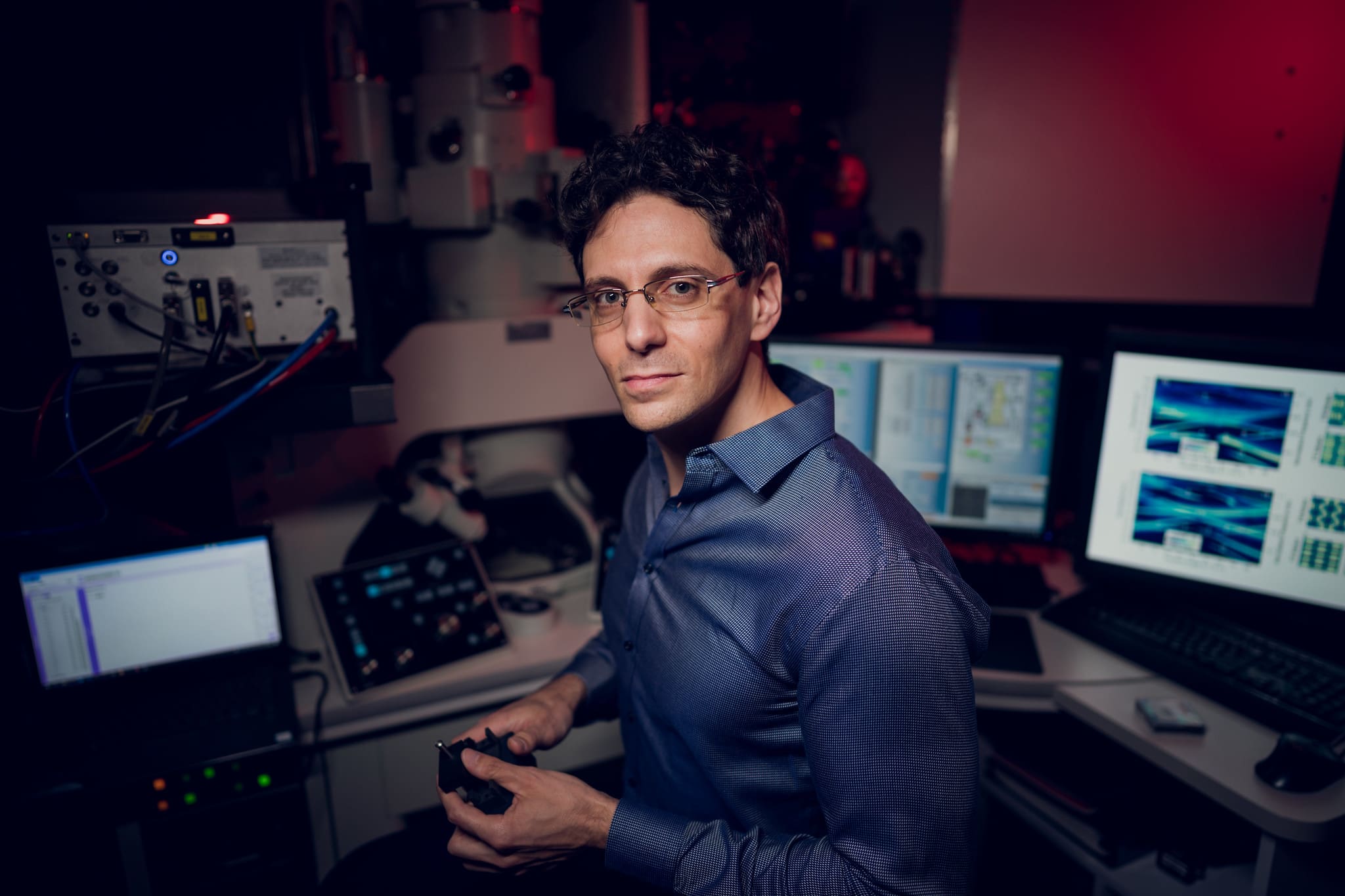
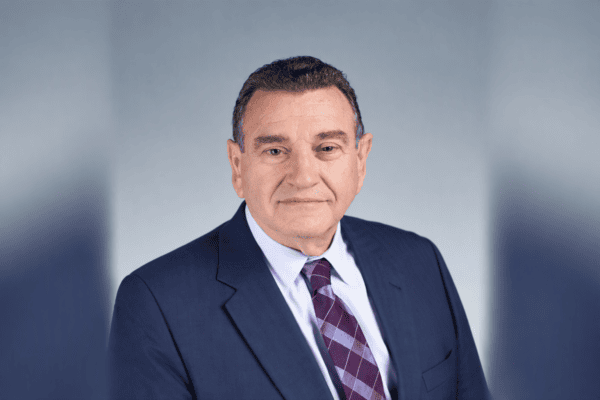
Professor Isaac Keslassy is the Louis and Miriam Benjamin Chair in Computer-Communication Networks in the Andrew and Erna Viterbi Faculty of Electrical and Computer Engineering. Together with his students, he focuses on how to make the internet faster and better.
The internet relies on many server farms called data centers. For instance, when an item is ordered on Amazon, the order goes to a data center, where several servers process it. Prof. Keslassy looks at the networks that connect the servers within these data centers so orders can be processed more quickly. His team also works to improve the networks so browsing can be more efficient.
Additionally, the data centers are interconnected in a global network called the cloud. His team of researchers looks at the cloud and tries to analyze whether its properties can help build a better internet. “In fact, when you access a server somewhere, we could say, figuratively speaking, that the internet lets you board a plane and go there relatively cheaply,” explained Prof. Keslassy.
“However, it is sometimes a bit slow, just as planes can be delayed due to high load or bad weather. Few people have realized it, but the cloud can provide private jets that are faster but more expensive than the regular plane flights provided by the internet. I look at whether and how we can combine both, for example, by only using private jets when the usual flights are delayed.”
To extend his airplane metaphor, Prof. Keslassy’s research considers global applications that require many network connections around the world, exactly as a large company requires many flights for its employees around the world. He then optimizes when and how to use expensive private jets through the cloud when regular flights are not good enough.
Prof. Keslassy compares internet slowdowns and outages to elephants boarding a plane. “On the internet, there is no easy way to distinguish between users who are regular passengers and users that are elephants, and as a result, internet planes often get stuck.”
His research introduced a fast way to tell whether a passenger is a conventional one or an elephant. This new method leverages techniques from machine learning with improved techniques for optimization.
Finally, internet router buffers, which Prof. Keslassy says function as internet airports, are expensive to build. He is seeking a way to provide fast connections to plane travelers by using only very small airports, without getting these airports clogged due to their limited capacity. Researchers have been looking for such a way for the past 20 years.
“It turns out these techniques are very promising and may be a way to utilize smaller airports.”
January 11, 2024
Find out how internet speeds can be improved through innovation in data centers and networking as explained by Technion Prof. Isaac Keslassy.
1 min
X (opens in a new tab) / Facebook (opens in a new tab) / LinkedIn (opens in a new tab) / Email / Copy Link
Artificial intelligence is not simply changing higher education — it is detonating old assumptions about how students learn and how professors teach. As universities worldwide grapple with how to respond, the Technion is working to confront the questions head-on. Here, AI is not treated as a threat but a catalyst, prompting careful reexamination at every […]
Every year, the European Research Council (ERC) identifies some of the world’s most promising early-career researchers and gives them the freedom to pursue bold ideas. This year, two of those ideas came from the Technion – Israel Institute of Technology. From cancer research to artificial intelligence (AI), breakthroughs that shape the future often begin with […]
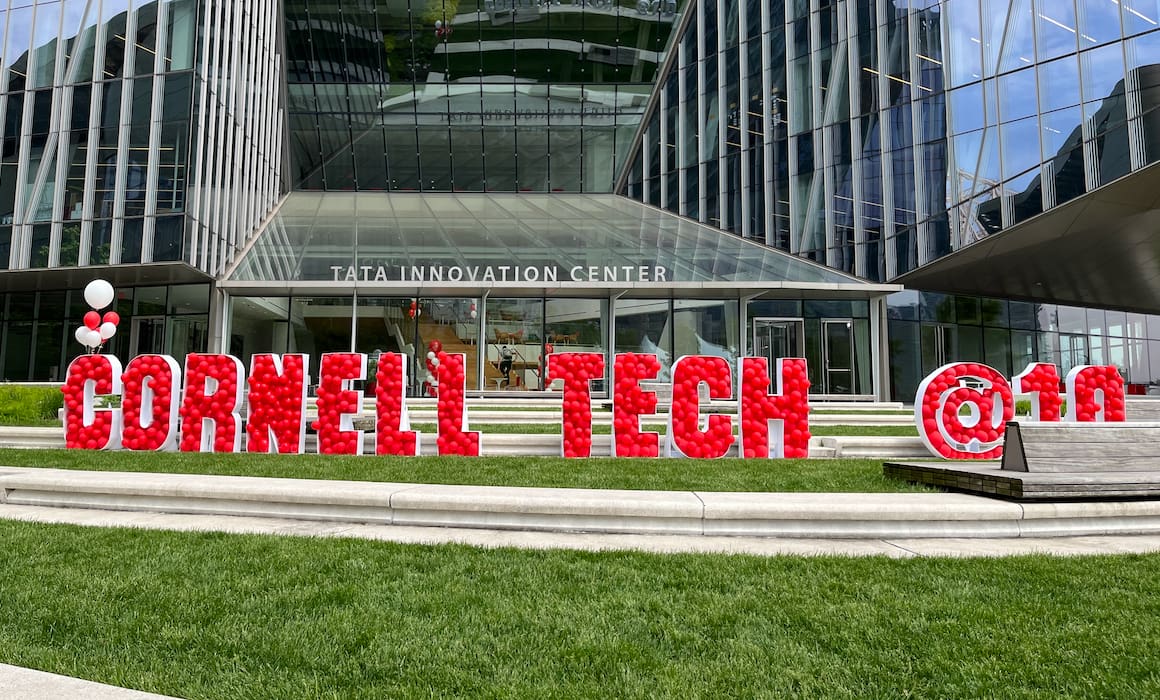
Despite New York City Mayor Zohran Mamdani’s past calls to boycott Cornell Tech because of its partnership with Israel’s Technion-Israel Institute of Technology, city officials and Jewish community leaders on Wednesday announced a $250,000 investment in a Cornell Tech research initiative aimed at expanding New York City’s tree canopy to combat rising temperatures. New York City Council Speaker Julie Menin, the first Jewish woman to hold the post, and other officials unveiled the funding for Cornell Tech’s Urban Tech Hub at the Jacobs Technion-Cornell Institute on Roosevelt Island. The grant will launch the Generative Tree Canopy Project, which will use…
Stay on top of the latest breaking scientific discoveries from Israel and the Technion. Subscribe to the ATS newsletter.