Something Fresh in the State of Denmark
October 06, 2026
















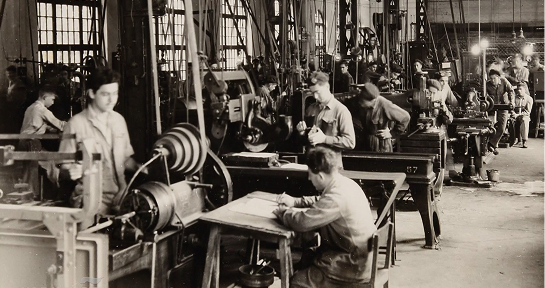
The Technion’s story has been intertwined with Israel’s for more than a century, from laying the foundations for a new nation to shaping its future.

Step inside Israeli innovation at the David and Janet Polak Visitors Center. Experience our 360° immersive movie and tech exhibition. Open to individuals and groups.
Learn More
David Wolpe is the Max Webb Emeritus Rabbi of Sinai Temple in Los Angeles. He currently serves as ADL’s inaugural rabbinic fellow and a scholar in residence at the Maimonides Fund. Named the most influential rabbi in America by Newsweek and one of the 50 most influential Jews in the world by The Jerusalem Post in 2012, Rabbi Wolpe is a prolific author, having published eight books and written columns for The New York Times, Los Angeles Times, Washington Post, and more, and has been featured on “The Today Show,” “Face the Nation,” “ABC This Morning,” and other news programs.
Rabbi Wolpe has taught at several institutions of higher learning, most recently spending the 2023-2024 academic year at Harvard Divinity School. When anti-Israel protests and antisemitism on campus broke out following October 7, he was asked by then-President Claudine Gay to serve on Harvard’s antisemitism advisory committee. He resigned in December due to its inaction. Rabbi Wolpe visited the Technion in April 2024 and spoke about his experiences there and at Harvard at an American Technion Society (ATS) National Board of Directors Meeting in Boston in November. Editorial staff from ATS recently sat down with the rabbi to ask him about his observations of both universities.
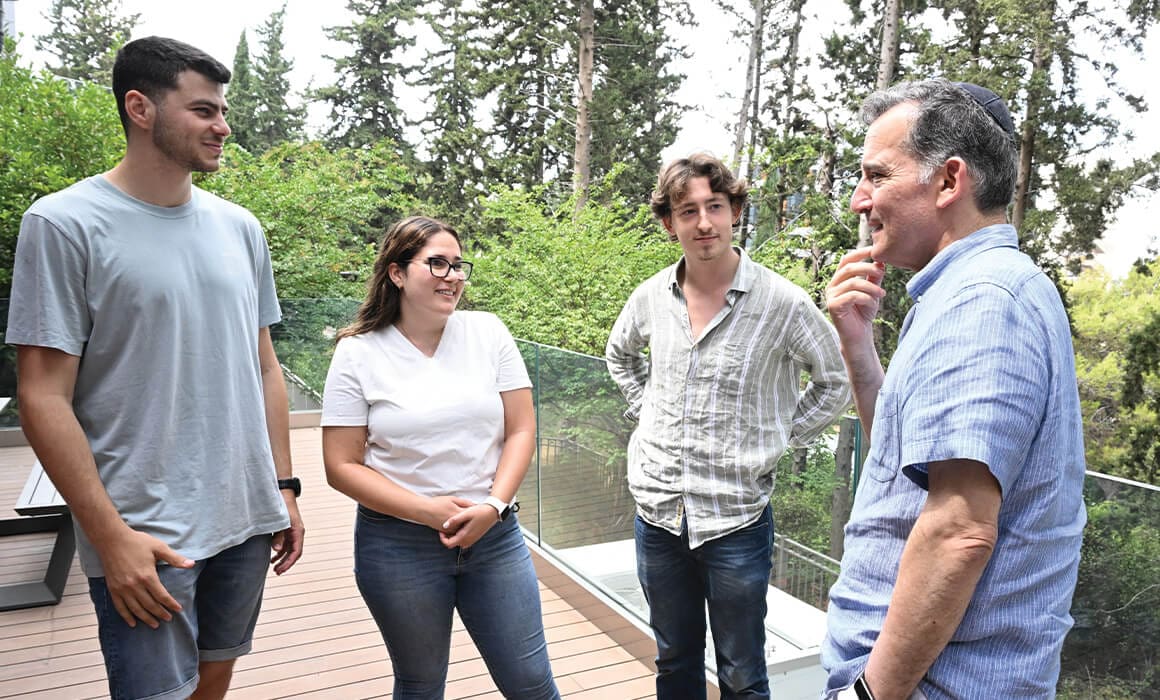
ATS: You met with five student reservists and several administrators at the Technion. What did you learn from them?
Rabbi Wolpe: I never visited the Technion before. So, the first thing I learned, which I found very significant, is that the Technion is not only a research university, but it’s a technology institute. It not only discovers what works but it creates what works, and I realized that, of course, in our age that is increasingly crucial to the operations of almost everything in the State. Defense, notably. But not only defense.
The second thing I learned was what good care the faculty had taken of the students since October 7, which was important to me, because it is often the case that you think of humanities’ institutions as being the ones that are solicitous of their students and careful with them and so on. And here is a place that was devoted to hard science, where the students said the Technion could not have been better to them, giving them outstanding emotional and other kinds of support throughout the crisis.
Another thing I learned was the broad range of technology that the Technion is involved with. Everything from health to defense. In other words, everything that requires both hard science and mechanisms to implement it. They have their hand in the world: in chemistry, engineering, medicine, computer science. You name it. The Technion is not only involved but has made its mark in those fields. And when we think of the kinds of contributions that Jews have made to the world, the Technion is a sort of hub that defines that kind of contribution.
And I also discovered that the students who go there have very varied ambitions. One of them wants to explore other planets. Someone else wants to find a cure for breast cancer. And someone else just wants to find a job in a good tech company and raise a family. It was really beautiful to see not only the range of fields they cover, but the different kinds of students who come from a variety of backgrounds. And the opportunities given to Arab Israelis to study technology and create the scientific future. So, for all those reasons, I found it both a fascinating place to visit and an important institution for Israel and beyond.
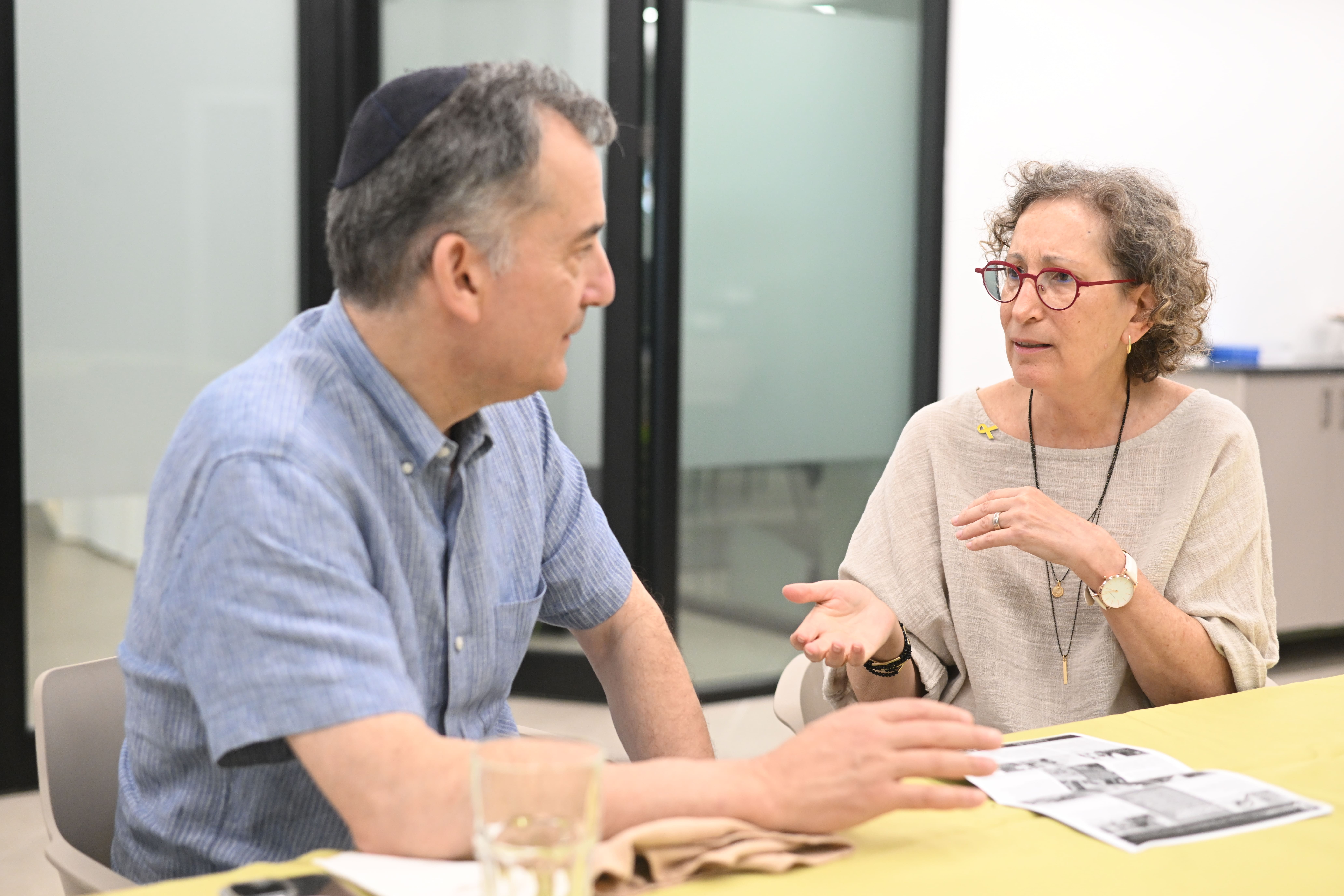
ATS: You met students who were called to serve in the IDF after October 7. Did they share their experiences and challenges with you?
Rabbi: Not only did they all serve, but one of them was in a kibbutz that was attacked. He hid out with his family. And when I asked him, “How did you survive?” He said, “They didn’t find us.” That was it. For hours he was just waiting to be found and, thank God, was not found.
And others had either lost people or had people injured in their social circles, whether on October 7 or subsequently. They talked about how hard it was to try to focus on their studies when they returned from reserve duty. But also, a couple of them said they were so grateful to have something to refocus their minds on, because it was easy to get lost in the horrors of the everyday, and they couldn’t afford to do that because they had to pass their exams.
None of the students complained. Every single one of them felt really well cared for and well-treated by the Technion faculty and administration. But they also said if you’re going to be a student here, you’ve got to be the best of the best. And so it was an interesting challenge for them, I think. There’s just an inexpressible constant pain that thrums under Israeli society every single day. It just doesn’t go away.
ATS: You spent a year teaching and studying at the Harvard Divinity School, beginning just a month or so before October 7 and the eruption of unsettling anti-Israel protests at Harvard and other universities throughout the country. Can you share some observations?
Rabbi: At Harvard, I saw, first of all, students who were in some sense profoundly unserious about their study and decided instead that their political position was really their job as students. And at the Technion you had students who were engaging very powerfully with the real challenges that the world faces and had themselves faced challenges far beyond anything that the average student on Harvard’s campus had. That was one point.
And then, of course, the other was that you have donors who give money to Harvard only to see the money used sometimes for faculty and students who are deeply anti-Israel and sometimes deeply antisemitic. They would do much better both as Jews and for the world if instead of giving to universities that are already bloated with funds and have impoverished values, to give to a university in Israel like the Technion. Israeli universities have the reverse problem. They have lots of values and not enough funding. So, I intend to make the case that those who have been traditionally giving to the Ivy League universities would do better in the long run to support higher education in Israel.
It reminds me of a story that Saul Bellow tells in his book about his trip to Jerusalem, where he met Shai Agnon. Here are two Nobel Prize-winning writers, one from America and one from Israel. Agnon asks Bellow if his books have been translated into Hebrew. Bellow tells him they have, and Agnon says, “Oh, thank God! Then you’re safe!”
The idea being that of course Hebrew will survive long after English is gone. Hebrew will still be here, as it was thousands of years before English ever came along. I would say the same thing to donors. It’s like you think that Harvard’s going to be here long after the Technion. But actually, looking at the record of history, if you want your donation to last, you should give it to a university in Israel.
ATS: Will you become an ambassador to bring that message to people of affluence?
Rabbi: Absolutely, absolutely! I was enormously impressed with the Technion’s faculty, with the facility, and especially with the students. I just thought they were charming, thoughtful, and deep, and way more mature than their 24 to 25 years.
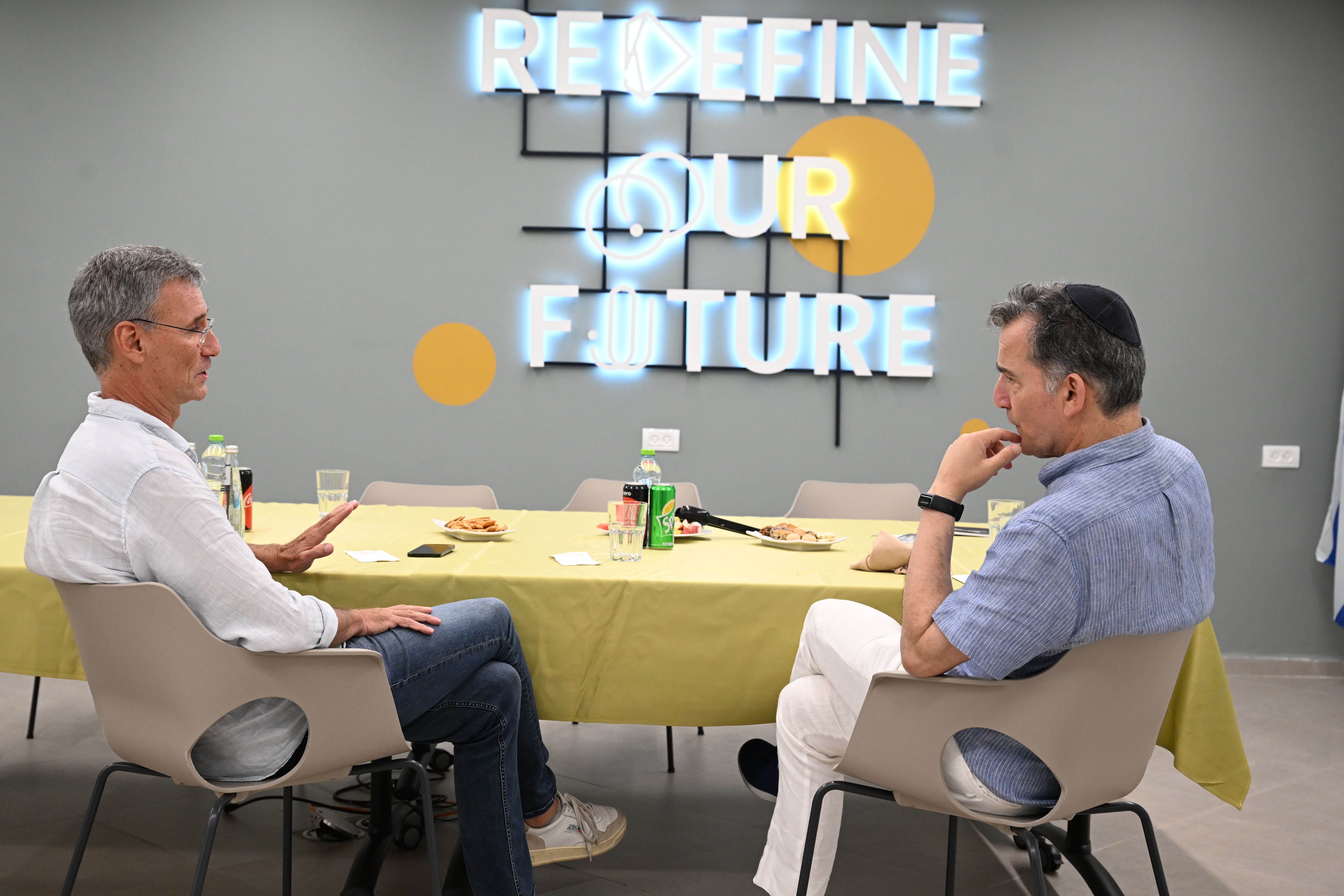
ATS: In the June 26 issue of the Los Angeles Jewish Journal, you wrote an article called “My Year at Harvard.” You made the following statement that I’d like you to elaborate on: “There is a great deal of disillusion which, mixed with uninformed idealism is a powerfully toxic combination. The vast unlearning has to start now.”
Rabbi: So, there is an idealism that wants people to be better but acknowledges the challenges they face. And then there’s an idealism that these things should just be solved frictionlessly and without any sacrifice, bloodshed, or difficulty, which is the kind of idealism, honestly, that Americans are more susceptible to than most people, because we’re surrounded by two oceans and Canada and Mexico. And we, Americans, “would never do that to people,” which is uninformed, because, of course, Americans do do that to people. So, when you’ve had this illusion and it’s shattered, you tend to believe that’s the only truth.
The students, I think, were like wide-eyed idealists about the world. A lot of them would shout, “From the river to the sea” and you’d ask them what they meant. They would say everybody should live in peace. There was a good deal of that. A lot of what was taken for antisemitic was just ignorant. I think unlearning that ideology has to start now.
The ideology that all of the West is evil and all of the ideas the West promulgates, from which students benefit so dramatically, are the product of bad, old, dead white men. And I understand why — I mean, part of it is the way people were taught American history as basically an illusion.
It was like America is all about freedom, and it’s all about goodness, and it’s all about truth. And then, when that began to crack and people said, no, actually America has also been built on the back of slavery and that filtered down into the classroom, people confused the disillusion with the only truth.
The pendulum swung way too far in the other direction, as opposed to seeing a balance of history, which is full of some pretty awful stuff, and we climb our way out of the pit bit by bit by bit. But every bit of progress is important and to be celebrated. That’s not the way these kids have learned history, and I think that we are now seeing the results, which is a shame, particularly because their elders should know better.
And, of course, there’s a lot of money flowing in from the Middle East where antisemitism and surely anti-Zionism is like bread with your mother’s milk.
There has to be unlearning and then relearning.
ATS: Knowing all this, are you optimistic about the future?
Rabbi Wolpe: Yes, I can’t help it. It’s constitutional. I think what happened on college campuses last year was essential to have happened because it woke a lot of people up to what is going on. And you can’t fix it if you’re not aware of it. I actually think the blowback was important, and I think it will be lasting. I don’t think it’s going to go away. I know that all these universities have instituted new rules about protests and so on. And now we’re going to have, I think over some time, real ideological battles.
What gives me hope is thinking about a conversation I might have had with my great-great-grandfather. I say to him, “You know there’s antisemitism at Harvard,” and he says to me, “There are Jews at Harvard?” And I say, “Yeah, but they hate Israel.” And he goes, “There’s an Israel?” And I realize compared to where we were, where we are is pretty great.
ATS: Were the Technion students you met as optimistic?
Rabbi: I think they were. They were worried, but the reason they were optimistic was because they saw the kinds of things that were just over the horizon. Because that’s what the Technion does, right? It looks over the horizon.