Something Fresh in the State of Denmark
October 06, 2026

























The Technion’s story has been intertwined with Israel’s for more than a century, from laying the foundations for a new nation to shaping its future.

Step inside Israeli innovation at the David and Janet Polak Visitors Center. Experience our 360° immersive movie and tech exhibition. Open to individuals and groups.
Learn More
There are no borders when it comes to brainpower, creativity, and a willingness to learn. That was made abundantly clear last summer when ten Technion students worked at the Joan & Irwin Jacobs Technion-Cornell Institute at Cornell Tech on engineering projects ranging from medical imaging to analyzing New York City’s near-ubiquitous scaffolds. They were part of a paid summer internship program, established in 2016, in which undergraduate and graduate Technion students work alongside Cornell Tech researchers primarily on projects that are under way. Some students continue the work after returning to the Technion.
“It’s an amazing program, one of our most successful,” said Professor Israel Cidon ’80, Ph.D.’84, who became the director of the Jacobs Technion-Cornell Institute in October 2023. “The researchers at Jacobs really enjoy the students from the Technion. They’re impressed by the quality of the research and the work they do in the summer. And I believe the students also have a unique experience.”
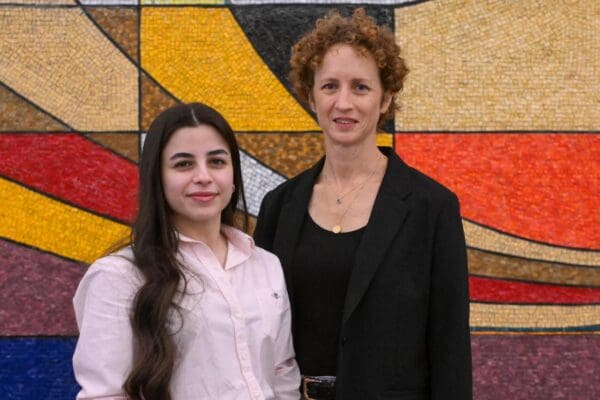
Intern Dorin Ruinsky ’22, a master’s student in the Technion Autonomous Systems Program, came to the Jacobs Technion-Cornell Institute for the experience of working with different research groups and the opportunity to study computer vision under Assistant Professor Wendy Ju. “I thought it would open doors,” she said. “And it’s been really great.”
“We had two free days to explore New York City before the program started and it was very hot,” Dorin recalled. “We found shelter from the sun under the construction scaffolding.” That sparked an idea for her research project, mapping the scaffolding to plan shady walking routes. Soon Dorin discovered that not only were scaffolds a nuisance, but many were illegal because their permits had expired. She shifted her focus to finding the offenders.
Dorin and her colleagues trained a machine learning algorithm to detect scaffolding in images. Implementing it on images obtained daily from the dash cams of rideshare drivers throughout the city, they have identified all the scaffolding in the city and combined that with the New York City Department of Buildings’ dataset of permits. Then came the question of what to do with their list of illegal scaffolding. “We didn’t want the information to be used to send fines as punishment, but to be helpful,” Dorin said. So, the team is finding ways to put the information to good use. For example, they are helping manage the construction process by identifying opportunities for shifting scaffolding from one building to a neighboring one.
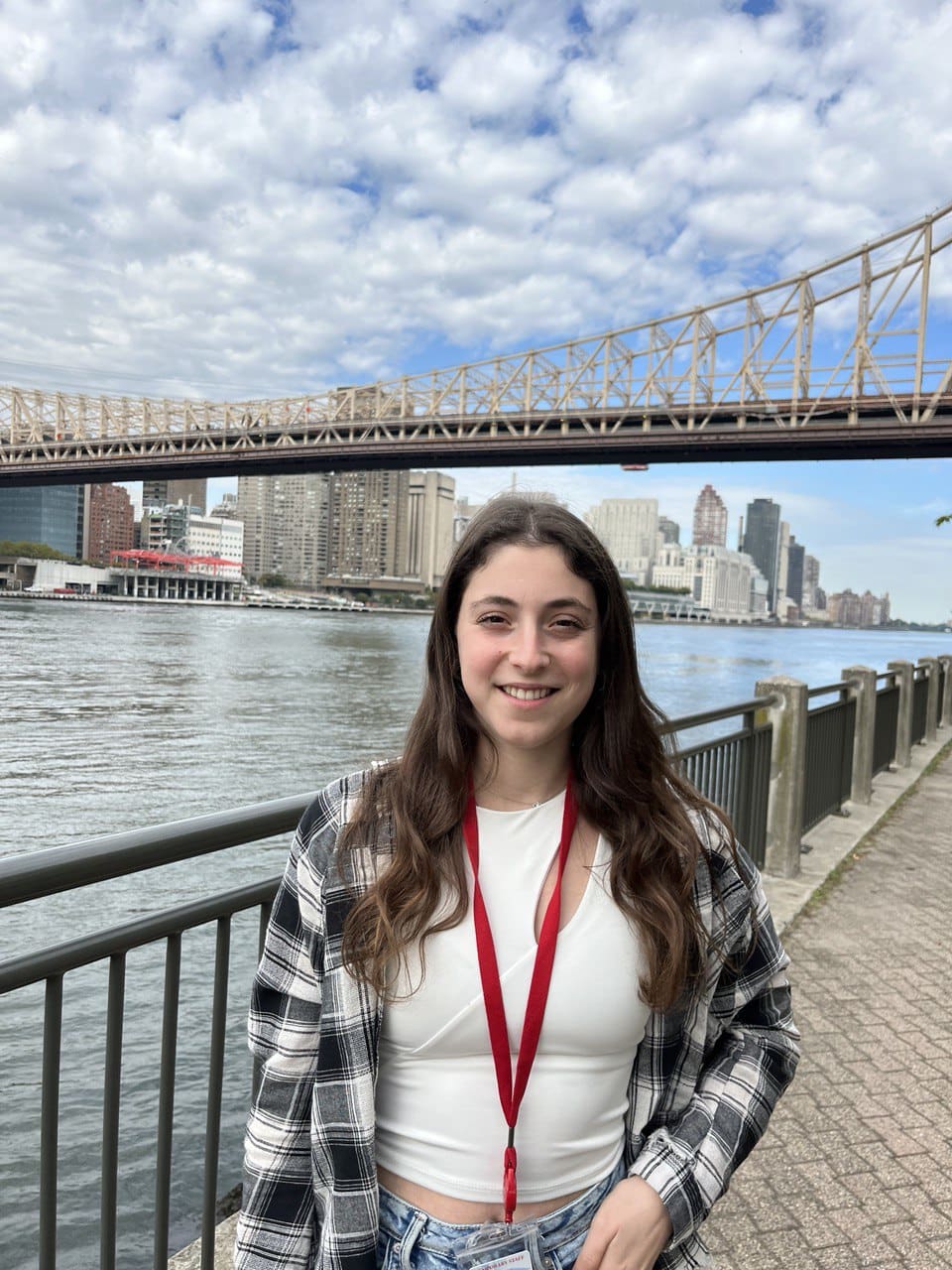
Another summer intern, Gilat Toker ’23, a Technion master’s student in data science and natural language processing, worked on an ongoing five-year project to help dyslexic elementary students learn a variety of subjects. Students who might otherwise be adept in those areas “start to fall behind the others in third to fifth grade because the readability level is too high for them and hinders their comprehension,” said Gilat. “We want to close this gap.”
The research team are using ChatGPT to simplify the readability of the text according to parameters that make reading difficult for the dyslexic learner. The content and level of the subject matter is unchanged. Once they demonstrate that the ChatGPT system works, they will deconstruct it to create their own model.
Gilat had planned to become a professional ballet dancer. “Then I started at the Technion. I was surprised things were going well but I wanted proof that I was cut out for academia,” she said. “The summer internship gave me the extra confidence I needed. I really enjoyed the program.”