The Technion’s story has been intertwined with Israel’s for more than a century, from laying the foundations for a new nation to shaping its future.

From medicine to security, explore how the Technion is advancing Israel and improving lives around the world.
View All Impact Areas
Explore stories, news, insights, and data across articles, videos, and podcasts.
view all content types
countries
students
in Israel and Europe for research on artificial intelligence
The Technion’s story has been intertwined with Israel’s for more than a century, from laying the foundations for a new nation to shaping its future.
Explore ATS, the Technion, and the people behind the breakthroughs redefining what's possible for Israel and the world.
Learn More About ATSATS is a community of supporters, innovators, and champions of possibility united by one mission: transforming Israel and the world through science and discovery.
Learn MoreFor more than 100 years, the Technion has been Israel's technological engine and leading driver of innovation, technology, and entrepreneurship, transforming ideas into impact.
Learn More
Step inside Israeli innovation at the David and Janet Polak Visitors Center. Experience our 360° immersive movie and tech exhibition. Open to individuals and groups.
Learn MoreFrom medicine to security, explore how the Technion is advancing Israel and improving lives around the world.
View All Impact AreasExplore stories, news, insights, and data across articles, videos, and podcasts.
view all content typesExplore ATS, the Technion, and the people behind the breakthroughs redefining what's possible for Israel and the world.
Learn More About ATSAs Seen in the Cornell Chronicle
Many medical studies record a patient’s race using only the broad categories from the U.S. Census, which may conceal racial health disparities, a new study reports.
Researchers evaluated the performance of clinical risk scores for people of different races in an emergency department (ED). A clinical risk score summarizes the severity of a patient’s symptoms into a single number – the higher the score, the greater the risk of severe health outcomes. The researchers looked at broad race categories, like “Asian,” and more specific subgroups, like “Chinese” and “Indian.” The risk scores performed much better for some subgroups than others, but lumping groups together under broad race categories hid those differences.
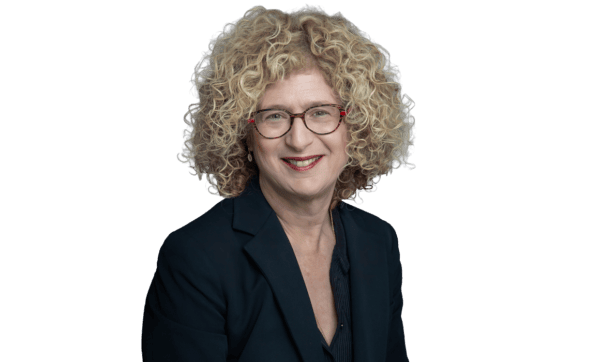
“Any time you have a predictive risk score that works better for some groups than for other groups, that’s potentially a problem, because it means that the errors in that risk score may have a bigger impact on some groups than on others,” said senior author Emma Pierson (opens in a new tab), assistant professor of computer science in the Jacobs Technion-Cornell Institute at Cornell Tech, and in the Cornell Ann S. Bowers College of Computing and Information Science.
by
news.cornell.edu (opens in a new tab)
on
August 14, 2023
Discover how broad categories may obscure important health disparities in medicine and the impact on clinical risk assessments.
1 min
X (opens in a new tab) / Facebook (opens in a new tab) / LinkedIn (opens in a new tab) / Email / Copy Link
Computer Science / Faculty / Jacobs Technion-Cornell Institute /
Why do so many life-saving technologies never make it out of the lab? Prof. Marcelle Machluf demonstrates how combining scientific rigor with business vision is the only way to bring practical solutions to the patients who need them most. As a case in point, she shares her personal transformation from researcher to entrepreneur. This talk […]
Can the future of nutrition be more personalized, even down to our biology? A new study from the Technion suggests it can. Researchers in the Faculty of Biotechnology and Food Engineering recently discovered that men and women digest milk and plant-based milk alternatives differently — a breakthrough that could have far-reaching implications for nutrition science, […]
This op-ed is authored by Jenny Goldstein, chief development officer of the American Technion Society. For anyone who has faced a cancer diagnosis, or watched someone they love go through one, there is a particular anguish that comes with uncertainty. For me, that feeling is deeply personal. My father, an engineer whose love of science […]
Stay on top of the latest breaking scientific discoveries from Israel and the Technion. Subscribe to the ATS newsletter.