Assaf Glazer on How Grit Turns Ideas Into Impact
November 24, 2026























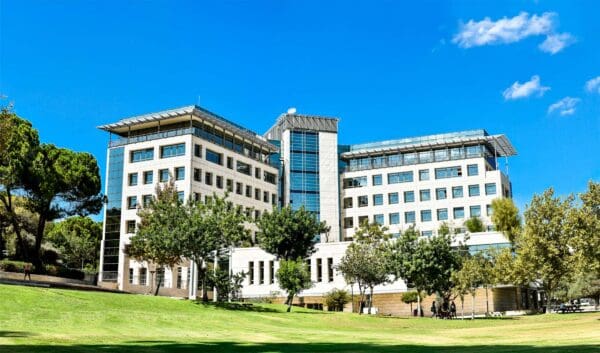


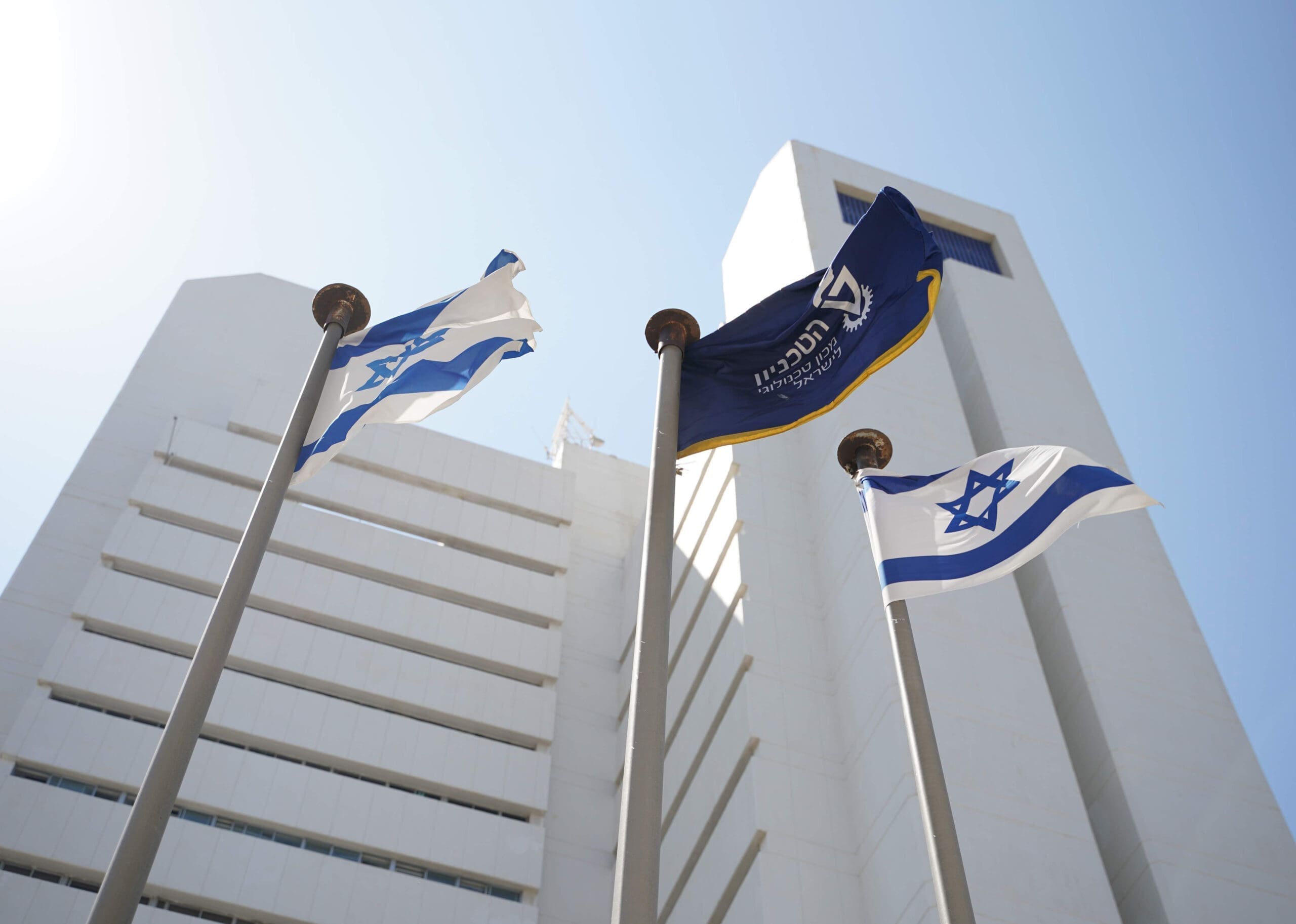


The Technion’s story has been intertwined with Israel’s for more than a century, from laying the foundations for a new nation to shaping its future.

Step inside Israeli innovation at the David and Janet Polak Visitors Center. Experience our 360° immersive movie and tech exhibition. Open to individuals and groups.
Learn More

The Fluidic Telescope (FLUTE) project team, jointly led by NASA and Technion – Israel Institute of Technology, envisions a way to make huge circular self-healing mirrors in-orbit to further the field of astronomy. Larger telescopes collect more light, and they allow astronomers to peer farther into space and see distant objects in greater detail. These next-generation large space observatories would study the highest priority astrophysics targets, including first generation stars – the first to shine and flame out after the Big Bang – early galaxies, and Earth-like exoplanets. These observatories could help address one of humanity’s most important science questions:…

One aspect of how industrial 3D printing works that is hard to grasp at first, is its ability to build parts inside of other parts. A metal 3D printer makes an object one hair-thin horizontal layer at a time. So imagine 3D printing an item like a chain. It’s constructed already linked in completely solid circles. By contrast, in traditional manufacturing, individual links are first straight, then bent, and joined together one at a time, which is slower, more labor intensive, and has weak points at each link. It’s the same age-old manufacturing principle for jewelry as it is for…
Technion aerospace engineers in collaboration with U.S. software giant PTC have created a 3D-printed micro turbojet engine in one piece — not an easy feat considering the complexity of the many moving parts in a traditional jet engine. While it is not the world’s first 3D-printed jet engine, Associate Professor Beni Cukurel and Dr. Ronen […]
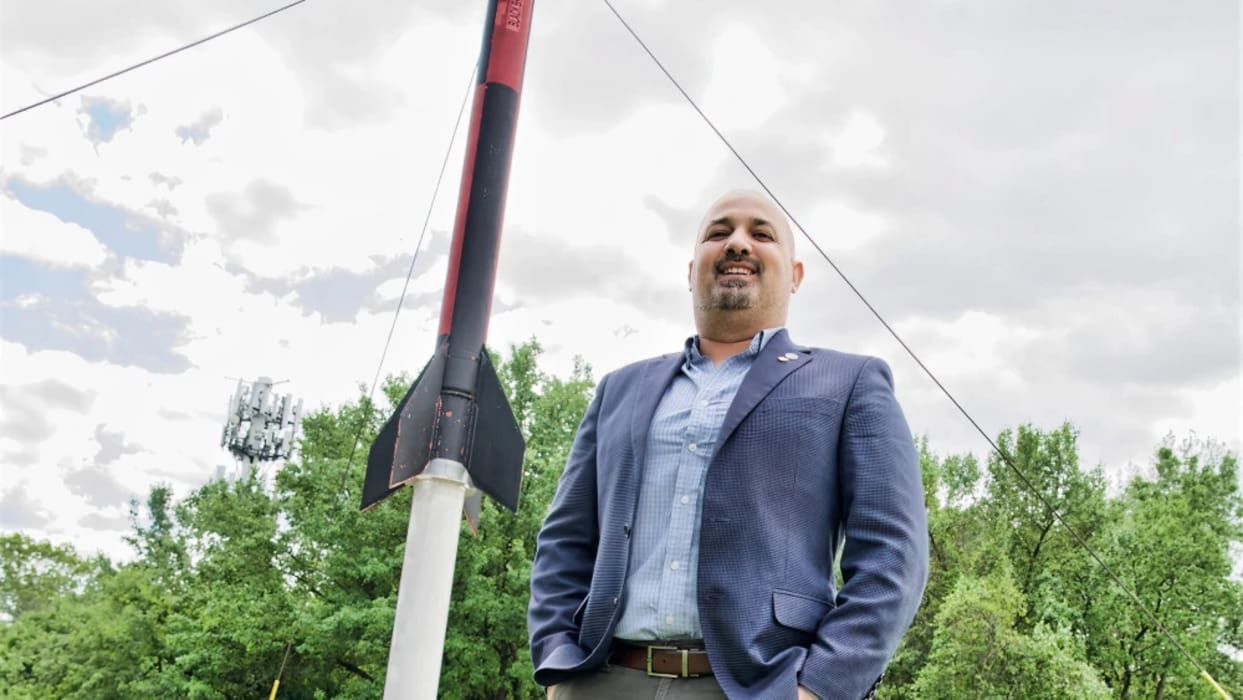
As a child growing up in Israel, Eliad Peretz was fascinated by space and the night sky. His goal, which he laid out in a five-year plan that he wrote as a fifth-grader, was to work for the organization whose mission was to address the big questions he wanted to pursue: the National Aeronautics and Space Administration. “I’m living my dream,” Peretz, who currently works at the NASA Goddard Space Flight Center in Greenbelt, Md., told JNS in a phone interview. On May 1, 2023, the American Technion Society will celebrate Peretz, a graduate of the Technion’s aerospace engineering faculty…

In this May 2023 discussion with American Technion Society donors, Associate Professor Beni Cukurel provides behind-the-scenes insights into the research and structure of the Faculty of Aerospace Engineering at the Technion — the only faculty of its kind in Israel. The faculty’s researchers still operate from the first building ever erected – more than 70 years ago – on the Technion’s main campus, making fundraising for a new building and faculty recruitment a priority for the Technion and Israel. Learn more about the impact of the Faculty of Aerospace Engineering here.

Astrophysicist Prof. Ehud Behar is intent on unearthing the mysteries of extragalactic events. Stellar explosions. The merging of neutron stars. Black holes. Outer space hosts jaw-dropping phenomena. But too often, we’re late to the viewing party. These spectacular occurrences emit flashes of light, sometimes including prompt, intense gamma-ray bursts, alerting physicists to their presence. Yet by the time we record them here on Earth, we lose the early time windows to study the events. Professor Ehud Behar and his team are looking to fix this time lag with their Gamma-Ray Burst Localizing Instrument (GALI). This shoebox-sized device can identify the…
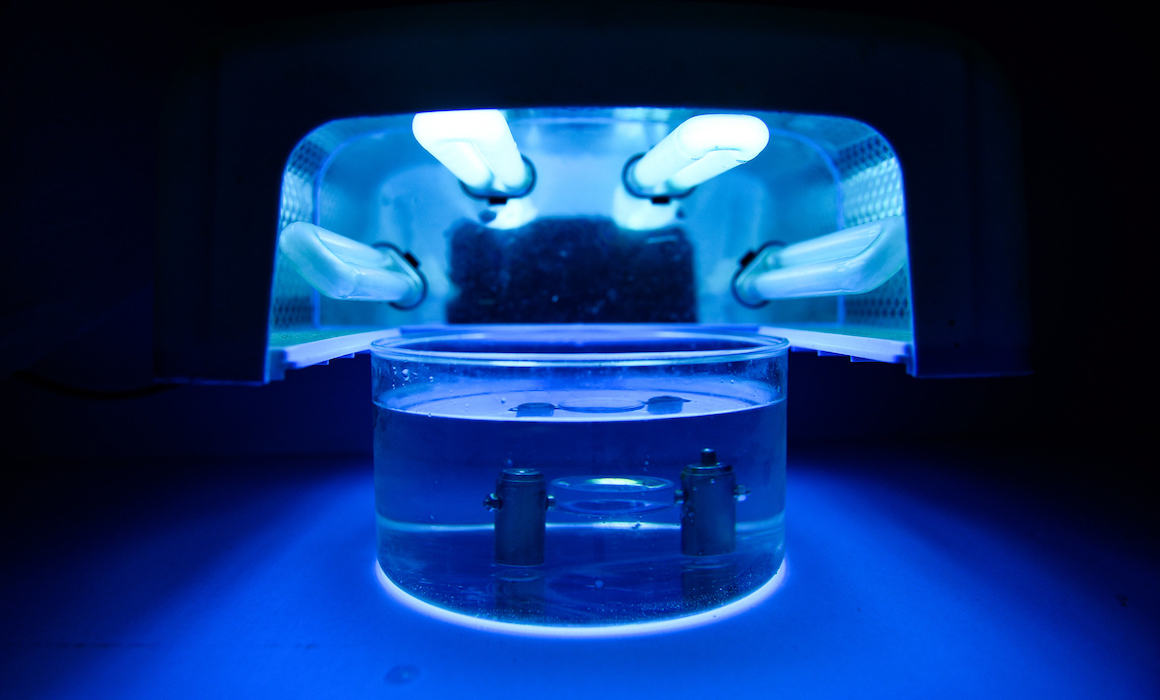
Technion researchers have developed a way to make optical lenses in a cost-effective way. It’s an innovation that could be a gamechanger for 2.5 billion people. It could transform space research. And it all started with a whiteboard and a marker. Although eyeglasses are cheap to make, in many parts of the world, they’re hard to come by. Yet without glasses, children find themselves struggling to follow along in the classroom. Adults lose their jobs because their vision has deteriorated so badly. Faculty of Mechanical Engineering members Professor Moran Bercovici and Dr. Valeri Frumkin became obsessed with this problem. How…

As an ever-increasing number of satellites circle the earth, providing information and services we could not have accessed otherwise. Technion researchers are creating breakthrough experiments to take human knowledge and capability farther than ever before into space. This video premiered during the December 2021 Technion Board of Governors meeting.

What’s in store for aerospace engineering in the coming years? A peek at projects being spearheaded by the Technion reveals technology of science fiction caliber, but the next frontier is closer than we think. The Technion’s Faculty of Aerospace Engineering and its Norman and Helen Asher Space Research Institute (ASRI) are exploring impressive projects from a hyper-sonic aircraft that travels at five times the speed of sound to telescopes that self-assemble in space. Often referred to as a “mini-NASA,” the Technion Faculty of Aerospace Engineering is the only department of its kind in Israel and has trained most of the…

Lead Researcher for New Space Missions and a Candidate for the Astronaut Selection Program The Netflix space drama Away follows the perils of a fictional expedition to Mars while gradually revealing the personal odysseys of its crew members. Listen to alumnus Eliad Peretz ’13 explore the challenges that instilled him with the right stuff to launch […]

Often referred to as a mini-NASA, the Technion Faculty of Aerospace Engineering is the only department of its kind in Israel and has trained most of the nation’s rocket scientists. Its researchers are involved in Israel’s priority space projects and have played an outsized role in building Israel’s aerospace industry. In this webinar, Aerospace Engineering […]