Something Fresh in the State of Denmark
October 06, 2026



















The Technion’s story has been intertwined with Israel’s for more than a century, from laying the foundations for a new nation to shaping its future.
Step inside Israeli innovation at the David and Janet Polak Visitors Center. Experience our 360° immersive movie and tech exhibition. Open to individuals and groups.
Learn More
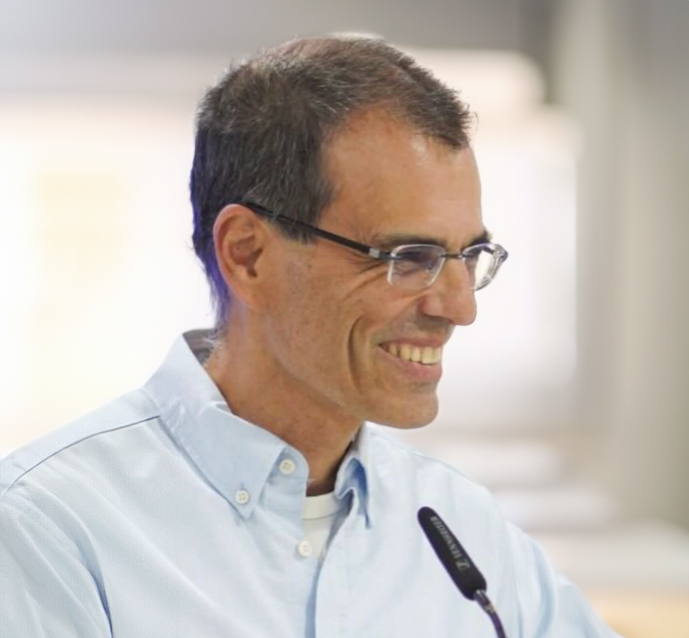
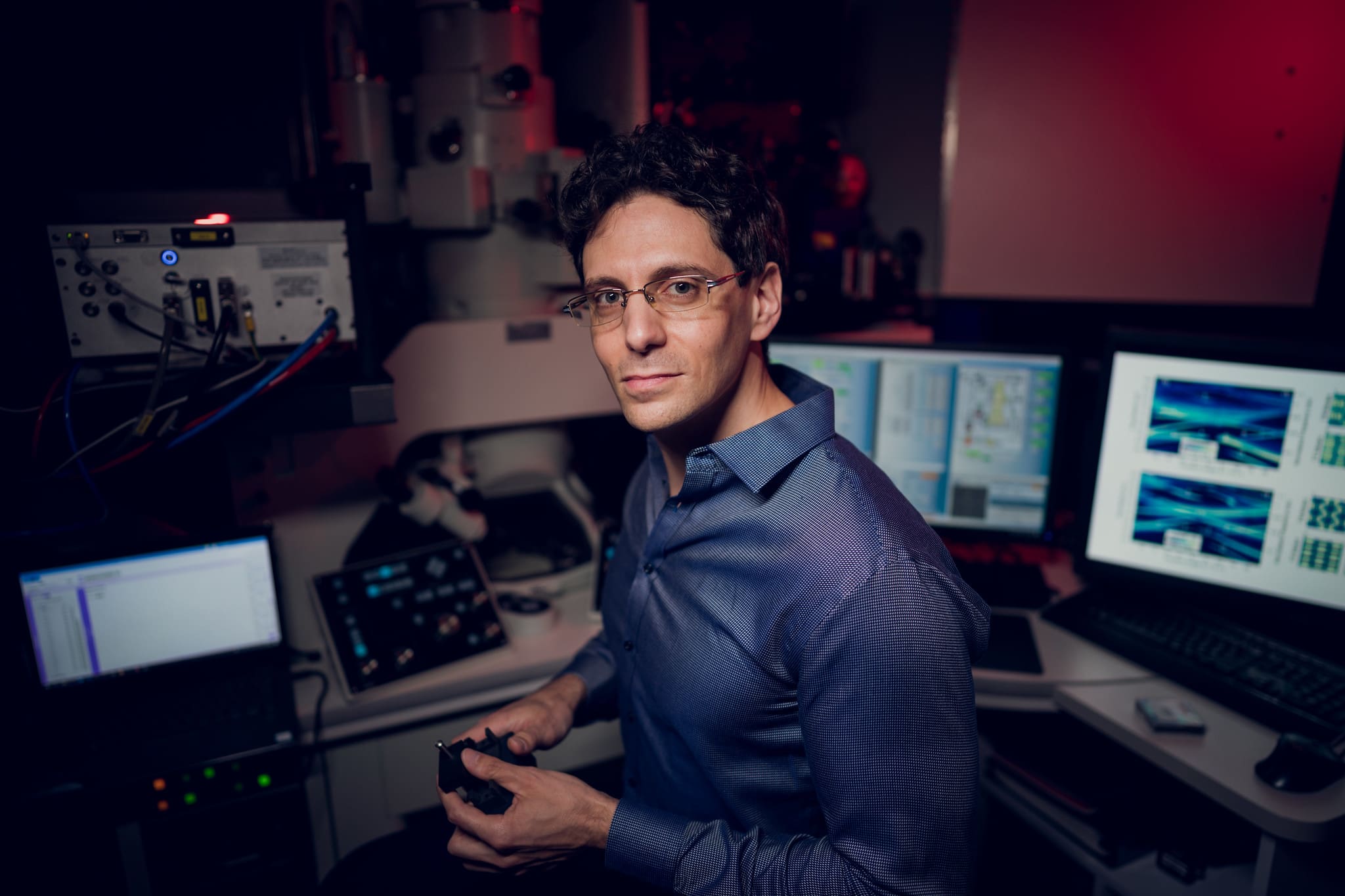
Astrophysicist Prof. Ehud Behar is intent on unearthing the mysteries of extragalactic events.
Stellar explosions. The merging of neutron stars. Black holes. Outer space hosts jaw-dropping phenomena. But too often, we’re late to the viewing party. These spectacular occurrences emit flashes of light, sometimes including prompt, intense gamma-ray bursts, alerting physicists to their presence. Yet by the time we record them here on Earth, we lose the early time windows to study the events.
Professor Ehud Behar and his team are looking to fix this time lag with their Gamma-Ray Burst Localizing Instrument (GALI). This shoebox-sized device can identify the direction of gamma-ray bursts to help astronomers train their telescopes toward the right regions of space, faster. By studying gamma rays, astronomers are able to see these high-energy events and learn more about how they shape our universe.
So impressive is GALI’s potential that it was part of Israel’s historic Rakia Mission to the International Space Station, which enabled entrepreneurs and scientists to test their work in the unique research environment of outer space. GALI will be installed outside of the space station, where it will monitor bursts and transmit signals to Earth for analysis.
“We astronomers don’t like the atmosphere, it gets in the way of what we’re trying to observe,” said Behar, dean of the Faculty of Physics and past director of the Norman and Helen Asher Space Research Institute. He hopes the mission will allow astronomers to avoid Earth-derived clutter and study gamma-ray bursts and related cosmic events early in their life cycle. “There’s a good chance we will understand how neutron stars collide and what happens (next). What is the physical mechanism that emits these gamma rays? So far we have mostly theories and not enough data,” Behar said. “We’re still only scratching the surface in understanding how exactly a star explodes.”
While GALI will not be the first to locate the positions of gamma-ray bursts, “previous instruments did not cover the entire sky or localize accurately enough,” he said. GALI will allow for high-precision localization from a much smaller instrument than has been used before.
Why does space exploration matter? Studying science is important for its own sake, Behar said: “It’s like asking a mountaineer the reason to climb a mountain. Because it’s there. Some game-changing technologies have even been built on chance discoveries.”
Israel has long been committed to space technology, which helps drive the economy and contributes to the country’s international standing. The Technion has played a major role, establishing an aerospace engineering faculty in 1954 that remains the only one of its kind in Israel. Being at the Technion is a big plus. “There are scientists here who have built satellites before,” said Behar.
We’re not just buying a satellite and adding our instruments to it. We’re proud to be building it all from scratch.”
Behar traces his own fascination with the cosmos to his childhood. Later on, he was drawn in by the challenge of taking on difficult subjects like physics and math. “I have been riding this fun carousel for a while,” Behar said. “I still feel like a kid in a candy store.”