The Technion’s story has been intertwined with Israel’s for more than a century, from laying the foundations for a new nation to shaping its future.

From medicine to security, explore how the Technion is advancing Israel and improving lives around the world.
View All Impact Areas
Explore stories, news, insights, and data across articles, videos, and podcasts.
view all content types
in Europe and #21 in the world for aerospace engineering*
of the student body are women
of the student body are Arab Israeli
The Technion’s story has been intertwined with Israel’s for more than a century, from laying the foundations for a new nation to shaping its future.
Explore ATS, the Technion, and the people behind the breakthroughs redefining what's possible for Israel and the world.
Learn More About ATSATS is a community of supporters, innovators, and champions of possibility united by one mission: transforming Israel and the world through science and discovery.
Learn MoreFor more than 100 years, the Technion has been Israel's technological engine and leading driver of innovation, technology, and entrepreneurship, transforming ideas into impact.
Learn More
Step inside Israeli innovation at the David and Janet Polak Visitors Center. Experience our 360° immersive movie and tech exhibition. Open to individuals and groups.
Learn MoreFrom medicine to security, explore how the Technion is advancing Israel and improving lives around the world.
View All Impact AreasExplore stories, news, insights, and data across articles, videos, and podcasts.
view all content typesDiscover ways to support, connect, and help drive innovation.
Get InvolvedExplore ATS, the Technion, and the people behind the breakthroughs redefining what's possible for Israel and the world.
Learn More About ATS

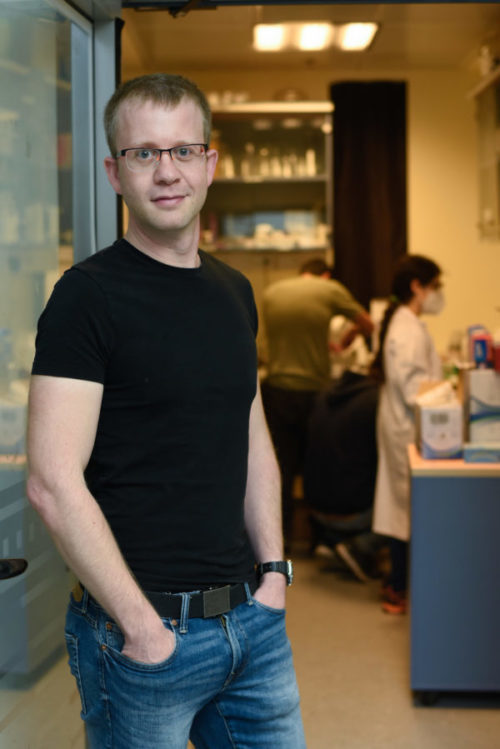
Prof. Moran Bercovici
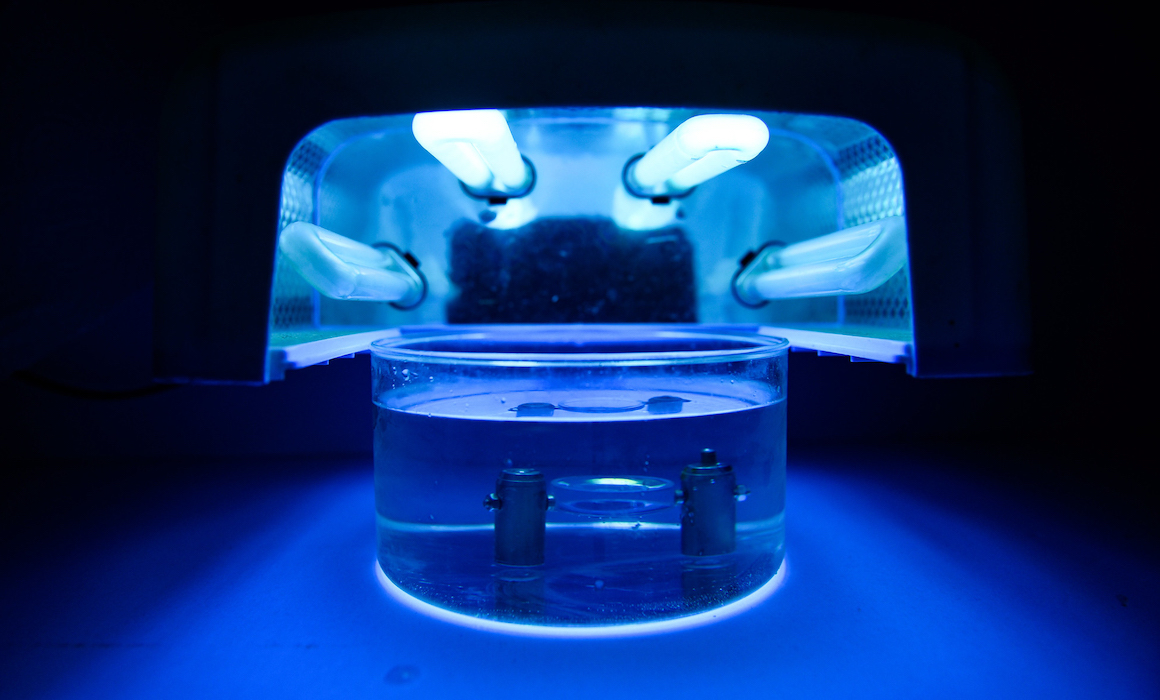
The researchers note that the materials required to make lenses using this process are easily found online for just a few dollars. While they used UV rays to harden the lenses in their lab, they posit lenses could be hardened just as effectively in the sun. This will allow their technique to be used in less developed regions that lack the laboratory infrastructure Israel and the United States have.
“Our fantasy is to create an impact in countries with minimal resources,” Bercovici told Haaretz. “Just as in the well-known proverb, I don’t want to give them fish, I want to teach them how to fish. With this method, people will be able to make their own glasses.”

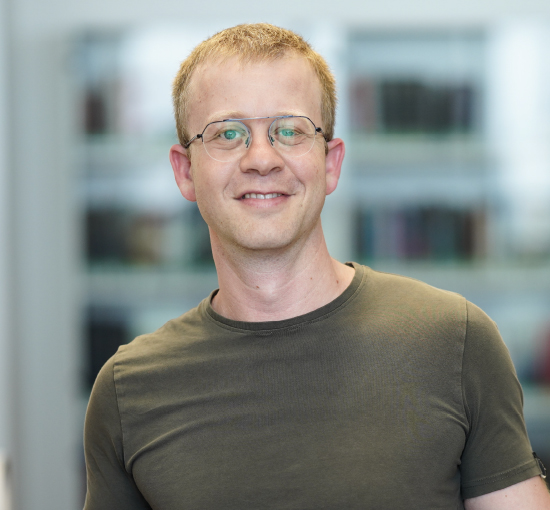
Dr. Valeri Frumkin
From Someone’s Face — to Space
The team has ambitions beyond optical lenses. They believe their method could also be used to develop complex optical components, which are used in pilot helmets, augmented reality systems, advanced projector systems, and elsewhere.
The manufacture of these complex optical components is expensive and time consuming, limiting their use. Bercovici and Frumkin’s method could reduce the cost and production time dramatically.
And NASA has already inquired about whether the team could create a very, very large lens — for their space telescopes. Current telescopic power is limited by the size of the lenses we can produce. With this latest development from the Technion, NASA researchers could be able to see exoplanets — planets outside our solar system, only visible with telescopes about ten times bigger than the most powerful ones we have today.
It may take a long time before we can see those exoplanets, but the Technion is already working on it. In late December, a lens making system developed by the team at Bercovici’s lab will be sent to the International Space Station to begin experimentation.
A NASA spokesperson told Haaretz, “the approach could lead to other space applications as well, such as in-space manufacturing of high-quality optical components for energy collection and transmission, scientific instruments, and medical devices — thus playing an important role in the emerging space economy.”
December 21, 2021
Learn about groundbreaking optical lens developments influenced by NASA, aimed at improving vision for 2.5 billion people.
1 min
X (opens in a new tab) / Facebook (opens in a new tab) / LinkedIn (opens in a new tab) / Email / Copy Link
Engineering / Aerospace / Faculty /
Artificial intelligence is not simply changing higher education — it is detonating old assumptions about how students learn and how professors teach. As universities worldwide grapple with how to respond, the Technion is working to confront the questions head-on. Here, AI is not treated as a threat but a catalyst, prompting careful reexamination at every […]
Every year, the European Research Council (ERC) identifies some of the world’s most promising early-career researchers and gives them the freedom to pursue bold ideas. This year, two of those ideas came from the Technion – Israel Institute of Technology. From cancer research to artificial intelligence (AI), breakthroughs that shape the future often begin with […]
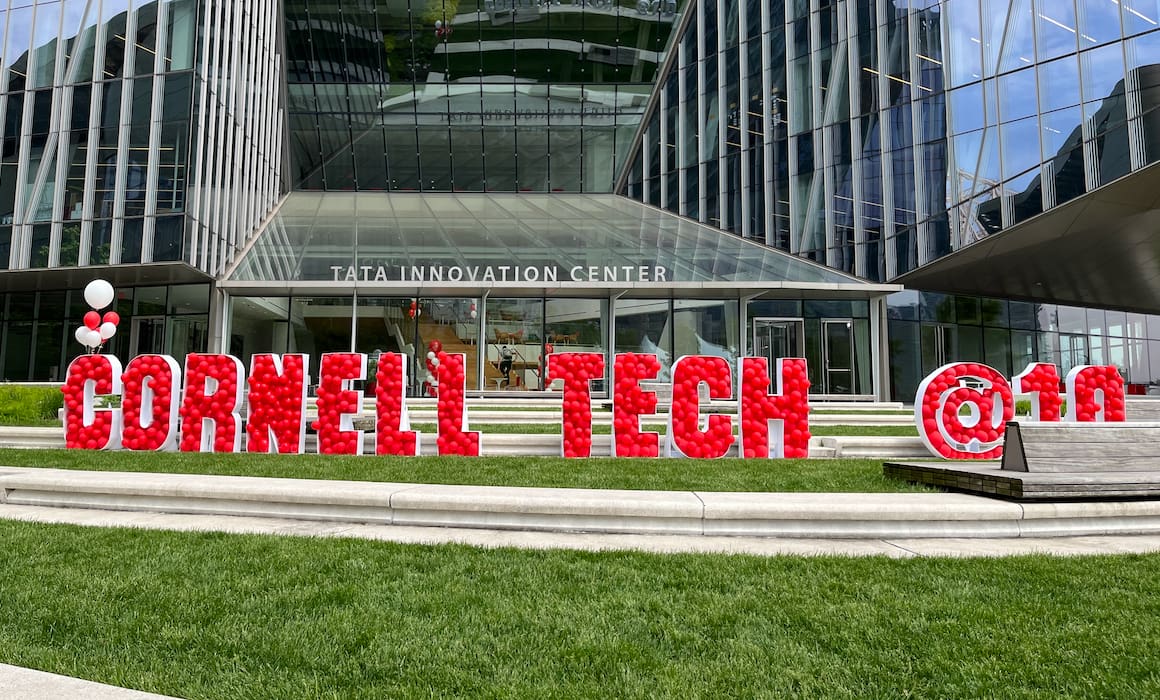
Despite New York City Mayor Zohran Mamdani’s past calls to boycott Cornell Tech because of its partnership with Israel’s Technion-Israel Institute of Technology, city officials and Jewish community leaders on Wednesday announced a $250,000 investment in a Cornell Tech research initiative aimed at expanding New York City’s tree canopy to combat rising temperatures. New York City Council Speaker Julie Menin, the first Jewish woman to hold the post, and other officials unveiled the funding for Cornell Tech’s Urban Tech Hub at the Jacobs Technion-Cornell Institute on Roosevelt Island. The grant will launch the Generative Tree Canopy Project, which will use…
Stay on top of the latest breaking scientific discoveries from Israel and the Technion. Subscribe to the ATS newsletter.