Something Fresh in the State of Denmark
October 06, 2026































The Technion’s story has been intertwined with Israel’s for more than a century, from laying the foundations for a new nation to shaping its future.

Step inside Israeli innovation at the David and Janet Polak Visitors Center. Experience our 360° immersive movie and tech exhibition. Open to individuals and groups.
Learn More

Considered to be one of the greatest revolutions in cancer treatment, immunotherapy enhances the immune system’s ability to target and destroy cancer cells efficiently. One of the key challenges in immunotherapy is the uncertainty regarding patients’ responses—not all patients respond to the treatment, and some may experience side effects without meaningful therapeutic gain. Therefore, there is a need to identify biomarkers that can predict treatment effectiveness based on individual patient data. New and promising findings on this topic are now presented in a study by Technion researchers published in the journal Cell Genomics. The research was led by Prof. Keren…

Novocure (Nasdaq: NVCR), a global oncology company working to extend survival in some of the most aggressive forms of cancer by developing and commercializing its innovative therapy, Tumor Treating Fields (TTFields), visits the Nasdaq MarketSite in Times Square. The company is celebrating its 25th anniversary. In honor of the occasion, Ashley Cordova, CEO, rings the Opening Bell. Novocure was founded in 2000 by Technion Professor Emeritus Yoram Palti.

Researchers at the Technion Faculty of Biology have identified potential new innovative genetic therapies for cancer and brain diseases. The findings were supported by the Israel Science Foundation (ISF), the US-Israel Binational Science Foundation (BSF), NSF-BSF Molecular and Cellular Biosciences, and the National Institutes of Health (NIH) and were published in the peer-reviewed journal Nucleic Acids Research. The study was conducted in collaboration with the research group of Professor Heather Hundley from Indiana University and was led by Ph.D student Berta Eliad, master’s student Noa Schneider, and their advisor, Associate Professor Ayelet Lamn.

This 3D-printed postmastectomy bra could be the next best breast prosthesis. Here’s how the technology works. Tal was diagnosed with stage 3 breast cancer in the fall of 2019. She underwent chemotherapy, a mastectomy, and whole breast radiation. Tal wasn’t a candidate for reconstructive surgery, because radiation thinned her skin and reduced its elasticity. Determined to move on and regain confidence, she tried her first breast prosthesis at a hospital. “It was knitted and looked like a pillow,” she says. “It made me laugh because it looked nothing like a real breast.” U·Bra was co-developed by Technion Professor Yoav Sterman.

Researchers at the Technion, led by Professor Nabieh Ayoub and his team, are paving the way for future cancer treatments with a new study that could change how we tackle lung cancer. The team explored a specific form of lung cancer called lung adenocarcinoma (LUAD), which is often diagnosed in its advanced stages, leaving patients with limited […]

An Israeli medtech company whose novel therapy freezes and destroys malignant tumors has announced positive results in a trial of breast cancer patients. IceCure Medical’s ProSense system uses extremely cold liquid (cryoablation) to freeze and destroy abnormal tumors as an alternative to surgical removal. Its focus is currently on early-stage breast, lung, liver and kidney tumors. While cryoablation is not a new process, IceCure Medical’s system allows physicians to perform the procedure in their own offices, with no need for hospitalization. The company’s ICE3 study is the largest multicenter clinical trial performing cryoablation on low-risk and early-stage breast cancer tumors….

Israeli AI-assisted colonoscopy technology has been given the seal of approval from the internationally respected Lancet Digital Health journal, following an extensive study of its capabilities. The novel polyp detection system developed by Haifa-based MAGENTIQ-EYE was studied by the Lancet over a 14-month period at 10 leading medical centers around the world, involving 31 endoscopists and 952 patients. The study, titled “A computer-aided polyp detection system in screening and surveillance colonoscopy: an international, multicentre, randomised, tandem trial,” found that the MAGNETIQ-EYE platform increases the average detection rate for adenoma (non-cancerous or pre-cancerous tumors) by 7 percent, and had a 17-percent lower rate of missed…
Hours in surgery, weeks in hospitals and months of recuperation – or a five-minute procedure under local anesthesia and straight back home with no side effects. That’s the difference that AI (artificial intelligence) developed in Israel will now be making for patients diagnosed with liver cancer. Techsomed, a medical imaging startup, allows physicians for the first time to see exactly what’s happening in real time while they destroy (or ablate) a tumor using targeted heat through a needle. Thermal ablation therapy, a minimally invasive procedure for small tumors, has huge benefits over surgery or chemotherapy for the patients.
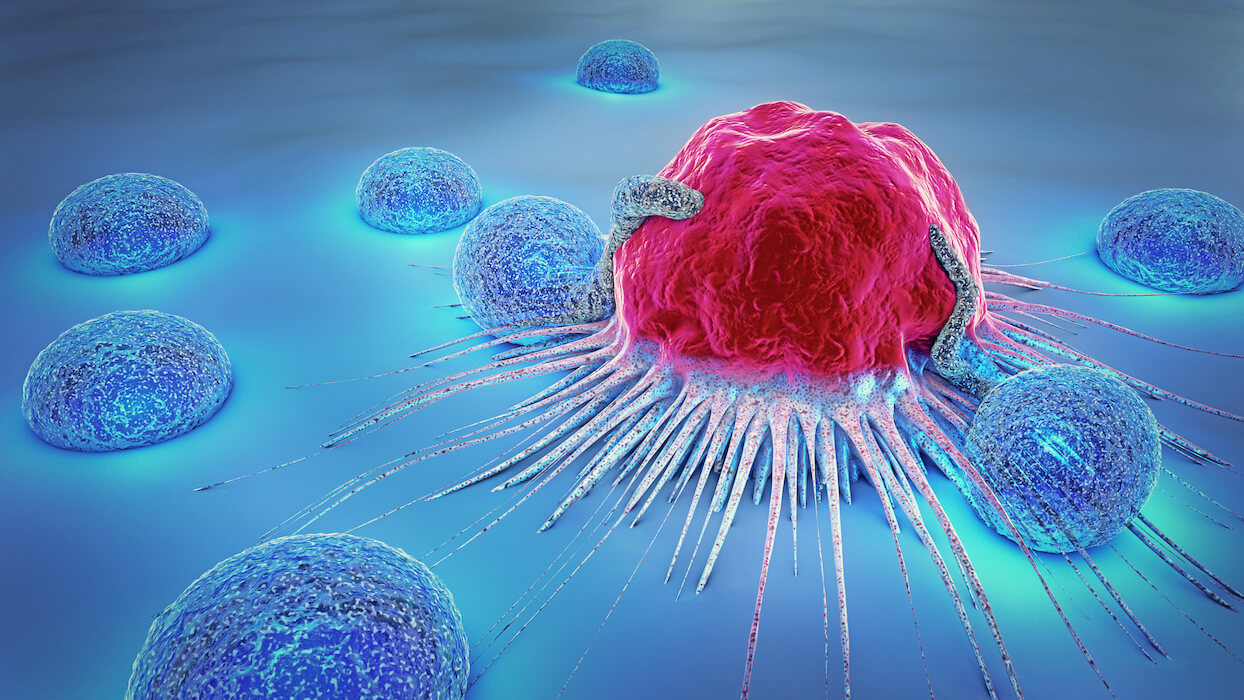
Researchers in the Technion’s Faculty of Materials Science and Engineering and Rappaport Technion Integrated Cancer Center have developed a new patented technology to treat tumors. They estimate it could accelerate the development of personalized treatments for various types of cancer. Typical cancer treatments, such as chemotherapy and radiation, often cause serious side effects, because in addition to attacking the cancerous cells, they damage healthy ones. Moreover, certain types of cancer don’t respond well to chemotherapy. Professor Alejandro Sosnik and doctoral student Ivan Zlotver have developed a treatment that combines sonodynamic therapy with a special formula of nanoparticles. Sonodynamic therapy is…

Soon, cancer patients will have an additional treatment option, moving away from relying solely on chemotherapy, which often has deleterious side effects. The current one-size-fits-all approach to treating many diseases will soon be replaced by personalized (or precision) medicine. Essentially, the patient’s DNA will be sequenced, to analyze subclass diseases and identify the cause of the mutation. With a better understanding of disease mechanisms, patients can be diagnosed with great precision and the treatment can be tailored specifically to the target. For breast cancer alone, there will be more than 20 drugs designed to cure each specific type. Thai PBS…

Researchers at the Technion – Israel Institute of Technology in Haifa have developed a new tool to determine whether a cancer patient is predisposed to an advanced kind of treatment called immunotherapy. The immune system contains “checkpoints” to prevent it from attacking cancer cells too strongly, as this would also potentially damage nearby healthy cells. Immune checkpoint inhibitors (ICI) suppress this action and allow the immune system to attack the cancer cells, but they are only effective in less than 40 percent of patients and tools currently being used to predict the drug’s efficacy are not completely accurate. Keep reading at nocamels.com.
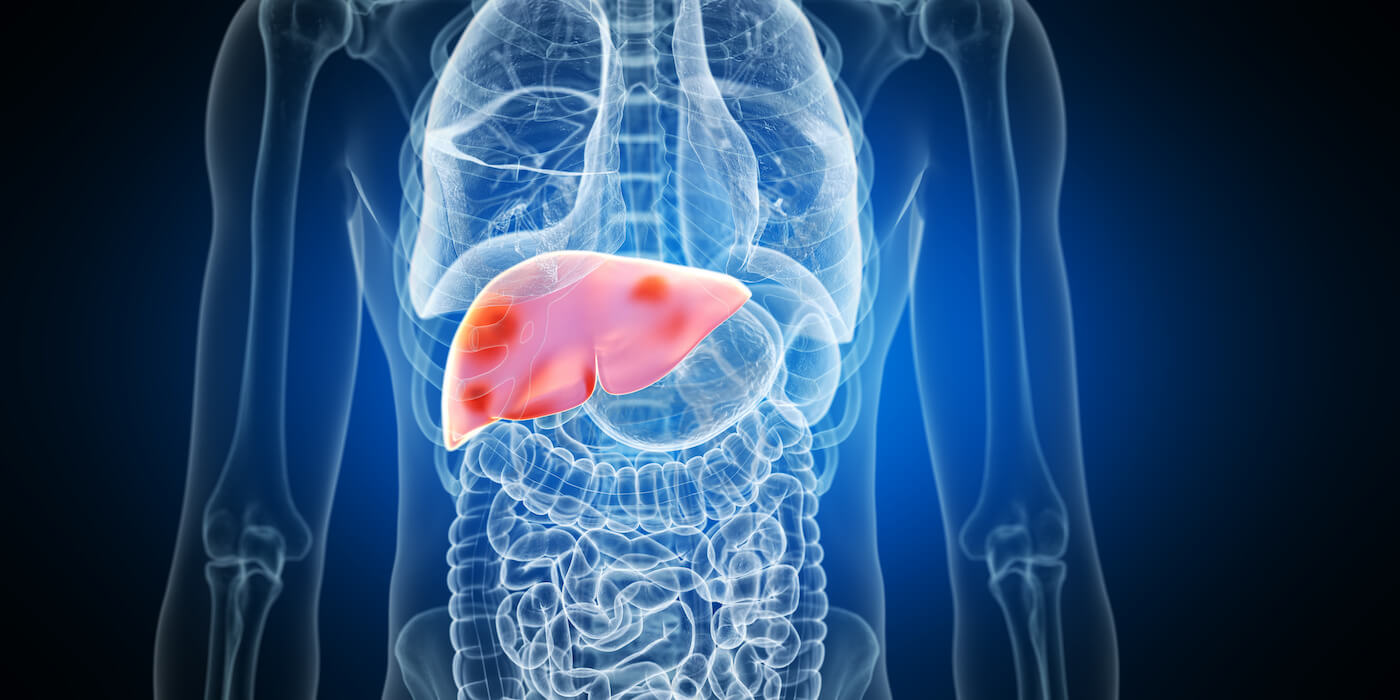
An Israeli company has been granted clearance from the US Food and Drug Administration (FDA) for its software used in the removal of liver tumors. The BioTracelO software created by Rehovot-based TechsoMed Medical Technologies received De Novo clearance from the FDA, which is approval granted to a novel system. The software is used during ablation therapy – a minimally invasive treatment that uses extreme temperatures to kill tumors – and is designed to predict the tissue response to the therapy. It is also designed to aid physicians who are performing liver tumor removal by providing real-time visuals with the ultrasound imaging.