Something Fresh in the State of Denmark
October 06, 2026
























The Technion’s story has been intertwined with Israel’s for more than a century, from laying the foundations for a new nation to shaping its future.

Step inside Israeli innovation at the David and Janet Polak Visitors Center. Experience our 360° immersive movie and tech exhibition. Open to individuals and groups.
Learn More

To bring a new drug to market costs on average $1.3 billion, according to a recent report in the Journal of the American Medical Association, and takes up to 20 years. These astronomical sums do factor in the billions of dollars and years of research invested in what potentially promising therapies that ultimately lead nowhere, according to David Harel, the co-founder and CEO of CytoReason, an Israeli startup using AI and reams of data on the human body to create computational models of diseases affecting mankind. “Developing new drugs is very, very expensive. And the reason it’s expensive is not only…
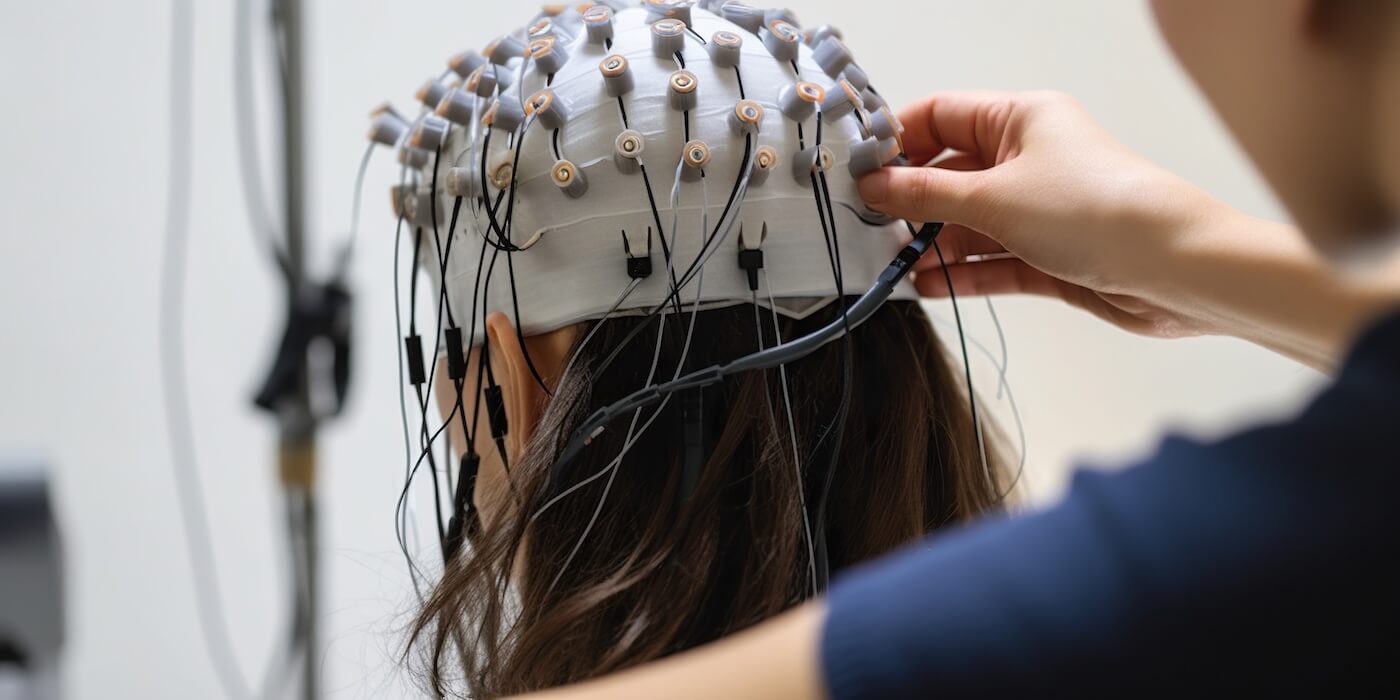
A study by GrayMatters Health, which develops digital training therapies to help the brain regulate mental health care, has shown that its FDA-approved Prism device is effective in the treatment of post-traumatic stress disorder (PTSD). The device, now available in selected clinics in the US, shows a patient’s brain activity in the amygdala, the small region of the brain associated with emotions and memory, while interacting with different scenarios. This can help patients with PTSD control their symptoms by better understanding what triggers that heightened activity in that part of the brain.

By the time Sara Smolley was born, her grandmother was unable to talk to her. She had been diagnosed with early onset Parkinson’s disease at the age of just 40, which stripped her of much of her motor capabilities. “More than anything, it was her speech that was impacted,” says Smolley, the co-founder and VP Partnerships of Voiceitt, an Israeli speech recognition platform for people who have non-standard speech. “Of course, that affected her ability to build a relationship with my brothers and me, as we couldn’t understand what she was saying,” she tells NoCamels. The AI-powered Voiceitt platform is designed…

Brigadier General (Ret.) Pinhas Buchris ’91 is a longtime pioneer of Israel’s security, dedicated to serving the State both on the frontlines and in various leadership positions. He’s also a man who lives by his words. Once, when asked what advice he would give to up-and-coming Technion students, he said: “If I have a message for (them), it is: ‘The daring is victorious.’ Don’t give up on your dreams even in difficult times. Studies and perseverance can lead to improvement and success, even when the environment seems hostile or difficult.” His long and storied career and bold contributions to securing…

Leaning on our friends and family during these challenging times has been an immense relief for many of us, but one of the most important forums for solidarity in this era shaped by conflict and tragedy is not so visible. The power of online community has played an invaluable role in providing wartime support, and Nathanaelle Klein, Technion alumna and Chief Product Officer at Soli, is one of the talented individuals shaping an empowering online community in Israel right now. In speaking with Nathanaelle, I learned about how the academic foundation she acquired at the Technion inspired her global career, and…

Jackie Chaney, an elementary teacher for the past 16 years, currently presides over a classroom of 25 2nd graders. She professes to love this stage in a students’ academic career, one that historically has been marked by growth in literacy, whereby word recognition begins to become automatic, fluency accelerates, and classroom teachers double down on building students’ ability to focus and read independently for a sustained period of time. But in recent years, Chaney has noticed a significant shift in this early literacy journey. “With the ‘microwave world’ that we live in nowadays, students want that immediate engagement and quick…

Cornell researchers’ “leaf-level” visualization of every tree in New York City – and how much shade each provides – could inform new strategies for mitigating extreme heat there, and in other cities coping with record-breaking temperatures. Tree Folio NYC creates a “digital twin” of New York’s urban canopy. The high-resolution, 3D model not only details trees’ location, type and size, but simulates how local conditions such as street orientation, street width and building height influence their shading benefits. For decades, cities have planted trees in uniform rows along streets. But improved understanding of how tree placement impacts shading could help planners…

Professor Isaac Keslassy is the Louis and Miriam Benjamin Chair in Computer-Communication Networks in the Andrew and Erna Viterbi Faculty of Electrical and Computer Engineering. Together with his students, he focuses on how to make the internet faster and better. The internet relies on many server farms called data centers. For instance, when an item is ordered on Amazon, the order goes to a data center, where several servers process it. Prof. Keslassy looks at the networks that connect the servers within these data centers so orders can be processed more quickly. His team also works to improve the networks…

You’ve had too much to drink. Or maybe you didn’t sleep the night before. Both represent cognitive states of impairment that should keep you from getting behind the wheel. But who’s going to stop you? Israeli startup CorrActions says it’s the car itself that should strongly state, “Sorry, mate, tonight you should take a taxi home.” But how will the car recognize how many cocktails you’ve imbibed or how many hours of shuteye you got? The steering wheel knows, the company’s CEO, Ilan Reingold, tells ISRAEL21c.
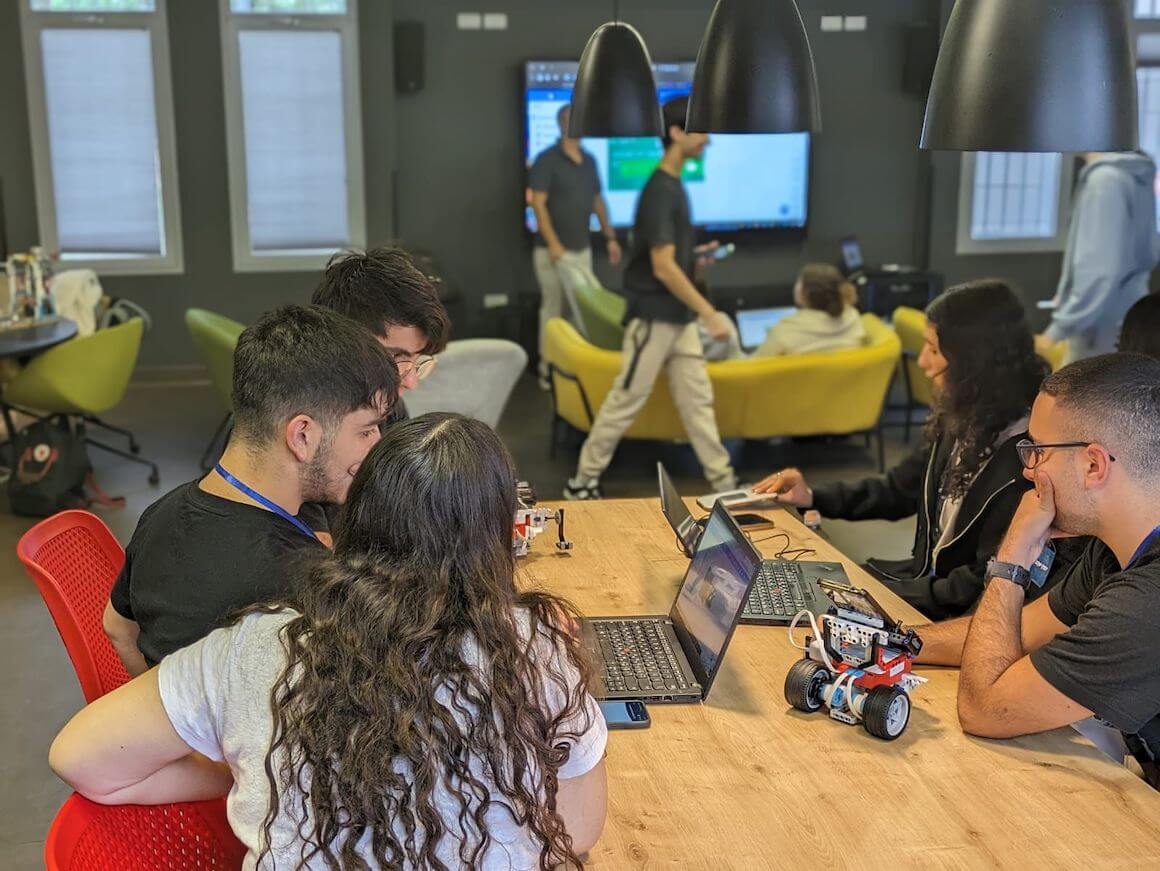
More than 250,000 Israelis are refugees in their own land, having been evacuated from the north and south of the country due to the Israel-Hamas war in the south and threats from Hezbollah in the north. The Technion is providing many with housing and other services and is offering a one-week robophysics program for outstanding 11th- and 12th-graders who have been displaced. Partnering with Atidim, a nonprofit organization dedicated to providing educational opportunities to bright young people from Israel’s underserved and marginalized communities, 30 high school students participated in a robophysics program created by the Technion’s Andrew and Erna Viterbi…

An Israeli startup that uses artificial intelligence to dub movies and TV shows into different languages has launched the first initiative of its kind to provide fair compensation to voice actors for the use of their voices in AI-powered dubbing and other synthetic voice projects. Deepdub uses proprietary AI to generate synthetic voices that capture the emotion and delivery of the original performances, but in a new language. The technology streamlines the labor-intensive dubbing process and reduces costs, while matching the quality of traditional workflows. Now, the startup’s new Voice Artist Royalty Program will save the submitted audio samples of voice actors in…
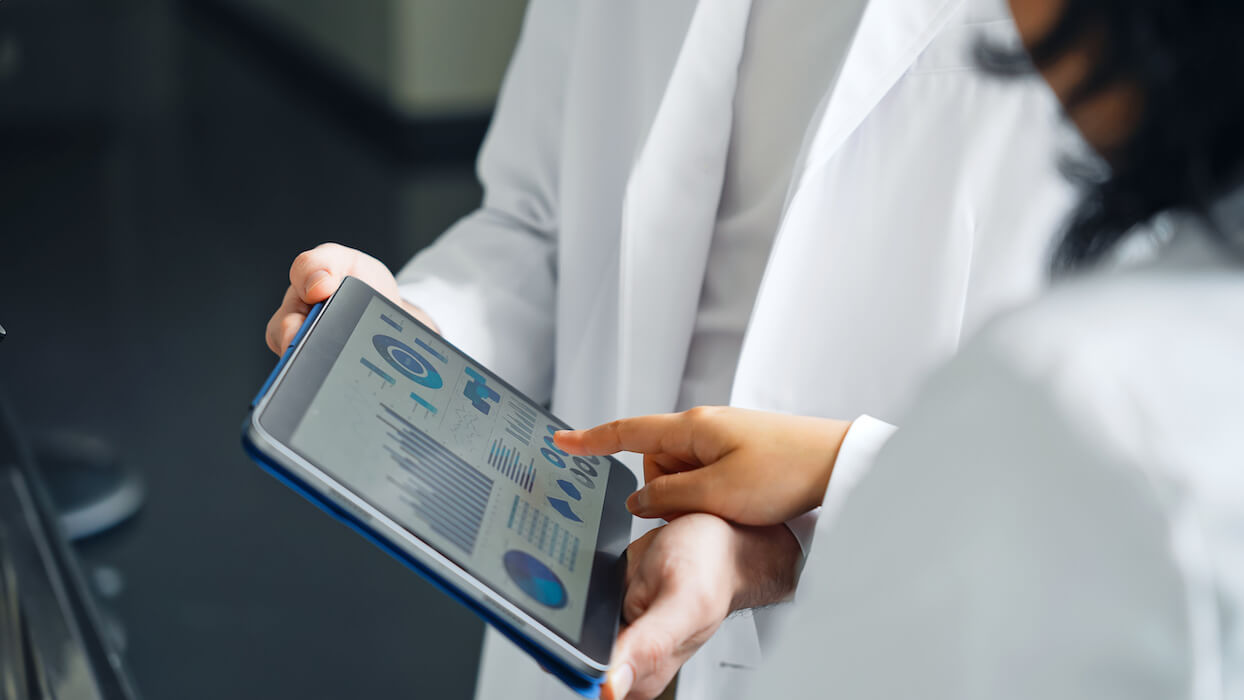
American-Israeli startup PhaseV is on a mission to overcome one of the most significant challenges of drug development: the clinical trial phase, the longest and most expensive part of the process. A recent Deloitte report reveals that, on average, a single new drug takes $2.3 billion and seven years to develop. Yet many candidates fail the clinical phase even if the biology works. That makes for a poor return on investment and wasted potential for treating diseases. “The development process for new drugs must therefore be transformed and could be made much more efficient with digital technologies,” the report urges.