Something Fresh in the State of Denmark
October 06, 2026





























The Technion’s story has been intertwined with Israel’s for more than a century, from laying the foundations for a new nation to shaping its future.

Step inside Israeli innovation at the David and Janet Polak Visitors Center. Experience our 360° immersive movie and tech exhibition. Open to individuals and groups.
Learn More

This op-ed is authored by Jenny Goldstein, chief development officer of the American Technion Society. In my last blog post, I wrote that philanthropy is most powerful when it is connected to meaning. As fundraisers and storytellers, our responsibility is not simply to celebrate Israel’s achievements. It is to help people understand why those achievements matter, how they improve lives, and why they deserve our collective support. That challenge feels especially urgent as we navigate one of the most transformative moments of our time: the rise of artificial intelligence. Not long ago, AI belonged mostly to the realm of science fiction….

OpenAI CEO Sam Altman claimed on Friday that the company is currently working with artificial intelligence models at “the singularity point,” which represents the moment when AI becomes better at generating results than humans can.And Altman’s claims might not be unfounded, as Technion-Israel Institute of Technology Professor Yaniv Romano told The Jerusalem Post that he believes the singularity might have been reached, citing recent studies showing that AI models can solve mathematical problems humans can’t.”We are now in the singularity; this is the moment,” Altman claimed during an interview with the Relentless podcast, adding that the idea of reaching this…

For decades, elementary students learned the same tale of the Solar System: first come rocky terrestrial planets such as Earth, followed by gas giants such as Jupiter and ice giants such as Neptune, with lovable Pluto bringing up the rear. Then 20 years ago, planetary scientists downgraded Pluto to a “dwarf planet.” And now, they say, it’s time to revisit our idea of Neptune and Uranus, too—for the so-called ice giants likely contain very little ice. The term is “a little bit misleading,” says Ravit Helled, a planetary scientist at the University of Zürich. “We really don’t know what these…

Vast Data, one of Israel’s fastest-growing technology companies, is using proceeds from a recent secondary transaction to establish a NIS 3 million ($1M) scholarship fund for artificial intelligence and computer science students at the Technion – Israel Institute of Technology, Tel Aviv University, and the Open University. The fund, established together with the Tmura Foundation, will be financed through options that Vast Data donated in its early years and that were exercised following the company’s recent secondary transaction at a $30 billion valuation. The scholarships will target students who meet academic, socioeconomic and social criteria, with the goal of expanding…

Researchers have developed a set of tools that look inside large language models to detect when they go wrong, including hallucinations, memorization of training data and other forms of unreliable output. Rather than relying only on a model’s final answer, the approach analyzes internal signals produced during computation, including activation patterns, attention maps and output probability distributions. The goal is to identify signs of failure as the model generates text. These challenges are a major focus of the research group led by Dr. Haggai Maron from the Andrew and Erna Viterbi Faculty of Electrical and Computer Engineering at the Technion…

Researchers at the Technion – Israel Institute of Technology have developed a technology that allows users to control movement in AI-generated videos using simple mouse gestures, without requiring large computing resources or retraining on massive video datasets. The system, called Time to Move, or TTM, was developed by Dr. Or Litany of the Henry and Marilyn Taub Faculty of Computer Science, together with Prof. Ron Kimmel and students Asaf Singer, Noam Rotstein and Amir Mann. Litany presented the research last month at the International Conference on Learning Representations, or ICLR 2026, in Brazil. The conference is considered one of the…

Not long ago, artificial intelligence felt like something out of science fiction: It lived in futuristic movies and speculative headlines. Today, it’s woven quietly into our daily routines. AI helps us decide where to eat dinner, flags unusual health symptoms, and even drafts our emails. But while AI has changed daily life, its impact within […]
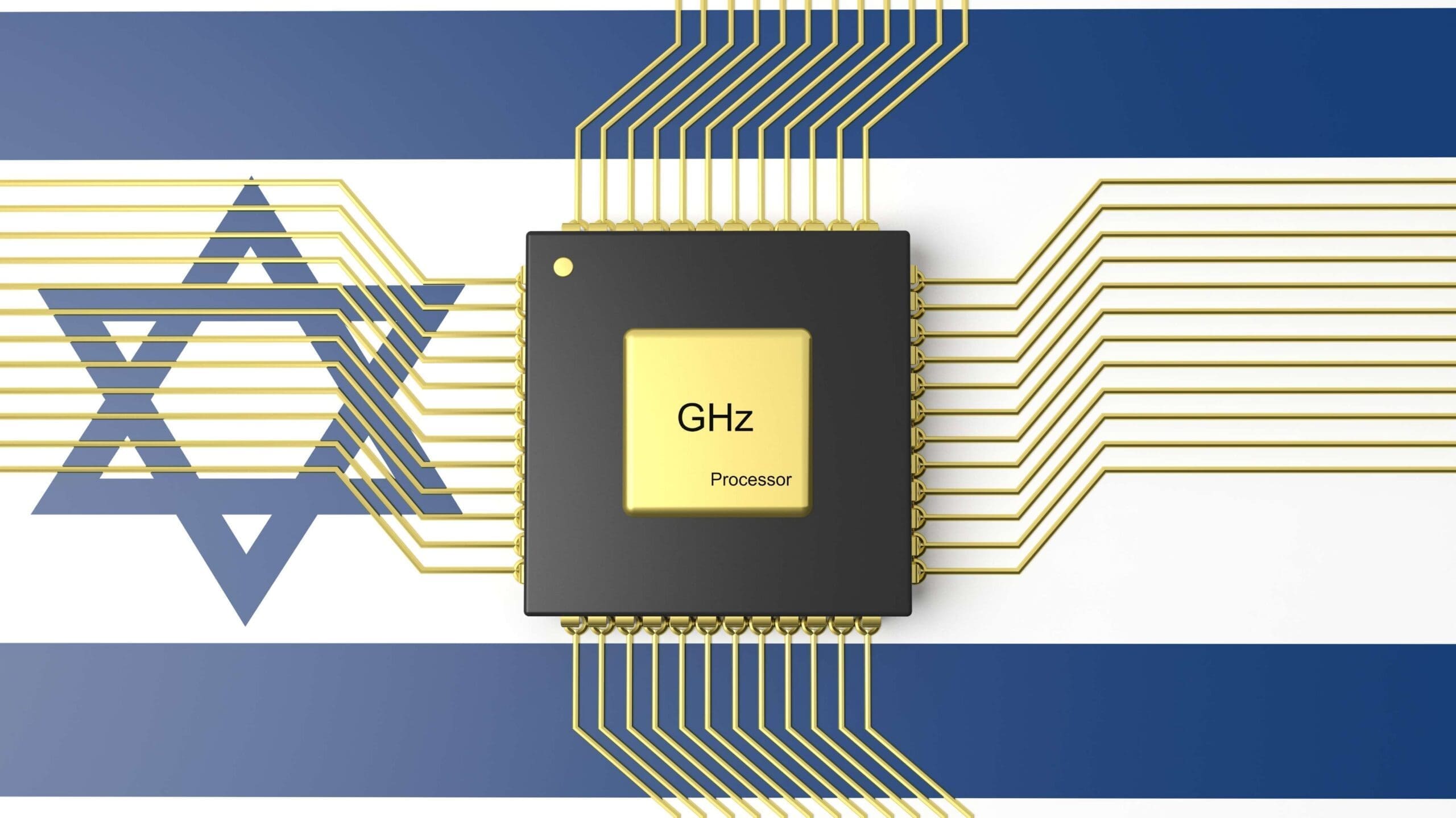
According to a recent report, government officials in the United States and Israel are considering a joint effort to develop a large-scale research and development campus for artificial intelligence in Israel’s Western Negev desert. The plan, which is called Project Spire, would create an advanced fabrication and design center to produce, assemble, and test a new generation of computer chips to meet the demands of the rapidly developing artificial intelligence era. The report in the Wall Street Journal was written by two members of Hudson Institute’s Center for Peace and Security in the Middle East, a conservative think tank based…

Could the entire internet fit inside a shoebox? As our world generates more data than our hard drives can handle, we are rapidly approaching a global storage crisis. Prof. Eitan Yaakobi reveals a solution that has been perfecting itself for billions of years: DNA. He discusses his team’s groundbreaking work to translate digital bits into […]

AI is transforming nearly every aspect of modern life — and the Technion – Israel Institute of Technology stands at the forefront of that change. From breakthrough research to globally influential startups, the Technion has earned international recognition as a leader in AI innovation. That leadership was underscored with the release of Greenfield Partners’ 2025 […]

Israeli startup Q-Factor had operated largely under the radar until today, but it has already attracted significant attention within the industry due to its unusually strong academic pedigree. The company, which is developing a full-scale quantum computer based on neutral atom technology, was founded by four leading physicists from the Weizmann Institute of Science and the Technion, each of whom heads a prominent laboratory in the field. It is now emerging from stealth with a $24 million Seed round, completed just months after its founding. The round was led by NFX and TPY Capital, with participation from Intel Capital, Korea…

For quite a while, someone has been living inside my computer, writing emails for me. I don’t recall signing up for this artificial intelligence feature, which is like having a word valet. It’s in my phone, too, which offers three serviceable but impersonal responses I can fire off to someone who has just sent me an email pitching a story or asking if I want to meet for coffee. “I’d like to do coffee,” was one of the suggested responses to a recent email. “Let me circle back soon about timing.” One argument for these features is that they can…