Something Fresh in the State of Denmark
October 06, 2026



























The Technion’s story has been intertwined with Israel’s for more than a century, from laying the foundations for a new nation to shaping its future.

Step inside Israeli innovation at the David and Janet Polak Visitors Center. Experience our 360° immersive movie and tech exhibition. Open to individuals and groups.
Learn More

Electric vehicles (EV) are surely a greener mode of transportation than gas-guzzling cars, buses, and trucks. But batteries are expensive, recharging takes longer than filing up at the pump, and charging stations are scarce, which can spark fear of getting stranded. Alumnus-founded Electreon has come up with an ingenious solution. Electrify the roads so our EVs can recharge while we are driving. The company, started in 2013 by Oren Ezer M.S. ’06, has been piloting its smart road technology in Israel and Europe. Now, they are rolling out in Detroit — the heart of the U.S.’s automotive industry. “As transportation…

The Wertheimers Renovate Lab for Prosthetics The late Naomi Wertheimer would remember playing hopscotch and jump rope in the schoolyard as a young girl, standard rites of passage in the 1950s. But she would also remember that a friend could only watch from the sidelines because she had a wooden leg. That memory is at the heart of a gift to the Technion to advance prosthetics — a gift that also captures the Wertheimer family’s commitment to involve multiple generations in their philanthropy. Naomi’s husband Bruce, a second-generation Technion supporter, and the couple’s four children are establishing the Naomi Wertheimer…

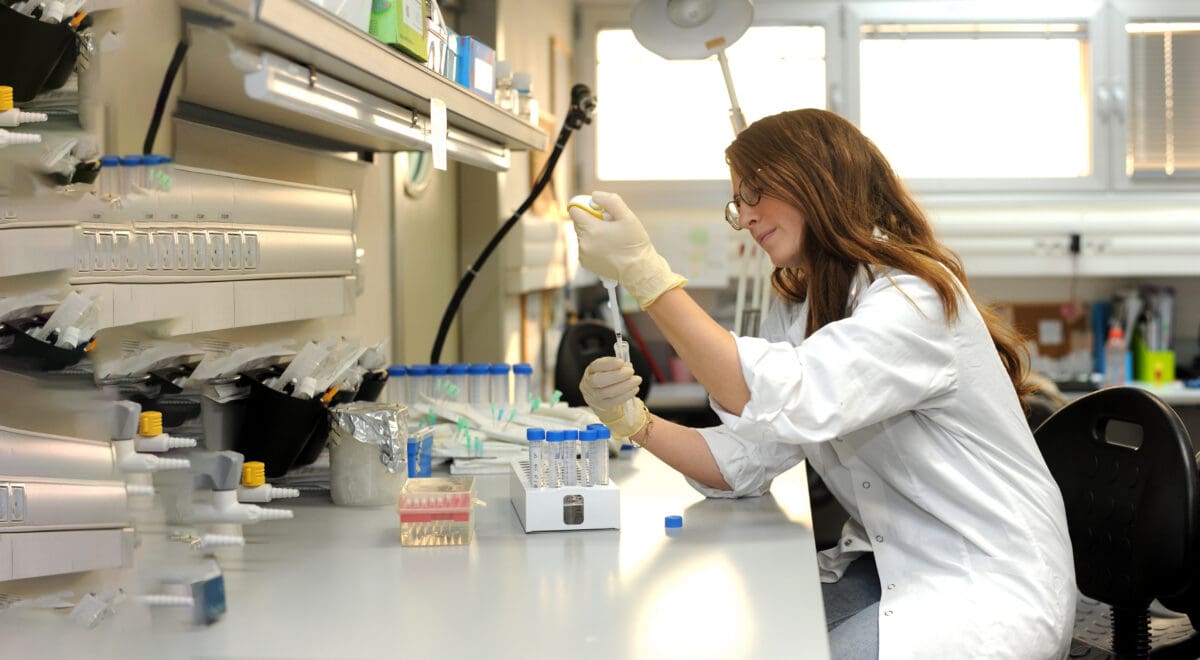
Nobel prize winners. Faculty on par with other world-class institutions like Harvard and MIT. A unique approach to learning and innovation that melds life sciences and engineering. The Technion is truly a force for good. Learn how the Technion’s approach to education and research is preparing the next generation of start-up leaders.
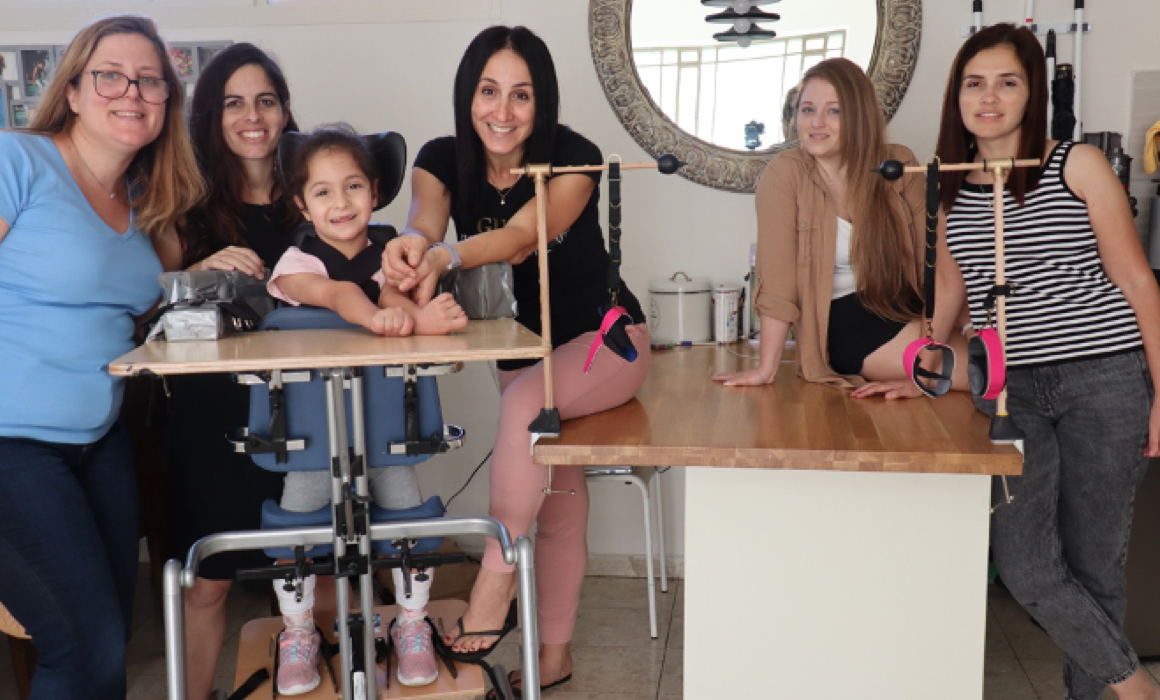
Pictured Above / (Left to right): Hadas Weizman, Sana Gur-Gelbard, Shani Zigman, Orit Zigman, Mor Heinrich, Marina Gabinski Six-year-old Shani has always yearned to draw, but her cerebral palsy has prevented her from lifting her hands independently for tabletop activities. In a heartwarming and inspiring turn of events, four students from the Technion’s Master’s of Industrial Design program teamed up with Shani’s mother to find a solution. They created an award-winning device that enables Shani to draw and eat independently for the first time in her life. “The importance of the device to Shani and the change it has made…

The joy of a baby coming into the world is accompanied by anxiety for this helpless little being, completely reliant on outside help to survive. This is magnified for a baby born preterm. Many premature babies with underdeveloped lungs require mechanical ventilation. The more prematurely the baby is born, the longer they will need artificial breathing. Using a 3D model of the babies’ upper airways, the research team of Professor Josué Sznitman, of the Technion Faculty of Biomedical Engineering, discovered that shear forces caused by the air jet from the mechanical ventilator can create stress and inflammation in the airway…
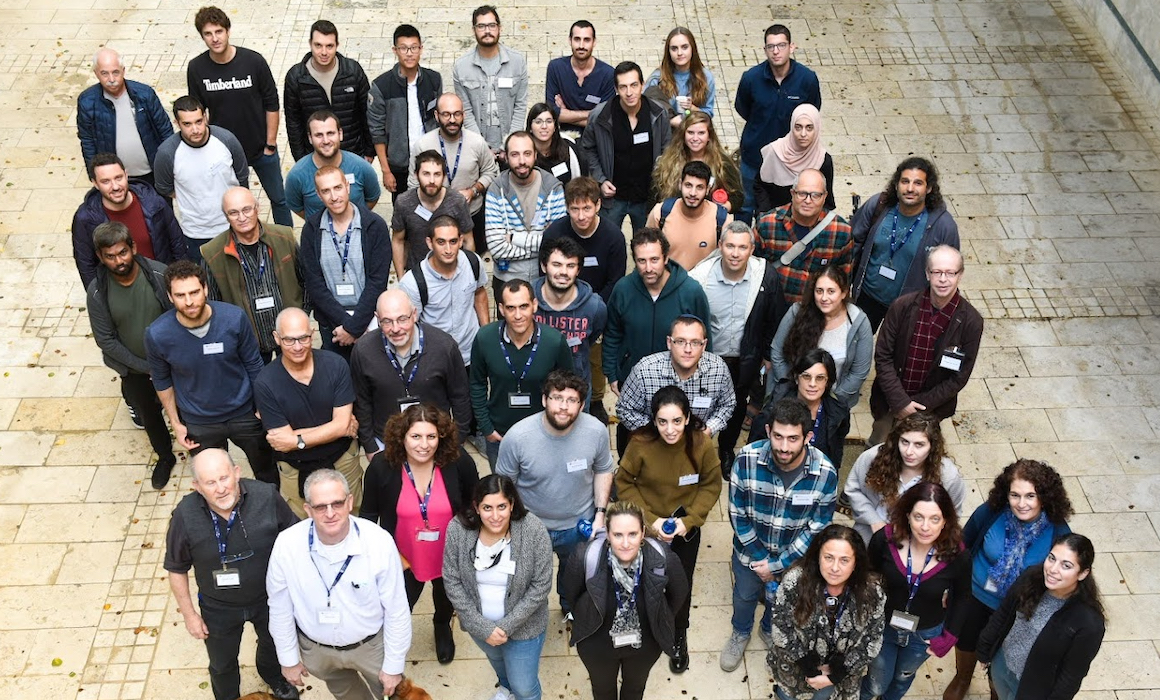
Pictured Above / 2021 GTEP Research Day participants. Every year, the Nancy and Stephen Grand Technion Energy Program (GTEP) invites graduate students to share their research during its Research Day. Prizes were awarded for the most innovative findings. Eliyahu Farber, who developed new methods for the precise production of porous carbon materials, shared the first prize. These porous carbon materials can be used in a variety of applications, including batteries, supercapacitators, and fuel cells. Inbal Offen-Polak also won first prize for research on low cost catalysts for urea oxidation, a useful process with applications in water treatment, hydrogen production, and…

Pictured Above / Technion researchers have developed a new method that harvests an electrical current directly from seaweed in an environmentally friendly and efficient fashion. Technion Ph.D. candidate Yaniv Shlosberg was walking on the beach one day when he noticed a rock covered by seaweed that looked like electrical cords. He had been researching a type of bacteria that obtained energy through photosynthesis and thought that maybe this sun-loving seaweed could also produce electrical currents. Using that common seaweed, called Ulva, as a source of energy, Shlosberg and a team of researchers from the Technion and the Israel Oceanographic and…
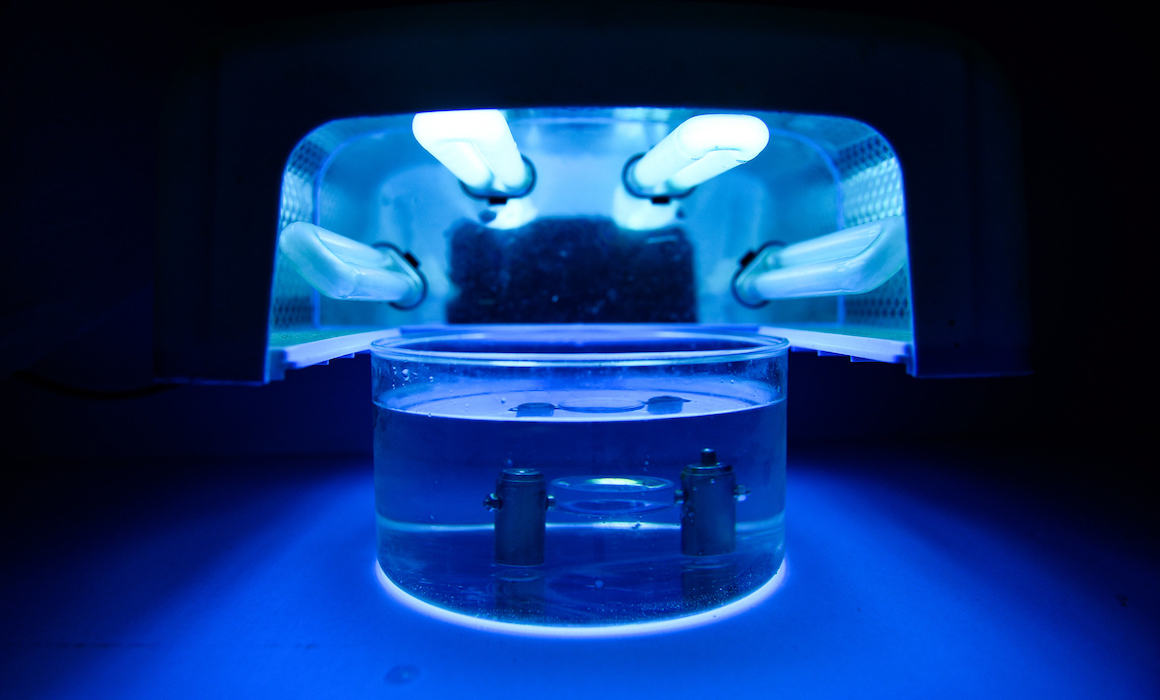
Technion researchers have developed a way to make optical lenses in a cost-effective way. It’s an innovation that could be a gamechanger for 2.5 billion people. It could transform space research. And it all started with a whiteboard and a marker. Although eyeglasses are cheap to make, in many parts of the world, they’re hard to come by. Yet without glasses, children find themselves struggling to follow along in the classroom. Adults lose their jobs because their vision has deteriorated so badly. Faculty of Mechanical Engineering members Professor Moran Bercovici and Dr. Valeri Frumkin became obsessed with this problem. How…

Pictured Above / BizTEC 2021 winners Team Defi (L to R): Prof. Ezri Tarazi , Ravit Abel, Idan Shenfeld, Alon Gilad, Yaron Arbel, Eyal Kellner, and Ohad Yaniv The Defi team, established by Technion students, won first prize and $10,000 in the BizTEC 2021 entrepreneurship competition, which took place in Tel Aviv. The prize was awarded to the team members for the development of a compact portable defibrillator, which is inexpensive and easy to use. Two teams took second place: BrainSense, which developed a system that monitors stroke events by identifying changes in brain activity and whose members are Technion…

Pictured Above / Dr. Shira Landau Researchers at the Technion – Israel Institute of Technology and Sheba Medical Center have developed a technology that can efficiently make custom-made functional aesthetic implants for patients with microtia, or congenitally deformed ears. Microtia is a birth defect that occurs when the external ear fails to develop normally, and as a result, is small and improperly formed. Microtia occurs in 0.1 to 0.3 percent of births. Occasionally, besides the aesthetic issue, microtia also involves hearing loss. Since the “bones” of the outer ear — the auricle — are in fact flexible cartilage and not…
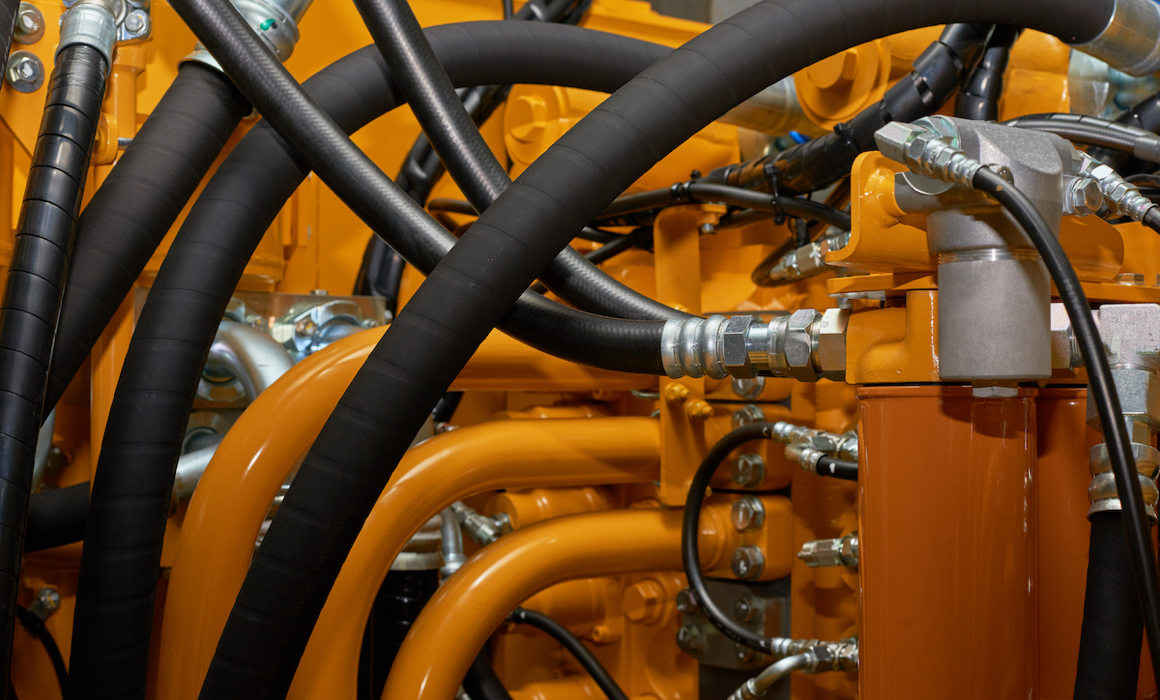
Every day, manufacturing companies face costly equipment failures. What if they could detect that leaky valve before it leaked? Alumni-founded Feelit Technologies Ltd. predicts and solves machinery problems before they happen — preventing potentially dangerous equipment failures and reducing the cost of manual inspections and production downtime associated with finding and fixing faults. Feelit technology is based on sensor-packed stickers printed with nanoparticle ink. When affixed to pipes, pumps, or valves, the sensors monitor pressure, temperature, vibration, leakage, wall integrity, thickness, and other industrial parameters. The data is then analyzed in the cloud in real time and sent back to…