Something Fresh in the State of Denmark
October 06, 2026



























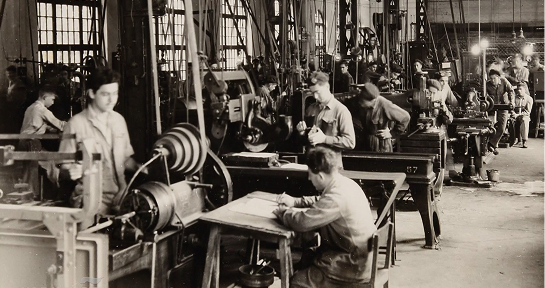
The Technion’s story has been intertwined with Israel’s for more than a century, from laying the foundations for a new nation to shaping its future.
Step inside Israeli innovation at the David and Janet Polak Visitors Center. Experience our 360° immersive movie and tech exhibition. Open to individuals and groups.
Learn More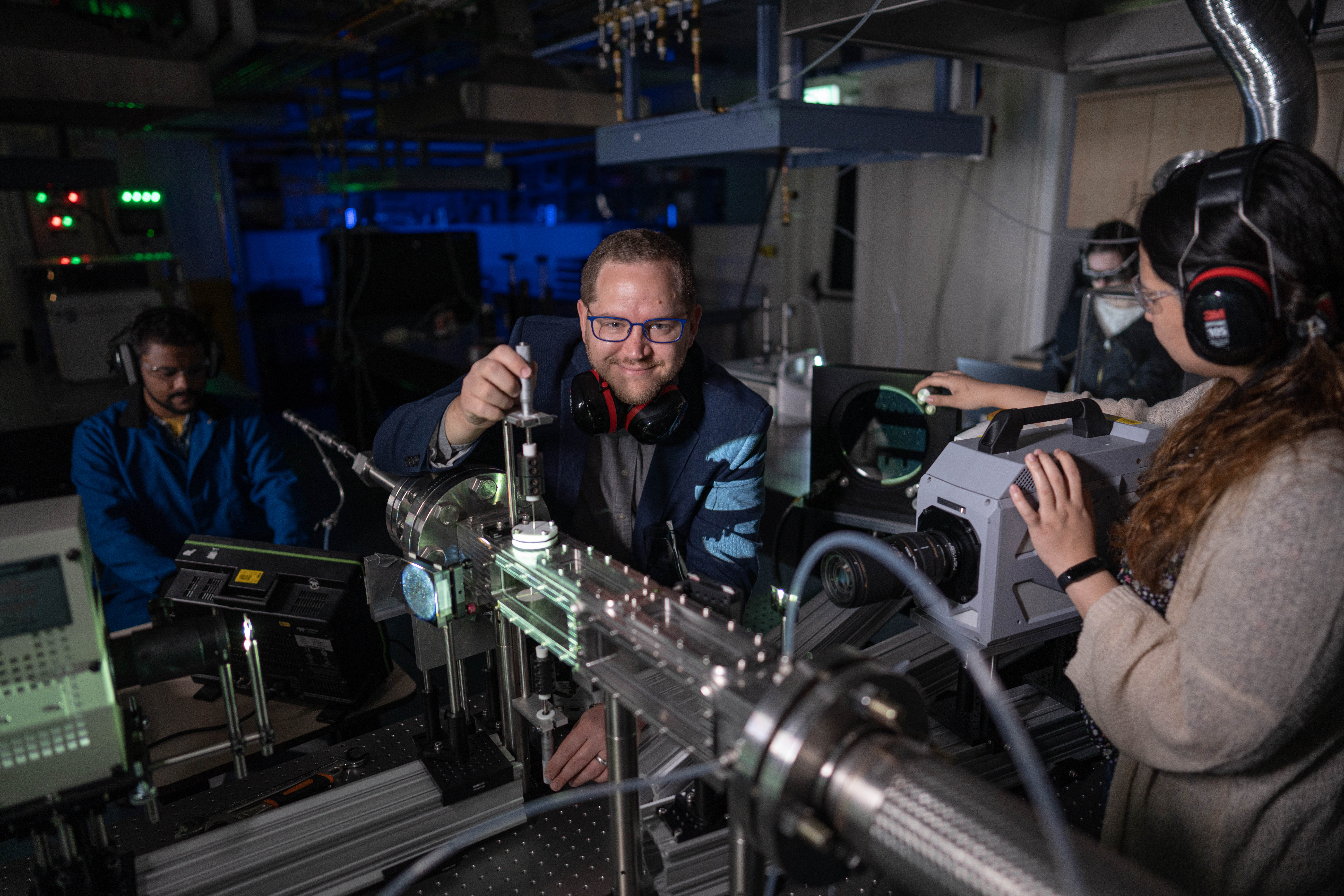

There’s nothing like a good night’s sleep, but that’s easier said than done. Now, a high-tech headband and accompanying app are helping put some sleep problems to bed. Israeli company NyX, co-founded in 2016 by Technion alum Ophir Orenstein, M.S. ’16, developed a comfortable, attractive headband that uses smart continuous-learning AI to automatically train your brain for optimum sleep. Other sleep aids use complicated training programs or things like guided meditation, said Orenstein, who is also the company’s chief technology officer. But NyX’s headband “talks” directly to the brain through neural signals. ”We cut out the middleman.” The headband is…

Mastering the ABCs of perspective, scale, and hand-drafting are only part of what it takes to become an architect. You also need teamwork, compromise, and social responsibility. That’s why Technion Assistant Professor Dan Price and teaching fellow Michal Bleicher of the Faculty of Architecture and Town Planning created Design-Build Studio 1:1 — a course that […]

Space is getting crowded. In addition to the thousands of satellites already orbiting Earth, about 14,000 new satellites are expected to be launched by the end of the decade. That translates into about 9,000 tons of space debris, says Igal Kronhaus, former Technion professor-turned-space-tech startup entrepreneur. It’s gotten so bad that the United States issued new regulations in 2022 that “won’t allow the launch of a satellite unless it has a convincing capability to move out of the way after five years from the end of the mission,” Kronhaus says.

Growing up in a kibbutz and working in agriculture from a young age, Adi Nir, founder of Israeli startup MetoMotion, left the fields, as many others did, to make a living in the tech industry. The widespread global shortage of fruit and vegetable pickers is what brought him back to his roots to develop the world’s first robot for picking tomatoes. Fewer and fewer people work in agriculture, which employs just 5% to 10% of the workforce in the European Union and euro area, and 6% in OECD countries, according to World Bank data. In Israel, only 1% of all…

The Fluidic Telescope (FLUTE) project team, jointly led by NASA and Technion – Israel Institute of Technology, envisions a way to make huge circular self-healing mirrors in-orbit to further the field of astronomy. Larger telescopes collect more light, and they allow astronomers to peer farther into space and see distant objects in greater detail. These next-generation large space observatories would study the highest priority astrophysics targets, including first generation stars – the first to shine and flame out after the Big Bang – early galaxies, and Earth-like exoplanets. These observatories could help address one of humanity’s most important science questions:…

One aspect of how industrial 3D printing works that is hard to grasp at first, is its ability to build parts inside of other parts. A metal 3D printer makes an object one hair-thin horizontal layer at a time. So imagine 3D printing an item like a chain. It’s constructed already linked in completely solid circles. By contrast, in traditional manufacturing, individual links are first straight, then bent, and joined together one at a time, which is slower, more labor intensive, and has weak points at each link. It’s the same age-old manufacturing principle for jewelry as it is for…
Technion aerospace engineers in collaboration with U.S. software giant PTC have created a 3D-printed micro turbojet engine in one piece — not an easy feat considering the complexity of the many moving parts in a traditional jet engine. While it is not the world’s first 3D-printed jet engine, Associate Professor Beni Cukurel and Dr. Ronen Ben Horin, a senior research fellow at the Technion and a VP of Technology at PTC, can lay claim to being the first to make the printed engine in a single, complete assembly. “This microturbine engine is meant to be an iconic part that demonstrates…

What are the big scientific discoveries that will emerge from the Technion in the next 100 years? Award-winning science correspondent and journalist Ira Flatow and three leading voices from the Technion – former Technion President Peretz Lavie, Professor Hagit Attiya, and Associate Professor Ido Roll – revealed the ingredients that make the Technion so exceptional. […]
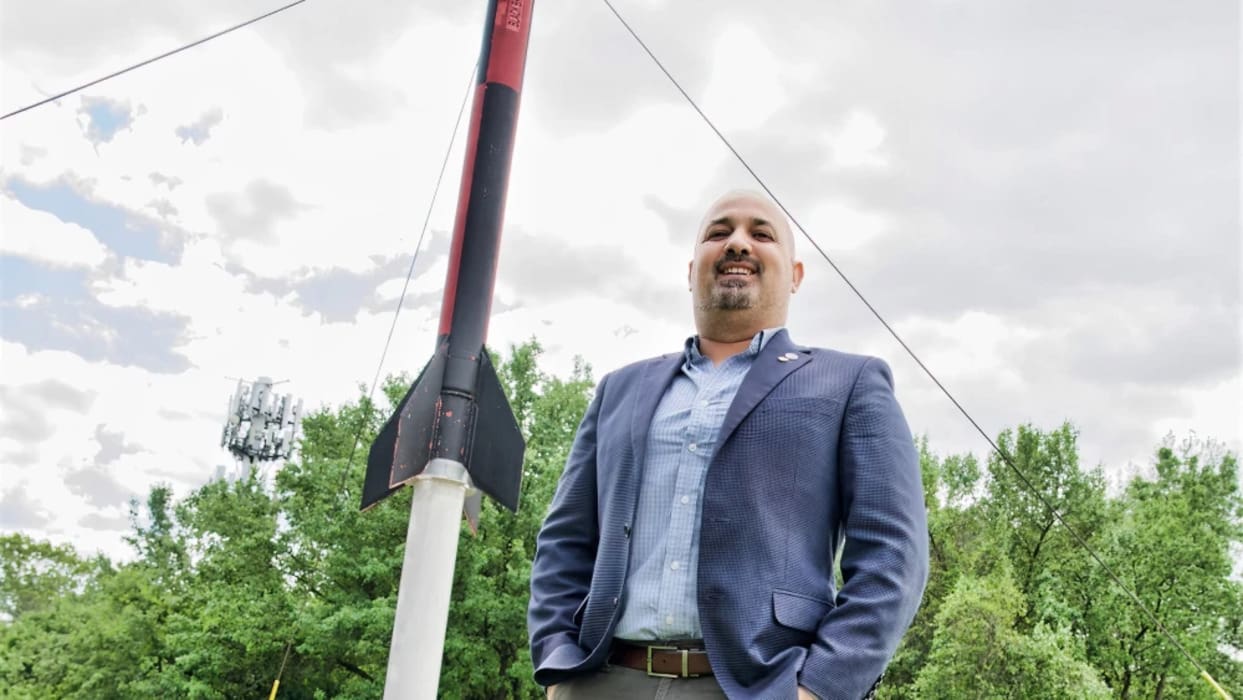
As a child growing up in Israel, Eliad Peretz was fascinated by space and the night sky. His goal, which he laid out in a five-year plan that he wrote as a fifth-grader, was to work for the organization whose mission was to address the big questions he wanted to pursue: the National Aeronautics and Space Administration. “I’m living my dream,” Peretz, who currently works at the NASA Goddard Space Flight Center in Greenbelt, Md., told JNS in a phone interview. On May 1, 2023, the American Technion Society will celebrate Peretz, a graduate of the Technion’s aerospace engineering faculty…

In this May 2023 discussion with American Technion Society donors, Associate Professor Beni Cukurel provides behind-the-scenes insights into the research and structure of the Faculty of Aerospace Engineering at the Technion — the only faculty of its kind in Israel. The faculty’s researchers still operate from the first building ever erected – more than 70 years ago – on the Technion’s main campus, making fundraising for a new building and faculty recruitment a priority for the Technion and Israel. Learn more about the impact of the Faculty of Aerospace Engineering here.

Smart glasses predicted by tech giants such as Google, Meta, and Apple could supplant smartphones in the next decade. Now, these industry titans have more competition in this up-and-coming market opportunity. New technology developed by startup Eyejets projects the screen directly onto the user’s retina – unlike previous designs, such as the Google Glass, that feature the screen’s image in the corner of the lens. According to Eyejets, the company’s EyeVis is the only product combining a virtual retinal display (VRD) system with novel eye-track technology that ensures the laser image projected is always within the center of the field…
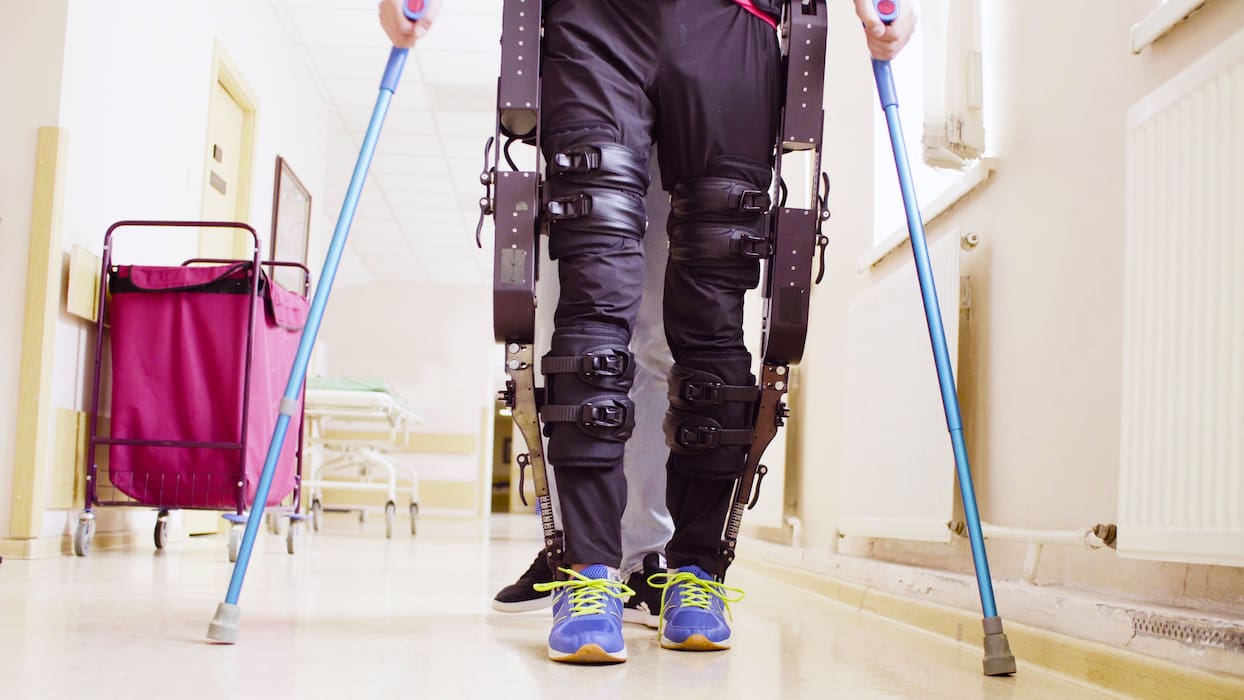
‘I can be a stand-up guy again’: Valley veteran regains ability to walk with new technology Richard Neider walks around Touchstone Rehabilitation with a big smile on his face. He has spent the past two months learning how to walk again with the use of the ReWalk Exoskeleton. “During Operation Iraqi Freedom I sustained a spinal cord injury that took my walking away,” Neider said. Life in a wheelchair was a big adjustment for Neider. Over the past 10 years, the Army veteran has learned to adapt – thinking he’d never walk again… until now.