Something Fresh in the State of Denmark
October 06, 2026























The Technion’s story has been intertwined with Israel’s for more than a century, from laying the foundations for a new nation to shaping its future.

Step inside Israeli innovation at the David and Janet Polak Visitors Center. Experience our 360° immersive movie and tech exhibition. Open to individuals and groups.
Learn More
The joy of a baby coming into the world is accompanied by anxiety for this helpless little being, completely reliant on outside help to survive. This is magnified for a baby born preterm. Many premature babies with underdeveloped lungs require mechanical ventilation. The more prematurely the baby is born, the longer they will need artificial breathing.
Using a 3D model of the babies’ upper airways, the research team of Professor Josué Sznitman, of the Technion Faculty of Biomedical Engineering, discovered that shear forces caused by the air jet from the mechanical ventilator can create stress and inflammation in the airway cells. Yet they also discovered an anti-inflammatory drug, commonly used to help asthma patients, can prevent the damage caused by the ventilator.
Approximately one in ten babies around the world is born prematurely. In high-income countries, most premature babies survive. But despite significant advances in the care of preterm babies and improved ventilation technologies, many suffer from lifelong disabilities of varied severity. One problem is offsetting adverse side effects of invasive mechanical ventilation. The impact of ventilation on patient health and the fundamental mechanisms causing damage is still not fully understood, which presents an obstacle to developing solutions.
In a study published last year in the Journal of the Royal Society Interface, Prof. Sznitman and (his then-doctoral student) Dr. Eliram Nof identified an airflow phenomenon largely unnoticed in medical literature: a jet structure originating in the tube inserted into the trachea during mechanical ventilation. Using a physical (fluid dynamics based) model, they discovered regions of elevated shear stress, potentially incurring damage to the epithelial cell lining of the respiratory tract. Calculations revealed significant risks of injury from these forces, especially worrisome if exposed for lengthy periods in fragile patients such as premature babies.
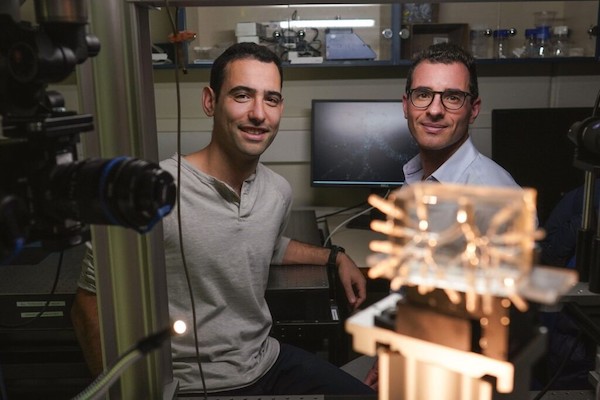
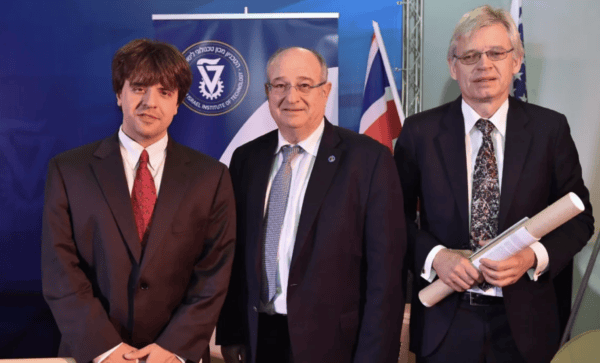
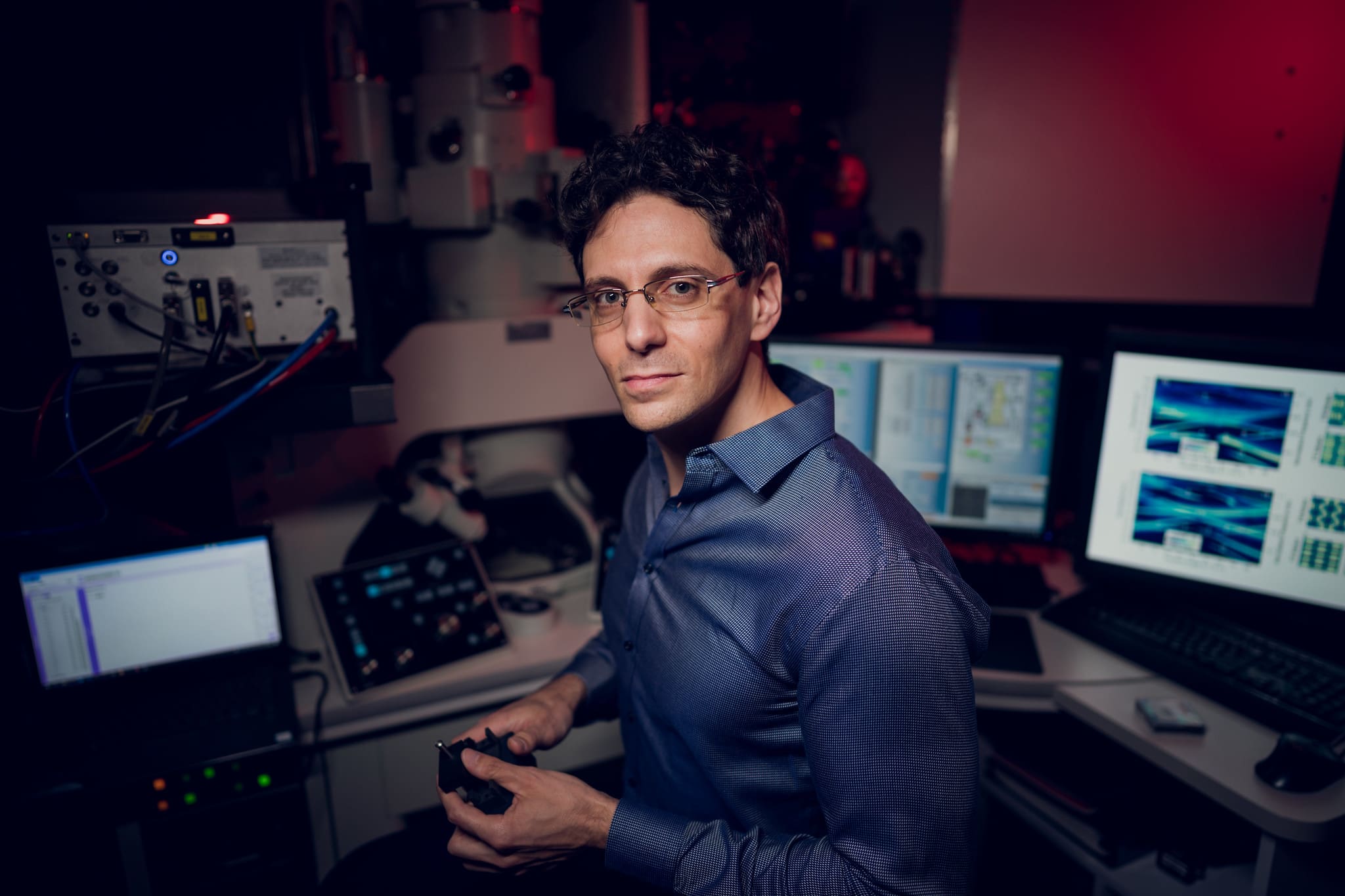
Dr. Eliram Nof (left) and Professor Josué Sznitman
In a follow-up study recently published in Bioengineering & Translational Medicine, the researchers tested their hypothesis in a new model featuring an artificial human lung epithelium. The team constructed a 3-D model of the upper respiratory tract, including the trachea and several branched airways. They cultured a layer of human lung epithelial cells in the model’s inner lumen, tracking their effects following mechanical ventilation. They found that the cells displayed stress and released cytokines, signaling proteins that influence inflammation.
The group then looked for means to mitigate or prevent the damage. The medication Montelukast, sold under the brand name Singulair, is commonly used in treating asthma patients. They found that topical delivery of the medication prior to starting mechanical ventilation considerably reduced cell death. It also altered the secretion of inflammation-related signaling proteins (cytokines).
Repurposing an existing, fully approved drug saves the vast resources and time required for developing new medication, allowing for faster and easier adoption in other clinical uses.
“Today, we know that artificial ventilation incurs various trauma to the respiratory system despite being an established, life-saving procedure,” explained Prof. Sznitman. “In the current study, we demonstrated in vitro the start of an inflammatory response at the core of morbidity in invasively ventilated infants. We linked the flow-induced shear stresses to inflammation by measuring cytokines, the messengers of the immune system, and tracking epithelial cell health.”
Applications Beyond Preterm Babies
Damage caused by mechanical ventilation, particularly prolonged mechanical ventilation, is not just observed in premature babies. When the COVID-19 epidemic began, countries were racing to acquire ventilators. Soon, however, patients requiring prolonged respiratory support were developing inflammation and dying. The findings of Prof. Sznitman’s group could improve their survival chances and help patients suffering from other conditions, such as COPD, that necessitate prolonged mechanical ventilation.
A New Approach to Medical Research
The methodology used by Prof. Sznitman’s group is of particular interest. Modeling the upper airways, they uncovered the mechanism of a deleterious effect and proposed treatment, all without necessitating animal studies. While animal testing cannot be eliminated from medical research entirely, advanced technologies permit scientists to use other means for earlier stages. Beyond reducing animal suffering, such methodologies permit scientists to obtain results faster, at a lower cost, and with reduced confounding factors, speeding up research.