Something Fresh in the State of Denmark
October 06, 2026


















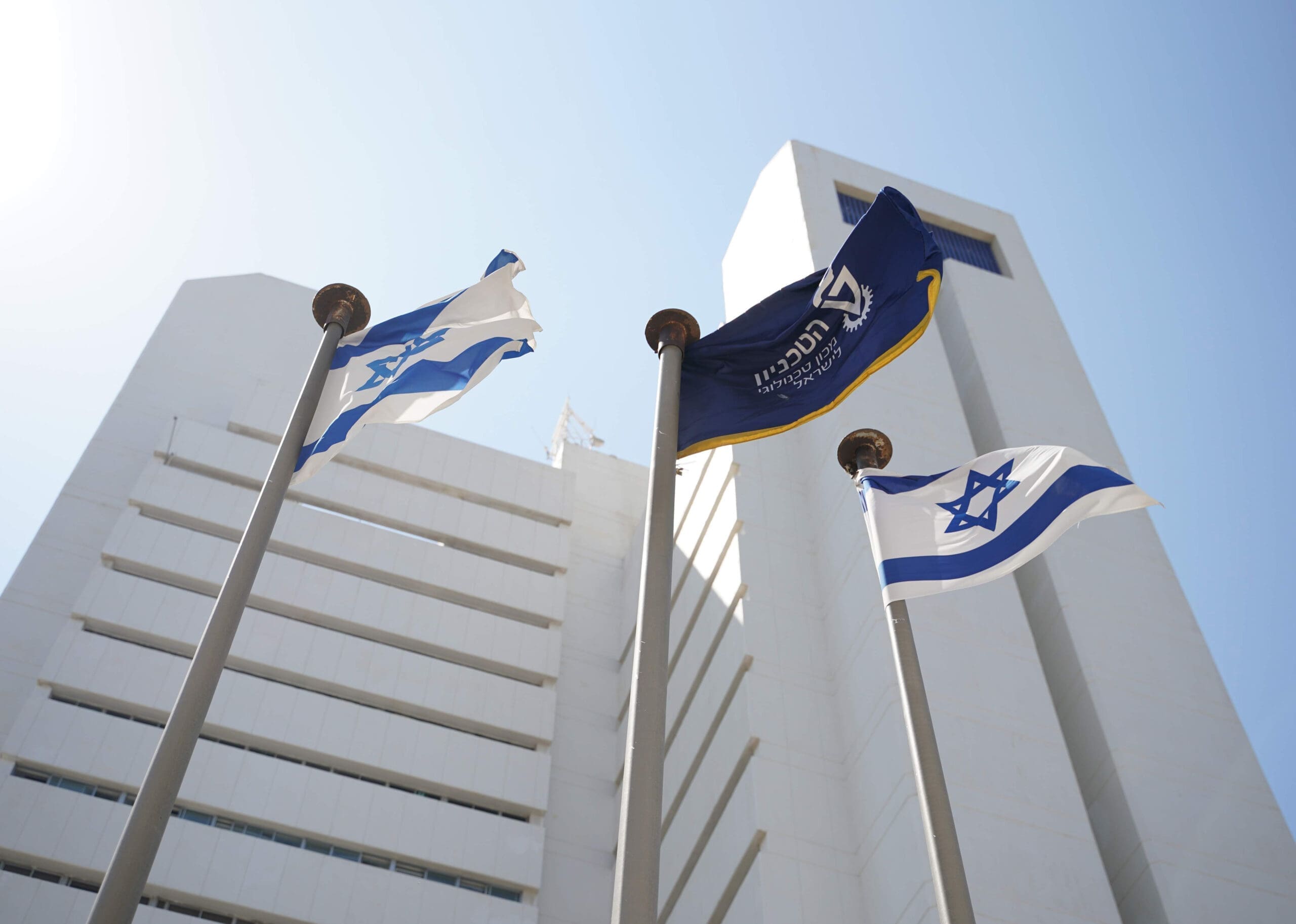








The Technion’s story has been intertwined with Israel’s for more than a century, from laying the foundations for a new nation to shaping its future.

Step inside Israeli innovation at the David and Janet Polak Visitors Center. Experience our 360° immersive movie and tech exhibition. Open to individuals and groups.
Learn More

What does it take to achieve a slender physique? In years past, individuals seeking to lose weight needed to spend hours sweating at the gym or subject themselves to chalky meal replacement shakes. Today, there is an easier way, found through a doctor’s prescription pad. A Technion alumnus has developed a medical solution that rivals […]

This is the 16th year that Calcalist has ranked the 50 most promising private technology companies in Israel. To compile the list, we consulted a number of prominent investors, consultants, and entrepreneurs active in the Israeli market. We asked participants to identify the fastest-growing startups with the greatest potential to make significant business moves in the coming year, with an emphasis on companies not yet included in rating agency portfolios. After weighing the data and the range of expert opinions, Calcalist’s high-tech reporters and editors—well-versed in the inner workings of the tech sector—compiled this year’s list of the 50 most…

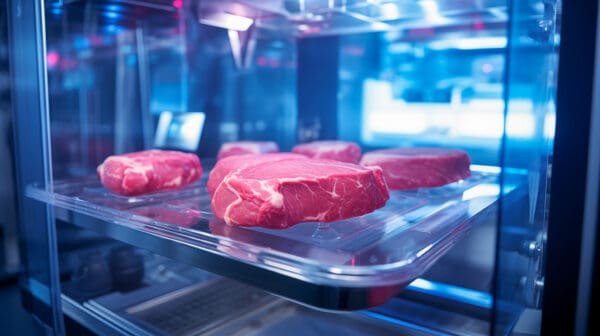
Alexey Tomsov is food technology lead at Redefine Meat, and a proud Technion alum. He’s our first guest from the exciting world of food-tech… If you don’t know about Redefine Meat, it’s an Israeli startup company that uses advanced technology, to develop and produce animal-free meat or “new meat” as they like to call it. […]

Entrepreneur Ifat Shterenberg Toledano was 30 weeks into her fourth pregnancy when she started feeling sudden excruciating pain in her pelvis and lower back. “Basically, I became disabled,” she tells ISRAEL21c. Her horrifying medical ordeal resulted in Shterenberg Toledano establishing Treat Me, a unique platform combining Western medicine, complementary therapies and cutting-edge research. Designed for practitioners, the platform leverages research-driven data and AI to personalize each treatment, improve patient outcomes and streamline care. It incorporates all integrative care methods, from more traditional treatments such as physiotherapy, to holistic ones such as Chinese medicine, naturopathy, reflexology and more.

AISAP, an Israeli medical startup pioneering AI-driven diagnostics, has been recognized as one of the world’s most innovative and promising companies for 2025 by Fast Company. The company secured fourth place globally in the healthcare category, a remarkable achievement that underscores the international recognition of its groundbreaking technology and its impact on the future of medicine. AISAP was founded by Adiel Am-Shalom, a former officer in Israel’s elite 8200 intelligence unit, alongside leading medical professionals: Professor Ehud Raanani, Professor Robert Klempner, and Professor Ehud Schwammenthal. The company has raised approximately $13 million in funding from investors including Harel Insurance, Shoni…

In 2019, Israel’s SpaceIL successfully launched its robotic lunar lander, Beresheet, into space. Although the vehicle crashed on landing, the mission made the Jewish state the seventh country to make a lunar orbit and the fourth country to attempt a soft landing on the Moon. Despite that impressive achievement, Israel is not exactly synonymous with space exploration or even deep-space technology, although it does have an active space-tech sector in areas such as surveillance satellite development. Experts say now is the time to accelerate deep-space efforts because this area is expected to become significant in the upcoming decades.

Noam Azran is a real live cowboy. He spent a decade on horseback patrolling the vast cattle ranches of California and Argentina. And now he heads an Israeli tech startup that uses drones — instead of traditional cowboys — to monitor the welfare of millions of cows. BeeFree Agro has just delivered its first fleet of “autonomous flying cowboys” to a paying customer. They’re the eyes in the sky that will transform the way the world’s beef cattle are farmed, says Azran. “I find it hard to believe in 10 years from now there will be commercial livestock growers who…

Nora Nseir, the founder and co-CEO of Nurami Medical, knows that the Haifa-based biomed company’s groundbreaking product may not seem particularly impressive at first glance. It looks like a plain white bandage, just 5 cm in width and length, but if everything goes according to plan, it could fundamentally change the way doctors treat brain and spinal cord injuries. The product’s ability to regenerate meningeal tissue after complex neurological surgeries sets it apart. So far, $16 million has been invested in Nurami, and the company is now completing another funding round—this time for $30 million. There is still a long…

Israeli entrepreneur and investor Shmulik Bezalel has traveled the world and donated funds for research to find a treatment for his son Itay who has low-functioning autism spectrum disorder. Itay is one of 254 million children and adults worldwide struggling with neuropsychiatric disorders without a suitable treatment. Recognizing the limited therapeutic options for neuropsychiatric disorders, Bezalel teamed up with serial entrepreneur Boaz Goldman and neuroscientist Dr. Nisim Perets, and in 2021 founded an Israeli biotech startup with the vision to generate a simulation of the brain and test the efficacy of drugs. That startup, Itay & Beyond — named after…

“Fat is flavor” is a well-known culinary principle. But nutritional research suggests consuming too much animal fat may be a factor in the development of many health conditions from dementia to male infertility to Crohn’s disease. A cutting-edge plant protein-based fat solution, Fatrix, will soon go into commercial production to help food manufacturers reduce total fat and especially saturated fat content. The product’s developer, Israeli food-tech startup Gavan Technologies, has raised $8 million in a Series A round led by MoreVC of Israel with participation from Lever VC; EIT Food, a European Union-supported platform for sustainable food innovations; and DarkBoot…

Israeli clean-tech startup W-Cycle has partnered with Brazilian company Melhoramentos to develop a new compostable food packaging material that fully decomposes within 100 days. The strategic partnership aims to create an ecofriendly alternative to single-use plastics that can withstand extreme temperatures and provide robust food containment. W-Cycle’s proprietary material, SupraPulp, is made from agricultural waste products like sugarcane bagasse, eucalyptus wood fibers and banana leaves. The packaging is oil- and water-resistant and can endure temperatures ranging from minus -40°C to 220°C, making it suitable for freezer-to-oven use without requiring plastic lamination.

Without a crystal ball, it’s impossible to predict with absolute certainty the outcome of any legal process. But AI is getting pretty close. A startup in Israel has developed an algorithm that is currently 85 percent accurate in assessing liability and in predicting how a case will conclude. That number will only increase as the AI handles more cases. “Litigation is a very unknown territory,” says Yariv Lissauer, CEO at Haifa-based Canotera and a former lawyer with vast experience in the startup world. “There are a lot of unknowns, a lot of complications, a lot of regulations and decrees. But…