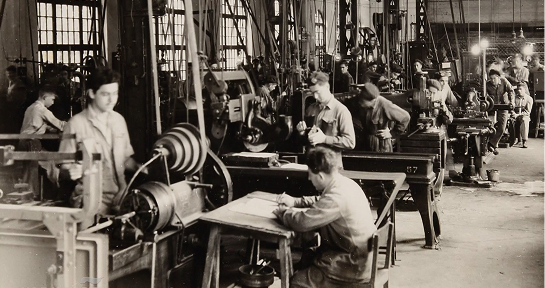
The Technion’s story has been intertwined with Israel’s for more than a century, from laying the foundations for a new nation to shaping its future.
From medicine to security, explore how the Technion is advancing Israel and improving lives around the world.
View All Impact Areas
Explore stories, news, insights, and data across articles, videos, and podcasts.
view all content types
students
of the student body are Arab Israeli
in Israel and Europe for research on artificial intelligence
The Technion’s story has been intertwined with Israel’s for more than a century, from laying the foundations for a new nation to shaping its future.
Explore ATS, the Technion, and the people behind the breakthroughs redefining what's possible for Israel and the world.
Learn More About ATSATS is a community of supporters, innovators, and champions of possibility united by one mission: transforming Israel and the world through science and discovery.
Learn MoreFor more than 100 years, the Technion has been Israel's technological engine and leading driver of innovation, technology, and entrepreneurship, transforming ideas into impact.
Learn More
Step inside Israeli innovation at the David and Janet Polak Visitors Center. Experience our 360° immersive movie and tech exhibition. Open to individuals and groups.
Learn MoreFrom medicine to security, explore how the Technion is advancing Israel and improving lives around the world.
View All Impact AreasExplore stories, news, insights, and data across articles, videos, and podcasts.
view all content typesDiscover ways to support, connect, and help drive innovation.
Get InvolvedExplore ATS, the Technion, and the people behind the breakthroughs redefining what's possible for Israel and the world.
Learn More About ATS
A friend calls with the news she was just diagnosed with COVID-19. You had dinner with her last night, and suddenly you start coughing, feel flu-like symptoms, and your fever spikes. What’s going on? Are you coming down with the virus or are your symptoms psychosomatic?
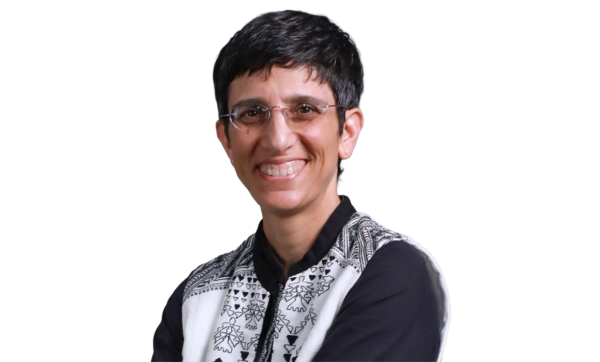
You test negative. Yet Technion Associate Professor Asya Rolls (opens in a new tab) wonders — can the brain induce an actual disease?
In a recent study involving mice published in Cell, Prof. Rolls and a team of researchers showed that not only can the brain make the body sick, but just as the brain remembers people, places, and smells, it stores “memory traces” of the illness. Moreover, reactivating that memory is enough to reawaken past immune system responses.
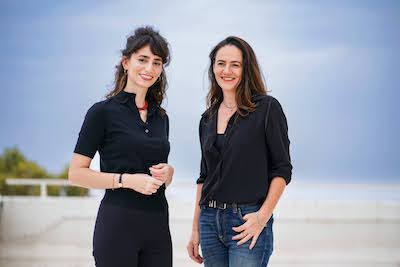
Prof. Rolls and M.D./Ph.D. student Tamar Cohen, with scientists from the University of Haifa and EMMS Hospital in Nazereth, first induced colitis, or inflammation of the colon, in laboratory mice. They found that brain cells became active in several regions, including the insular cortex, responsible for sensory perceptions. The team waited for the mice to recover and then injected them with a drug that artificially reactivated the insular cortex brain cells. Sure enough, inflammation re-emerged in the exact same location even though there was no infection, demonstrating that the brain remembered the infection and told the immune system to fight.
“I was surprised to see the effect so clearly, with inflammation starting soon after neurons were activated, even though there was no pathogen or other physical trigger,” said Rolls.
November 15, 2021
Uncover how the brain remembers illness and can trigger immune reactions, influencing overall health and wellness.
2 mins
X (opens in a new tab) / Facebook (opens in a new tab) / LinkedIn (opens in a new tab) / Email / Copy Link
What if diagnosing cancer, Parkinson’s disease, or other serious illnesses could be as simple as breathing into a handheld device? That possibility is moving closer to reality thanks to the work of the Technion’s Prof. Hossam Haick, whose groundbreaking research is changing how diseases are detected around the world. In recognition of his extraordinary achievements, […]
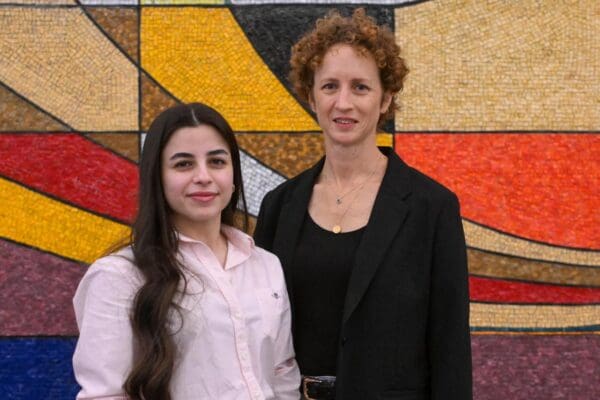
Every year, the European Research Council (ERC) identifies some of the world’s most promising early-career researchers and gives them the freedom to pursue bold ideas. This year, two of those ideas came from the Technion – Israel Institute of Technology. From cancer research to artificial intelligence (AI), breakthroughs that shape the future often begin with […]
As more people turn to AI chatbots for companionship, life advice, or even as a stand-in for therapy, experts say the technology offers both new opportunities and risks when it comes to mental health. Prof. Tanzeem Choudhury is the chief of health innovation in the Joan & Irwin Jacobs Technion-Cornell Institute and has been studying AI and mental health for 15 years. She said AI tools are available any time, often at low cost, making it easier for people to access some form of mental health support.
Stay on top of the latest breaking scientific discoveries from Israel and the Technion. Subscribe to the ATS newsletter.