Something Fresh in the State of Denmark
October 06, 2026


















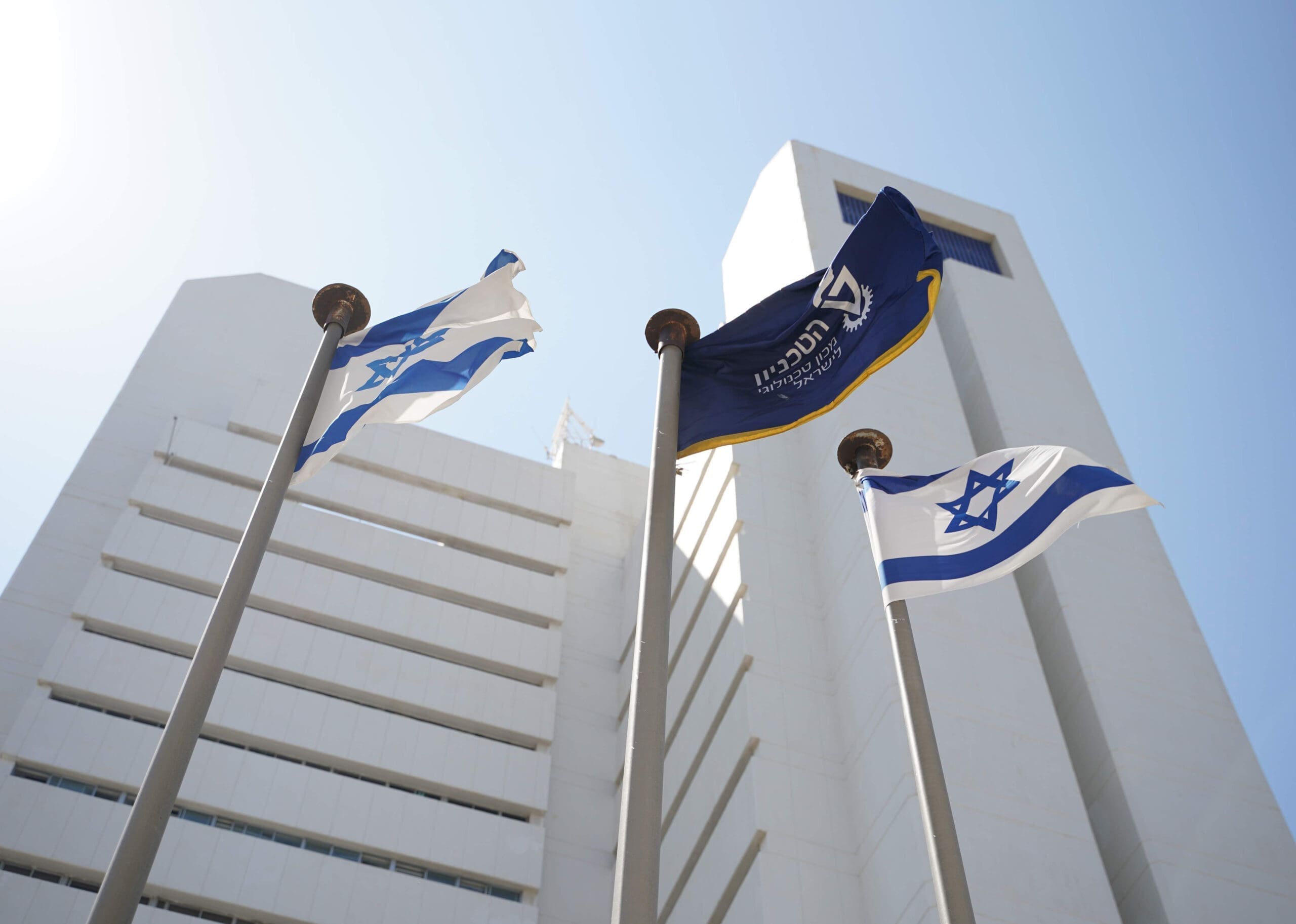





The Technion’s story has been intertwined with Israel’s for more than a century, from laying the foundations for a new nation to shaping its future.

Step inside Israeli innovation at the David and Janet Polak Visitors Center. Experience our 360° immersive movie and tech exhibition. Open to individuals and groups.
Learn MoreA member of the Schulich Faculty of Chemistry, Distinguished Prof. Marek directs the Stewart and Lynda Resnick Sustainability Center for Catalysis, which aims to develop new catalysts needed for the production of food, fuel, medicine, and other critical products. Through this research, the Center promises to enable humankind to meet its growing needs more efficiently while lessening the negative impact on nature. Distinguished Prof. Marek has pioneered new methodologies to connect carbon atoms that efficiently prepare highly sophisticated molecular backbones (the building blocks of life) found both in living creatures and in synthetic materials. The methods he develops dramatically minimize…
Prof. Tomer Michaeli’s research interests focus in the areas of computer vision; machine learning; signal processing, and image restoration, generation, and manipulation. Working with Technion researchers from biomedical engineering and nanotechnology, he helped develop DeepSTORM3D — a microscopic method that allows scientists to map the biological processes of living cells at super resolution. Microscopes as a rule produce two-dimensional images. Currently, 3D images are obtained through layer scanning and computerized integration, but the process is problematic and requires a long scanning time. DeepSTORM3D harnessed Prof. Michaeli’s expertise to develop an artificial neural network capable of producing 3D images from microscopy…
Assistant Professor Alon Grinberg Dana was the first student enrolled in GTEP’s interdisciplinary graduate studies program, and came full circle when he joined the Technion faculty in September 2020. He conducted postdoctoral work at MIT, where he carved out a niche in developing novel and scalable, low-carbon energy alternatives to address the global environmental crisis. His laboratory in the Wolfson Department of Chemical Engineering focuses on the challenge of quantitatively predicting the reactivity of various chemical systems over time, with applications such as predicting pollutant levels in alternative fuels or predicting the shelf life of a new drug. Using computational…
He works in the area of catalysis, discovering new molecules and materials to speed up chemical reactions. In his independent career, he received the Thieme Chemistry Journals Award in 2022, which recognizes promising early career researchers worldwide. In the same year he was selected by The Marker magazine as one of the 40 under 40 most promising young people in Israel. Born in the Netherlands, he received his bachelor’s and master’s degrees in chemistry at Leiden University. He furthered his master’s studies and obtained a Ph.D. at the Weizmann Institute of Science. Following post-doctoral work at the California Institute of Technology,…
As executive vice president for research from 2019 to 2023, he made significant progress to boost ties between the Technion and industry. He oversaw the coordination and development of research contracts with funding agencies and industry, new collaborative research agreements, research prizes, and ethics in research. As part of this leadership role, he helmed the Technion’s tech transfer commercialization office, Technion Technology Transfer (T3). He also served as CEO of the Technion R&D Foundation (TRDF), a subsidiary that serves as the administrative and financial framework for research activities, scientific experiments, and technical analyses. As a mathematician, Prof. Rubinstein focuses on…
Assistant Professor Yonatan Savir ’04 heads a lab in the Technion’s Rappaport Faculty of Medicine that studies information processing in biological systems and its failure in aged cells. His interdisciplinary research has led to unique algorithms that extract precise data from inexpensive thermal imaging cameras — technology that was used in his COVID-19 device. He […]
Prof. Ein-Eli graduated from Bar-Ilan University (1995). He joined the Department of Materials Engineering at the Technion in 2001 after serving three years as the VP of R&D of Electric Fuel Ltd. (Israel). Before that, he was a post-doctoral fellow (1995-1998) at Covalent Assoc. Inc. (MA, USA). He served as Dean of the Department of Materials Science and Engineering for four years, between 2018 and 2021. Current research projects of Prof. Ein-Eli in the field of power sources involve advanced materials for Li-ion batteries, alkaline batteries, metal-air cells, and fuel cells. He is also engaged in research and development of electroplating…
Daniel Orenstein is Associate Professor in the Faculty of Architecture and Town Planning at the Technion – Israel Institute of Technology and Faculty Advisor to the Technion’s Sustainability Hub. He holds a master’s degree in desert ecology from Ben Gurion University, and a Ph.D. in interdisciplinary environmental studies from Brown University. Prof. Orenstein is a social ecologist, studying human interactions with nature, cultural ecosystem services, and integrating scientific research with policy and management. He serves on the science committee and central coordinating committee of the European Long-Term Ecosystem Research Infrastructure, a network of over 800 ecosystem observation sites across Europe…
Prof. Jackie Schiller’s work in the Rappaport Faculty of Medicine and the Allen and Jewel Prince Center for Neurodegenerative Disorders of the Brain seeks to understand the brain’s largest and most complex structure, the cerebral cortex, and its links to Parkinson’s disease, epilepsy, autism, and more. The cerebral cortex is responsible for our most basic sensory and motor functions as well as the higher functions of learning, memory, and emotions. Researchers in the Cortical Computation Lab bearing her name focus on how information is processed, changed, and stored in the neurons of the brain’s cortex. Conducting experiments in learning and…
Prof. Shima’s research interests focus on the guidance of vehicles, mainly aerial, operating individually or as a team. The interdisciplinary work of CASY scientists spans from cooperatively planning and guiding spacecraft with regard to optimizing and following their trajectories, and low-level control of a single vehicle. Their work seeks to devise new algorithms and strategies for performing both cooperative and individual tasks. Prof. Shima received all three degrees from the Technion, earning his Ph.D. in 2001, and an MBA from Tel Aviv University. He joined the Technion in 2006 and founded the CASY lab. From 2020 to 2023, he was…
Prof. Gurfil’s research focuses on astrodynamics, distributed space systems, trajectory optimization, celestial mechanics, and satellite dynamics and control. His research lab, DSSL, comprises an interdisciplinary group of researchers including graduate students from the Technion and abroad. In early 2021, the Adelis-SAMSON project intends to launch three autonomous nano-satellites into space, which will fly in a controlled formation for the first time ever. ASRI collaborated with industry to create a sophisticated system that can accurately pinpoint the location of distress signals from Earth for search and rescue missions, along with other applications such as environmental monitoring. Prof. Gurfil received all three…