Something Fresh in the State of Denmark
October 06, 2026





























The Technion’s story has been intertwined with Israel’s for more than a century, from laying the foundations for a new nation to shaping its future.

Step inside Israeli innovation at the David and Janet Polak Visitors Center. Experience our 360° immersive movie and tech exhibition. Open to individuals and groups.
Learn MoreProf. Raveh focuses her work in the area of aeroelasticity, the interaction between aerodynamic forces and flexible structures. In an attempt for green aviation, new aircraft designs are lighter and more flexible, and thus experience aeroelastic phenomena that must be controlled. To that end, she and her students built a 3D-printed unmanned aerial vehicle (UAV) that will serve as a platform for aeroelastic experimentation. Their A3TB, Active Aeroelastic Aircraft Testbed, will help reach the goal of designing aircraft that are lightweight and have a large wingspan, reducing drag forces to cut energy consumption and pollution. Its maiden May 2020 test…
Prof. Shaked’s lab pioneered the term “host response to anti-cancer drugs”— a patient’s response to cancer treatments, which may explain therapy resistance and cancer metastasis. He found that anti-cancer drugs, including chemotherapy, radiation, surgery, targeted drugs, and even immunotherapy, can contribute to cancer cell resistance or spread by provoking the body to protect its cancer cells from the toxic effects of treatments. This research has paved the way for new combinations of cancer treatments that block the body’s protective patterns, increase therapeutic outcome, and further support precision medicine in oncology. Prof. Shaked founded the company OncoHost, a next-generation leader in…
Professor Ciechanover – together with Technion Distinguished Research Professor Avram Hershko and the late Dr. Irwin Rose of Fox Chase Cancer Center in Philadelphia – was awarded the 2004 Nobel Prize in Chemistry for the discovery of ubiquitin-mediated protein degradation, the process by which the body destroys proteins that are no longer useful. That research has led to the development of several anti-cancer drugs including Velcade® and an entire family of Immunomodulatory drugs. Along the years it has become clear that ubiquitin-mediated proteolysis plays major roles in numerous cellular processes, and aberrations in the system underlie the pathogenetic mechanisms of many…
Assistant Professor Nicola Dell’s research spans Human-Computer Interaction (HCI) and Information and Communication Technologies for Development (ICTD) with a focus on designing, building, and evaluating novel computing systems that improve the lives of under-served populations in low income regions. Prof. Dell’s research and outreach activities have been recognized through several awards and fellowships, including a Graduate Facebook Fellowship and a Google Anita Borg Scholarship. She was born in Zimbabwe and received a B.Sc. in Computer Science from the University of East Anglia (UK) in 2004, an M.S. and Ph.D. in Computer Science and Engineering from the University of Washington in…
One of Israel’s rising stars in the areas of chemical and biomedical engineering and nanotherapeutics, he has received more than 15 national and international excellence awards. His research group in Wolfson Faculty of Chemical Engineering develops biomimetic nanoparticles to treat neurodegenerative pediatric diseases, brain injuries, and multiple cancers. He has developed various novel drug delivery systems, each aiming to deliver different treatments and target different diseases. One such system, dubbed “nano-taxis,” are tiny, nature-mimicking vesicles that carry medication such as mRNA directly to targeted neurons, without being destroyed or changed en route, to potentially revolutionize various treatments and drug delivery….
Mor leads a research group looking at topics at the intersection of technology, media and democracy. The group applies multidisciplinary techniques — from machine learning to qualitative social science — to study our information ecosystem and its challenges, with a special focus on AI-mediated communication and its impact on society. Previously, Mor was on the faculty at the Rutgers School of Communication and Information, led a research team at Yahoo! Research Berkeley, and received a Ph.D. in Computer Science from the Stanford University InfoLab. He also played professional basketball for Hapoel Tel Aviv. He is a former startup co-founder, and…
Prof. Kaminer is a physicist and electrical engineer who studies the frontiers of photonics, quantum optics, and laser-driven electron acceleration, using both theoretical and experimental methods. His AdQuanta Lab established the foundations of quantum electrodynamics with photonic quasiparticles, and his discoveries predict new phenomena that yield physical situations not encountered in natural settings. His research combines use of an electron microscope with a femtosecond pulsed laser, which is the first system of its kind in Israel and one of just a few in the entire world. The system’s spatial and temporal resolution is 10 times better than conventional microscopes, providing…
The Geva-Zatorsky lab, established nearly three years ago, studies the interaction of gut microbes and the host immune system in health and disease. She has characterized the host response to a variety of intestinal microbes and has developed an approach that fluorescently labels the microbes to visualize them live inside organisms. Other research projects in her lab focus on antibiotic-resistant bacteria; the emerging field of the gut-brain axis, which explores the interaction between intestinal bacteria and the brain; and how gut bacteria can be used for cancer prevention and treatments. Since the COVID-19 pandemic took hold, many of the researchers…
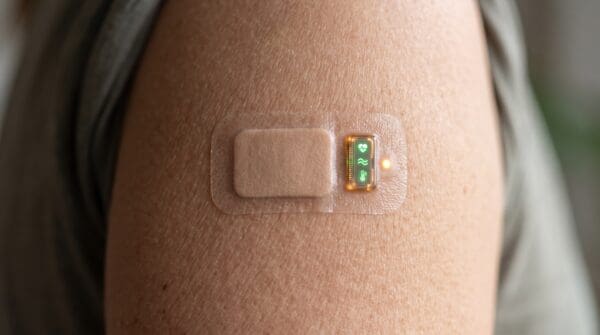
Prof. Haick’s research focuses on artificial olfactory systems based on nanosensors, the screening and diagnosis of disease via breath and tissue samples, volatile biomarkers, and molecule-based electronic devices and sensors. He has developed an artificially intelligent nanoarray that can sniff out more than 17 diseases in a person’s breath, including various types of cancer, chronic and acute kidney disease, Parkinson’s and Alzheimer’s diseases, and more. The technology aids in providing personalized diagnoses and helps to tailor personalized treatment. As a complementary tool, Prof. Haick and his team have developed “smart patches” that imitate human skin, simultaneously sensing pressure, humidity, and…
Professor Eyal Zussman made media headlines recently as the inventor of the “Maya” sticker, one of the Technion’s earliest and most successful developments in the fight against COVID-19. The unique sticker consists of nanofibers coated with antiseptics to trap and kill the coronavirus on the spot. The sticker, made by a 3D printer, was adopted by the COVID-19 National Emergency Team of Israel’s Defense Ministry, developed in conjunction with the Galilee Medical Center in Nahariya, and is currently in production at the Dykam paper plant on Kibbutz Ein Harod. As of mid-August, Dykam was manufacturing 5,000 stickers per day and…
Soil and water contamination, caused by industrial activity, agricultural practices, and improper waste disposal, can lead to a variety of environmental and health problems. Prof. Radian’s team in the Soil and Environmental Chemistry Lab designs advanced material based on natural particles such as clays, that can absorb and degrade pollutants in natural and engineered systems. She recently developed an efficient technology for cleansing drinking water of perfluoroalkyl and polyfluoroalkyl substances (PFAS), which have been linked to various health risks. Previously, she collaborated with Biotechnology and Food Engineering Professor Ayelet Fishman to develop and patent technology to purify industrial wastewater from…
Prof. Fishman and her team address consumer interest in healthy foods and protein alternatives that do not rely on animal sources. Her research mainly centers on green chemistry using natural biocatalysts, alternative proteins as meat replacements, and fermentation technology. For example, she has experimented in developing vegan gels used to produce chocolate pudding or gummy bears with the same texture as their animal-based counterparts, and with less sugar and oil and higher protein content. Her group also conducts soil and water research. Working with the Technion Faculty of Civil and Environmental Engineering, she helped develop an innovative, patented technology to…