Something Fresh in the State of Denmark
October 06, 2026






















The Technion’s story has been intertwined with Israel’s for more than a century, from laying the foundations for a new nation to shaping its future.

Step inside Israeli innovation at the David and Janet Polak Visitors Center. Experience our 360° immersive movie and tech exhibition. Open to individuals and groups.
Learn MoreDr. Kira Radinsky is a visiting professor at the Technion Department of Computer Science. She is also the chair and CTO of Diagnostic Robotics, which harnesses artificial intelligence technologies to make health care better, cheaper, and more widely available. She is the cofounder of SalesPredict, which was acquired by eBay in 2016, and has served as eBay’s director of data science since 2016. Dr. Radinsky specializes in the field of medical data mining. She has developed predictive algorithms that recognized the early warning signs of globally impactful events such as political riots and disease epidemics. As a visiting professor at…
Moti Segev is the Robert J. Shillman Distinguished Professor of Physics at the Technion. He received his B.Sc. and Ph.D. from the Technion in 1985 and 1990. After his postdoc at Caltech, he joined Princeton as an assistant professor in 1994, becoming associate professor in 1997 and professor in 1999. Subsequently, Prof. Segev went back to Israel, and in 2009 was appointed as Distinguished Professor. Prof. Segev’s interests are mainly in nonlinear optics, photonics, solitons, sub-wavelength imaging, lasers, quantum simulators, and quantum electronics. He has won numerous international awards, among them the 2007 Quantum Electronics Prize of the European Physics…
At the Technion, he heads the Center for Security Science and Technology (CSST) and the Peter Munk Advanced Defense Research Institute (ADRI). The institute’s mission is to advance the development of novel defense-related concepts and technologies; to foster collaboration among defense authorities, governmental institutions, industry, and academy researchers; and to educate the next generation of engineers and scientists who will play leading roles in Israel’s defense ecosystem. Brig. Gen. (res.) Prof. Nagel heads and teaches a master’s program for military officers on defense R&D strategy and policy, and systems engineering. His most recent government appointment was chairing the “Nagel Committee,”…
Prof. Grobman’s work focuses on performance-oriented architectural design, sustainable design, and the use of computers to develop innovative tools in architectural design and fabrication. His Technion Computer Oriented Manufacturing Lab, within T_CODE, is equipped with an advanced Computer Numerical Control machine, and 3D printing, scanning, and laser-cutting machines. It is the only such lab in Israel. As a practicing architect, his projects often test the real-life viability of his research. The Porter School of Environmental Studies building he designed at Tel Aviv University won an international design competition for sustainability. Born in Moscow, Prof. Grobman graduated from the Israeli Air…
Professor Eli Biham is the founding head of the Hiroshi Fujiwara Cyber Security Research Center at the Technion. Previously, he was the dean of the Faculty of Computer Science. He has served on numerous professional committees including Israel’s National Cyber Initiative and Standardization Committee. He has been a fellow of the International Association for Cryptologic Research since 2012. Prof. Biham is a world-renowned expert in cryptography and cryptanalysis, the invention and breaking of computer codes. These codes guard billions of daily transactions, from the privacy of our email, cellphones, and online banking to the security of nations. Prof. Biham is…
Professor Alon Wolf is founder and director of the Biorobotics and Biomechanics Lab at the Technion – Israel Institute of Technology. His lab is best known for creating robotic snakes for urban rescue. As co-founder of MedRobotics, he helped invent a medical snake for minimally invasive procedures on organs that are hard to reach. Prof. Wolf heads the Israeli Olympic Sports Research Center, a Technion collaboration with Israel’s Olympic Committee, and FIRST Robotics Israel. He also leads the Helping Hand project, a philanthropic initiative to provide 3D-printed robotic hands to children in need across the world. Prof. Wolf received all…
Prof. Eisenstein has also been director of the Russell Berrie Nanotechnology Institute (RBNI) since 2013. He is a member of the management committee of the newly established Helen Diller Quantum Center, the Technion’s interdisciplinary hub for research in quantum science and technology. An expert in photonics, optoelectronics, and quantum electronics, Prof. Eisenstein joined the Technion in 1989 and launched Israel’s first significant research laboratory in fiber optics and related technologies. In 2014, he was recognized with the prestigious IEEE Photonics Society William Streifer Scientific Award, for his contributions to the fields of lasers and electro-optics. As director of the RBNI,…
Professor Ezri Tarazi is the Chair of the Industrial Design Program at the Faculty of Architecture and Town Planning at the Technion. He is also the chair of t-Hub, a new center for innovation and entrepreneurship at the Technion, and chair of Design-Tech Lab, which seeks to foster design awareness and design thinking among science and engineering students. Prof. Tarazi’s work seeks to apply design thinking to solve industrial problems. He has developed and designed life support systems including nuclear, biological, and chemical masks for children, and cooling-vest systems for tank crews. He has worked with numerous technology startups focusing…
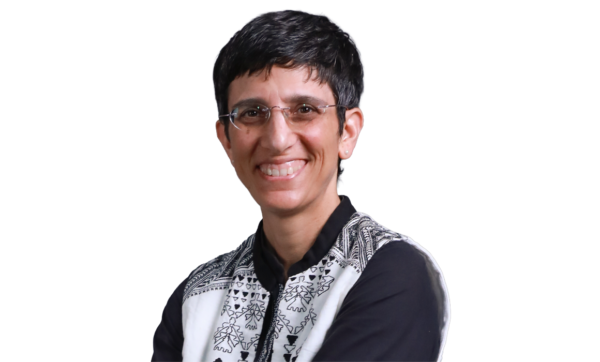
Prof. Segal leads a multidisciplinary research laboratory focused on developing advanced nanomaterials-based technologies for medical diagnostics. Her group designs sensitive biosensing platforms that can detect biological markers of disease with the goal of enabling earlier, faster, and more accessible diagnosis. The lab also applies its expertise in nanomaterials and biotechnology to therapeutic delivery, food safety, […]
Prof. Schroeder’s focus is on the development of targeted and more personalized medicines, including nanotechnology. His research group aims to improve patients’ quality of life and treatment by developing innovative medical technologies. He and his team focus on targeted drug delivery systems to treat neurodegenerative diseases of the brain. They utilize their technology to treat metastatic cancers, and they combine their technology with synthetic biology to develop artificial cells for therapeutic applications. Prof. Schroeder is the recipient of more than 30 national and international awards, including being named a KAVLI Fellow and recipient of the Intel Nanotechnology, TEVA Pharmaceuticals, and…