Something Fresh in the State of Denmark
October 06, 2026























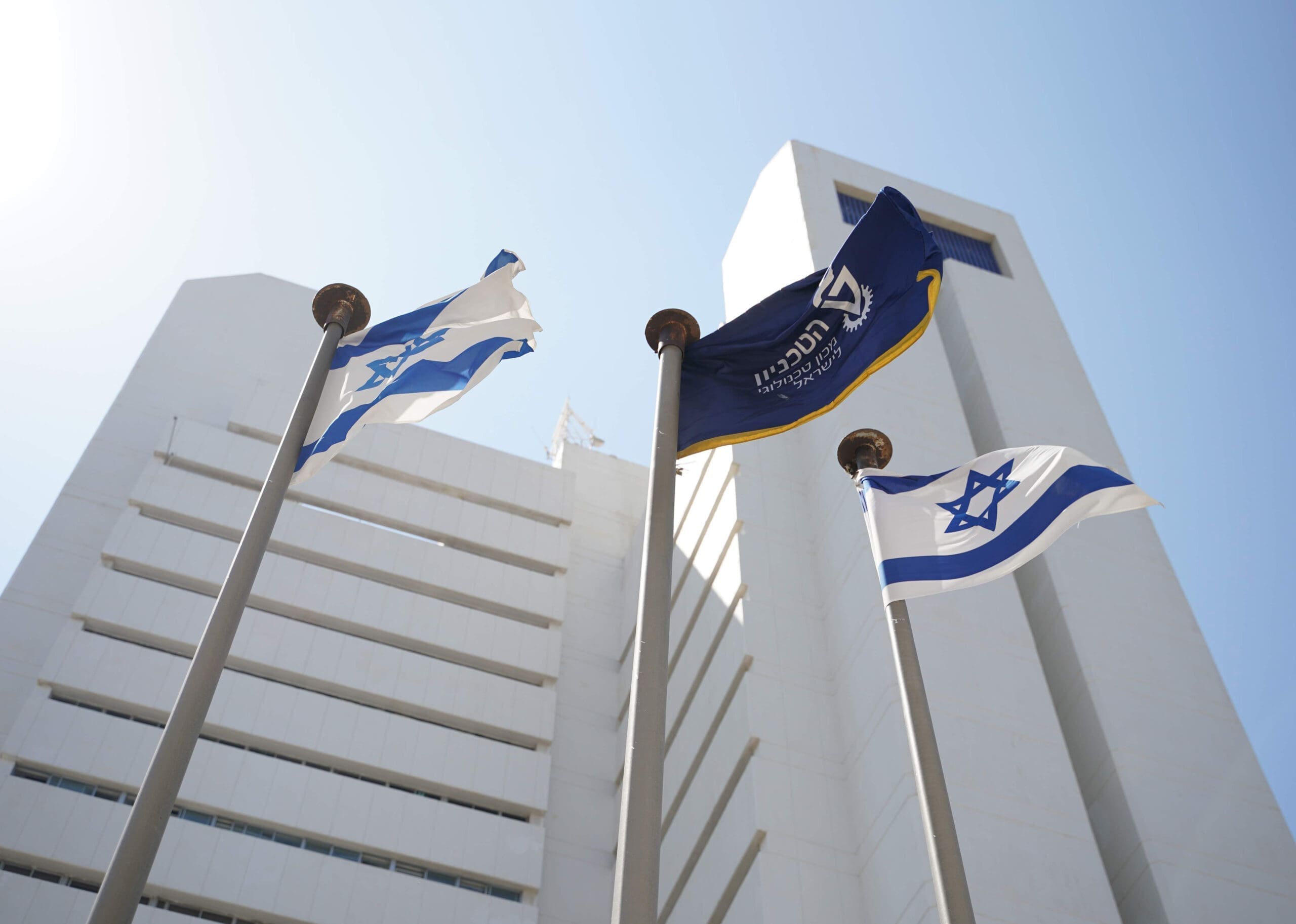






The Technion’s story has been intertwined with Israel’s for more than a century, from laying the foundations for a new nation to shaping its future.

Step inside Israeli innovation at the David and Janet Polak Visitors Center. Experience our 360° immersive movie and tech exhibition. Open to individuals and groups.
Learn MoreProf. Shpigelman’s research focuses on the interplay between food processing, the structure of food components, and their behavior during shelf life and at the end of their bioactivity in our body. He is guided by the principle that the design of food processing should carefully balance aspects that are important to consumers’ health and well-being. Currently, he is experimenting with non-thermal food technologies such as high-pressure processing, which uses cold processing techniques rather than conventional heat to eliminate microorganisms and optimize nutrition. Prof. Shpigelman completed all his degrees at the Technion and conducted postdoctoral research at KU Leuven in Belgium,…
Dr. Meiri’s lab, the largest of its kind in academia with 44 researchers, investigates the therapeutic potential of cannabinoids, the naturally-occurring chemicals found in the cannabis plant. Researchers work on a variety of projects in the lab with its main focus on how cannabinoids affect various types of cancer, epilepsy, and diabetes. A man on a mission, Dr. Meiri aims to understand the cannabis plant thoroughly enough so that a doctor can prescribe the right treatment at the right dosage for a particular patient. To that end, he collaborates with cannabis growers, clinicians, major manufacturers, and distributors of medical cannabis…
Associate Professor Uri Lesmes heads the Lab of Food Chemistry & Bioactives and the Food and Health Innovation Center, both in the Technion Faculty of Biotechnology and Food Engineering. He is also the academic leader of Israel’s pan-European accelerator network, aimed at promoting food entrepreneurs and startups. Concerned with healthy, affordable, and eco-friendly food choices, Prof. Lesmes works on the rational design of foods, personalized food solutions, and the safety of food additives. One such project is the EU-funded EAT4AGE, which seeks to develop palatable, easily digestible, nutrient-dense foods tailored to the needs of the aging population. Prof. Lesmes is…
Prof. Lavie served as president of the Technion from 2009 to 2019, transforming the University into a global player. In New York City, he was instrumental in creating the Joan & Irwin Jacobs Technion-Cornell Institute. In China, he helped establish the Guangdong-Technion Israel Institute of Technology. Accelerating the ascent of the Technion to one of the world’s top institutes for science and technology, he recruited world-class faculty; forged international research collaborations; and advanced multidisciplinary learning with the establishment of the Technion Integrated Cancer Center and the Helen Diller Center for Quantum Science, Matter, and Engineering. Prof. Lavie is chairman of…
An aeronautical engineer by trade, Prof. Bercovici is equally interested in understanding basic physical mechanisms related to fluid mechanics (the flow of liquids or gases) and in leveraging these mechanisms to create new tools and new capabilities. His current focus is on development of the Fluidic Shaping method that his lab pioneered, which uses the physics of fluids to shape liquid volumes into useful optical components (such as lenses) in minutes. The method won the 3D printing award by SPIE (the international society of photonics and optics), and the lab recently received the prestigious ERC award from the EU for…
Professor Marcelle Machluf is a member of the Technion Faculty of Biotechnology and Food Engineering and head of the Carasso FoodTech Innovation Center. She is a member of the Affiliate Engineering Faculty of the Technion Integrated Cancer Center, former deputy executive vice president for research for the Technion’s Pre-Clinical Research Authority, and former dean of Faculty of Biotechnology and Food Engineering. She also works closely with the Russell Berrie Nanotechnology Institute at the Technion. Prof. Machluf is developing a targeted drug delivery system using modified stem cells called Nano-Ghosts to home in on tumors, unleashing its therapeutic load at the…
Prof. Levenberg conducts interdisciplinary research on stem cells and tissue engineering, with implications for regenerative medicine and sustainable food production. Her research shows that it is possible to create complex tissues, including blood vessels, in a laboratory and that these engineered tissue-constructs can integrate with the host when implanted. Her team recently developed unique stem-cell engineered tissue constructs that induce the regeneration and repair of injured spinal cords and genetically engineered muscle tissue for treating type 2 diabetes. She is founder and CSO of two start-up companies, including Aleph Farms, which is revolutionizing the food industry by producing real meat…
Prof. Adir served for nearly two decades in the Schulich Faculty of Chemistry, most recently as dean. He holds the Bertha Hertz-Axel Chair in Chemistry. His research focuses on the relationship between the three-dimensional structure of proteins (such as enzymes) and their function. Prof. Adir employs X-ray crystallography to analyze the relative positions of the atoms within a molecule, resulting in a 3D model. Some applications of his work involve the process of photosynthesis – the efficient way in which plants convert solar energy into useful chemical energy. Other projects involve the study of proteins that can serve as targets…
Professor Efraim Lev has a strong interdisciplinary focus — combining archeology with botany and the history of Middle Eastern medicine with pharmacology. Integrating biology and history has allowed him to study subjects that have seldom been researched together, and to arrive at new historical insights. In his current research, he has mined the sacred Jewish manuscripts known as the Cairo Genizah to shed light on the medical practice of Jews in Arab Medieval Egypt, and is building a medical library of the ancient physicians and pharmacists. Balancing his interest in history, he has helped start interdisciplinary research groups for complementary…
Professor Josué Sznitman heads the Technion Biofluids Laboratory in the Faculty of Biomedical Engineering and is also the director of the Norman Seiden Multidisciplinary Graduate Program in Nanoscience and Nanotechnology in the Russell Berrie Nanotechnology Institute. Prof. Sznitman is a world leader in the area of pulmonary physiology and drug delivery to the lungs. He engineered an inhaler that dispenses aerosol droplets of chemotherapy and magnetic nanoparticles to the lungs. A magnet outside the body directs the droplets to the tumor, while drugs outside the magnetic field are exhaled. In earlier research, he created a life-sized artificial lung to watch…
Prof. Kishony is one of the most prominent names in the struggle against bacterial resistance to antibiotics. A physicist and mathematician by training, he recently developed an AI-based algorithm to combat antibiotic resistance that markedly helped doctors at Maccabi Healthcare Services prescribe the correct antibiotic for urinary tract infection patients. He has also used genetic mapping of pathogens to unravel emergence of antibiotic resistance during infection within the human host. And he has developed “antibiotic cocktails” that can counteract and even reverse the evolution of antibiotic resistance. These approaches inspire a novel paradigm of patient-tailored antibiotic diagnostics and treatment. Most…
Shie Mannor is a professor at the Andrew and Erna Viterbi Faculty of Computer and Electrical Engineering at the Technion. He is a member of the Technion Machine Learning Center and the Grand Technion Energy Program, and the head of the Technion and Intel Corporation’s Center for Artificial Intelligence. Prof. Mannor’s research interests include machine learning and pattern recognition, planning and control, multi-agent systems, computer network security, and communications. He is currently leading a new initiative by Ford to develop a decision-making system in Israel for driving autonomous cars.