Something Fresh in the State of Denmark
October 06, 2026






















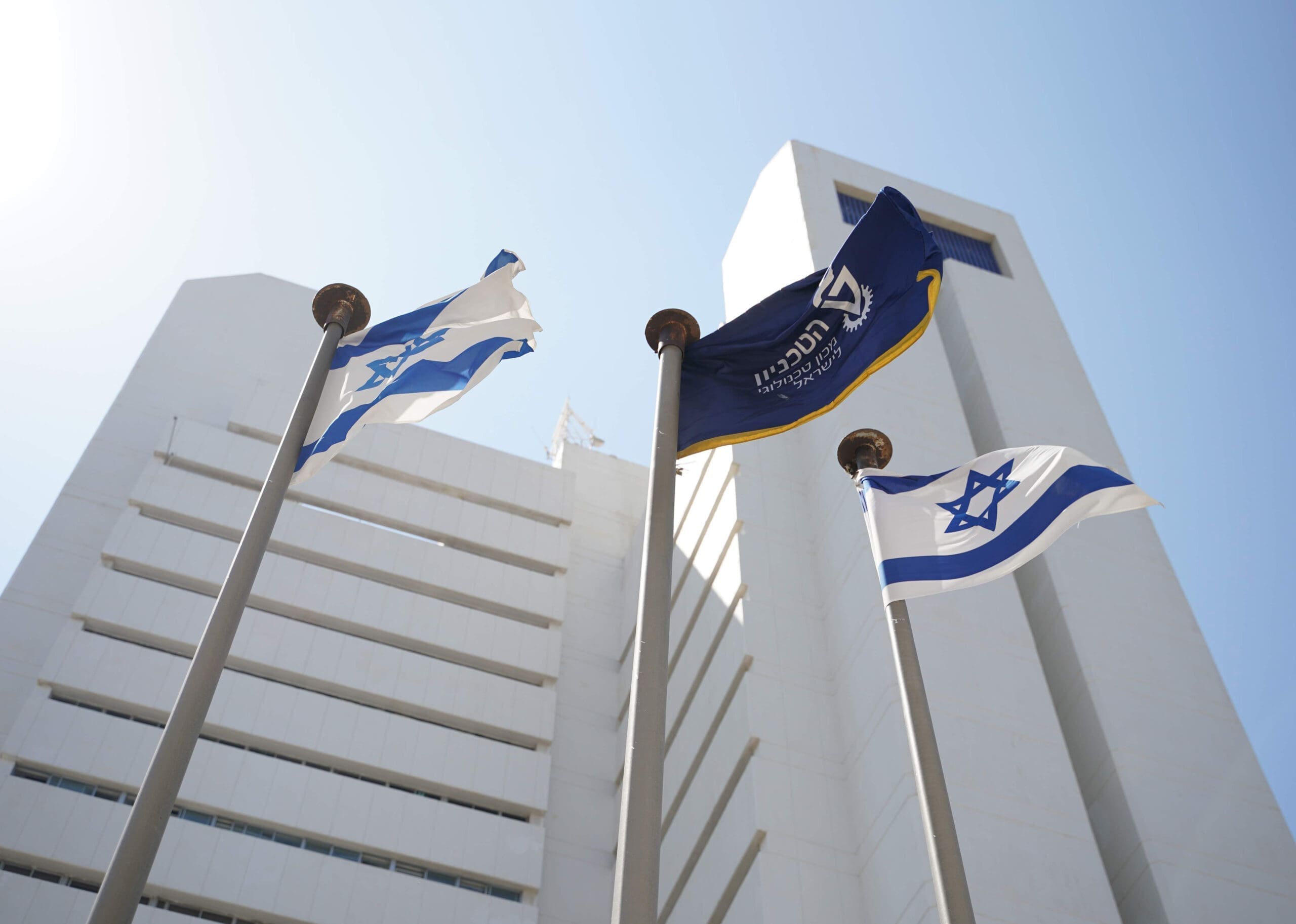






The Technion’s story has been intertwined with Israel’s for more than a century, from laying the foundations for a new nation to shaping its future.

Step inside Israeli innovation at the David and Janet Polak Visitors Center. Experience our 360° immersive movie and tech exhibition. Open to individuals and groups.
Learn MoreWith expertise in computer architecture and electronic circuit design, he is working to build the computers of the future. Inspired by the human brain, Prof. Kvatinsky is developing computers that have structures and computational models similar to neural networks. This research combines new semiconductor technologies, such as memristors, with new architectures that are fundamentally different from conventional computer architecture (i.e., not based on a processor and memory). These computer structures have significantly better energy efficiency and faster computation, and they enable new applications such as artificial intelligence. As a member of the Technion Faculty Ambassador Program, Prof. Kvatinksy shares his…
Boaz Mizrahi is an associate professor and member of the Faculty of Biotechnology and Food Engineering at the Technion. He is also a member of the Russell Berrie Nanotechnology Institute and the Lorry I. Lokey Interdisciplinary Center for Life Sciences and Engineering. His research interests focus on understanding and mimicking principles that nature uses and on designing functional materials — such as mucoadhesive tablets and polymeric implants — based on these concepts. Prof. Mizrahi holds 12 patents, three of which were licensed, and is the author of more than 20 scientific publications.
Prof. Friedler is head of the Water Forum Project at the Technion and head of the Stephen and Nancy Grand Water Research Institute. A senior research fellow, he holds the Henry Goldberg Academic Chair. His research interests include developing alternative water sources as part of sustainable management in the urban sector, extensive wastewater treatment systems, and processes occurring in sewer systems and those affecting water quality in catchment basins.
In conjunction with his role a faculty member, Prof. Broday leads the Technion Center of Excellence in Exposure Science and Environmental Health. His research interests include atmospheric and aerosol physics, air pollution, exposure modeling and assessment, applications of GIS for environmental health, dosimetry of inhalable pollutants, and enviroinformatics. His research group studies methods for measuring airborne pollutants at the breathing height, improved acute and chronic exposure estimation in urban areas, and linking geo-referenced databases for better air-quality inference.
Galia Maayan is an associate professor and member of the Schulich Faculty of Chemistry at the Technion. She leads the Biomimetic Chemistry Laboratory. Her research focuses on the design and synthesis of peptide mimics and their use in enzymatic functions such as selective recognition and cooperative catalysis. Prof. Maayan holds awards from the Stereochemical Society of Greater New York (2009), the American Chemical Society (2010), and the National Science Foundation (2011).
Prof. Rothschild leads the Electrochemical Materials & Devices research group. His research focuses on materials and devices for water splitting as a means of sustainably producing green hydrogen from renewable energies such as solar and wind. He is co-founder of H2Pro, a startup company that develops water splitting technology for the low-cost production of green hydrogen. Prof. Rothschild is one of the founding directors of the Israeli Center of Research Excellence on Solar Fuels and a member of several European consortia, and he holds a European Research Council grant for research on ultrathin-film solar cells. He is a fellow of…
Professor Gideon S. Grader joined the Technion Faculty of Chemical Engineering in 1989, and served as the dean from 2016 to 2020. In 2007, he became the founding director of the Nancy and Stephen Grand Technion Energy Project (GTEP), which aims to ensure the university’s role as a key player in energy research; he held that role until 2015. Prof. Grader’s research aims to develop clean technologies that will decarbonize our economy and prevent global climate change. Focuses include the development of ceramics for energy applications, combustion of non-carbon fuels, and hydrogen generation. One project has centered on using advanced…
She is a member of the Information Science field at Cornell University. Dr. Ju comes to Cornell Tech from the Center for Design Research at Stanford University, where she was Executive Director of Interaction Design Research, and from the California College of the Arts, where she was an Associate Professor of Interaction Design in the Design MFA program. Her work in the areas of human-robot interaction and automated vehicle interfaces highlights the ways that interactive devices can communicate and engage people without interrupting or intruding. Dr. Ju has innovated numerous methods for early-stage prototyping of automated systems to understand how…
Prof. Sivan is married to Yael, a father of three, and a grandfather of five who was born in Haifa, Israel. He earned a B.Sc. in Physics and Mathematics, an M.Sc. both (cum laude), and a Ph.D. in Physics (summa cum laude) from Tel Aviv University. In 1991, after three years at IBM T. J. Watson Research Center in Yorktown Heights, New York, Prof. Sivan joined the Faculty of Physics at the Technion where he currently holds the Bertoldo Badler Chair. His early scientific career focused on the physics of miniature electronic devices at low temperatures where quantum mechanics dominates…
Assistant Professor Meytal Landau is a member of the Technion Faculty of Biology. Her research focuses on protein structure-function relationships to better understand diseases and how to treat them. Of particular focus to Prof. Landau is understanding how to fight antibiotic-resistant bacteria. Her lab is also studying rational drug design in order to move drugs to the market more quickly. Prof. Landau holds three patents and has published more than 40 papers in professional journals. She has received more than 20 awards and honors, including the Biophysical Society’s Margaret Oakley Dayhoff Award (2019), the Wolf Foundation’s Krill Prize for Excellence…
An expert in image processing, 3D data analysis, and computer vision, he is an accomplished scholar and entrepreneur. The laboratory he oversees, GIP, conducts theoretical and applied research in model-based image and video processing and analysis. The lab’s research can be applied to a wide range of fields including medicine, security, robotics, and entertainment. For example, Prof. Kimmel is using 3D facial recognition technology to improve airport security, and he is also working to develop an infant-specific inhalation mask for pediatricians. He has leveraged his lab’s innovations to co-found six tech start-ups. Prof. Kimmel serves by courtesy as a professor…
Shai Shen-Orr, professor in the Ruth and Bruce Rappaport Faculty of Medicine at the Technion, heads the Laboratory of Systems Immunology & Precision Medicine. He is director of the Technion’s Healthy Aging Institute and the Zimin Institute for AI Solutions in Healthcare, and he serves as deputy vice president for fundraising strategy. The Technion Healthy Aging Institute tackles one of the most complex and urgent challenges in modern medicine: enabling individuals to maintain health and vitality in their later years, even as global life expectancy rises. By leveraging the expertise of researchers from across the University, the multidisciplinary Institute aims…