Israel’s New Reality: Michael Oren on Antisemitism, Diplomacy, and Existential Threats
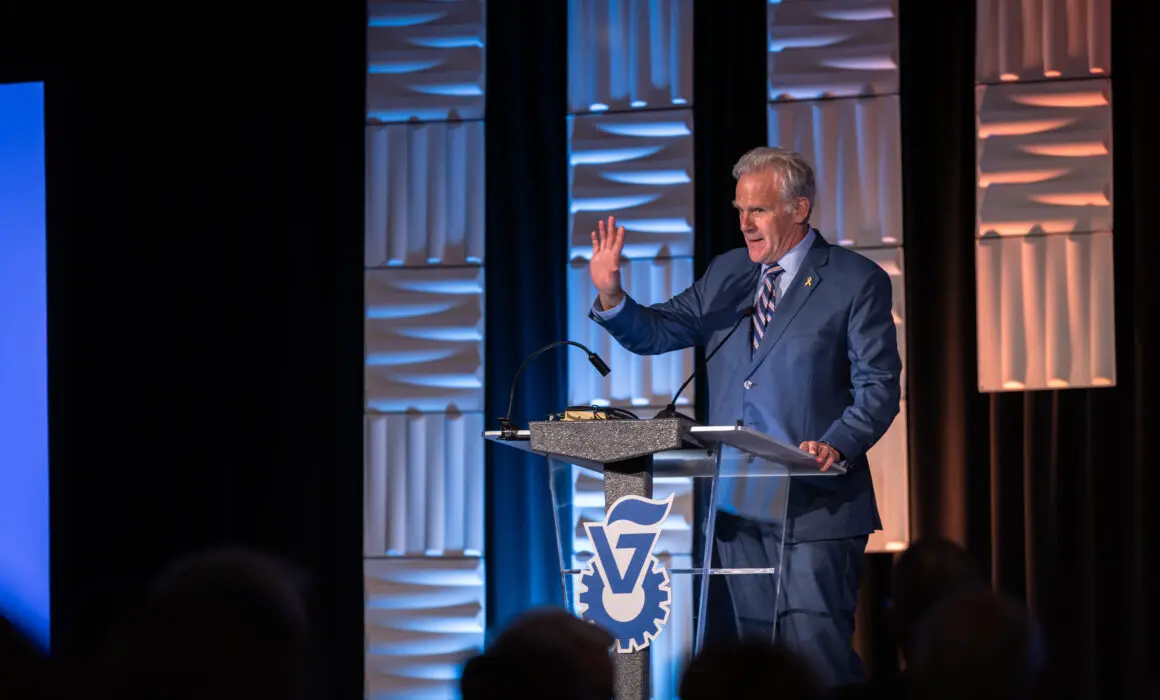
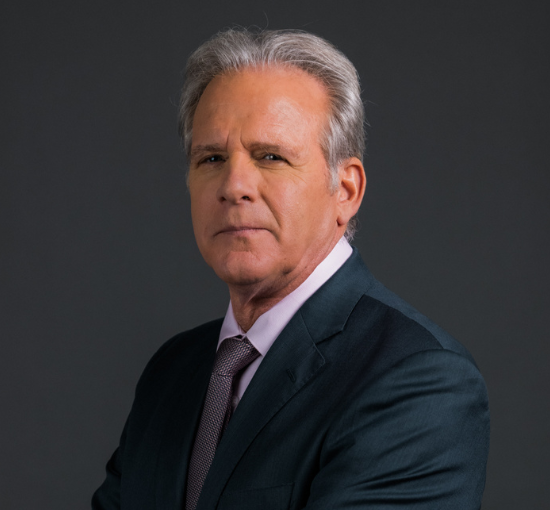
Michael Oren, former Israeli ambassador to the United States, historian, and author, is a leading voice on U.S.–Israel relations and Middle East diplomacy. He was a guest speaker at an American Technion Society Board of Directors meeting in November 2025. Below is an excerpt from an incisive and illuminating Q&A. While the talk took place before the war with Iran, his insights remain strikingly relevant.
Question:
In the U.S., attitudes toward Israel have changed significantly. It’s been politicized and young people seem very unsupportive. Is it a moment? Is it a fundamental shift? What happens next?
Michael Oren:
The answer is yes. There has been a fundamental shift — a very extreme and disturbing shift, particularly among young people. The question is how much of this shift is permanent and how much can be rectified by policy. Certainly, one of, if not the primary goal of Israel in the coming years must be to restore our foreign relations. Not just with America, but with Europe and other countries around the world.
For the first time in its history, Israel has to internalize that foreign relations and public diplomacy are as essential to our defense as is a battalion of tanks or a squadron of F‑35s. Without public diplomacy, the tanks won’t move and the planes won’t fly. We need to harness the technological expertise and innovation of the Technion to more effectively make our case to the world.
What has been unleashed is an antisemitism that was contained for decades after the Holocaust, when antisemitism was considered unsavory.
The old model for fighting antisemitism — identifying it, shaming it, and reeducating — no longer works. Antisemites no longer hide. They are proud.
Michael Oren, former Israeli ambassador to the United States
So, we have to deal with a reality that our great‑grandparents knew well. For centuries, Jews responded by strengthening themselves — educating their children about who they are and why it is worthwhile to stand up as Jews, and by strengthening institutions like the Technion. By giving to the Technion, you are supporting resilience. This is actually good news. We are still here. We have survived worse, and we have the innovation the world wants.
Question:
Do you think Israel is doing a poor job of PR, or is this simply an impossible situation? If we could do it better, how would you do it?
Michael Oren:
I’ve been involved in public diplomacy for 50 years. The most common question I’ve heard is, “Why is Israel’s PR so bad?” The answers are complex. Part of it comes from a Zionist ethos that says it’s not important what others think — only what Jews do. It’s deeply ingrained.
Among younger Israelis today, many believe that no matter what Israel does, it will be accused of genocide. They ask why money should be spent on PR rather than on schools, roads, or hospitals. Getting an Israeli to understand that without an investment in foreign relations the tanks won’t roll and the planes won’t take off is very difficult.
We can make a difference by investing heavily in social media. During this war, young people were inundated daily with images from Gaza, and Israel was largely absent from that space. Not that we can completely mitigate the disaster. We are 10 million people up against 1.4 billion Muslims, up against Russia, up against China, up against a huge swath of the international media, certainly up against a huge swath of American academia. It’s not a fair fight, but we can make a difference.
I knew that appearing on CNN or the BBC wouldn’t change millions of minds, but even creating 5% more space for Israel mattered. And by the way, behind roughly 90% — without exaggeration — of the questions I received were antisemitic tropes.
For example, every time they talked about statistics from the Gaza Health Ministry, they would say that Israel killed 60,000 Palestinians and 70% of them were children, which is statistically impossible. It goes back literally to the blood libels of the Middle Ages.
Question:
What do you think the future of Israel–Saudi Arabia relations are? Is there any chance they roll forward to the Abraham Accords, and does that even matter?
Michael Oren:
The answer is yes. What the Saudis have said to us is that Israel has to discuss a pathway to a Palestinian state. Now, they use that word, pathway, again and again. Why? They know if you create a Palestinian state tomorrow, the day after it’s going to fall to Hamas and it’s going to take down Jordan; it’s going to take down half the Gulf. But they need to discuss a pathway. And I’ve long been of the opinion, and I’m not alone in this, that the Israeli government has to say, OK, we’ll discuss a pathway. And relations with Saudi Arabia is not just relations with Saudi Arabia. It’s relations with the entire Sunni world. It is relations with Indonesia, relations with Pakistan. The largest Muslim countries in the world are outside of the Middle East. And the road to them leads from Riyadh.
Question:
Where does integrating the Haredim [ultra-Orthodox people] rank among Israel’s priorities?
Michael Oren:
In my book “2048: The Rejuvenated State,” written about four or five years ago — before the war and before the great upheaval over the government’s judicial reform — is my vision for what Israel must do over the next 25 years. A very large share of the book deals with the Haredi issue because the Haredi issue is an existential issue.
The idea of a Haredi enlistment in the military has been perceived as an end in itself, but it’s not; it’s a means. It’s a means to integrating the Haredim into our communities. They have the highest natural birth rate in Israel. Their population doubles every 25 years. By the year 2048, roughly half of the elementary school students in the State of Israel will be Haredim.
And in those elementary schools, they’re receiving a second-grade education in math and almost no English. That means they’re not capable of integrating into the Israeli economy. And if they’re not working, then the tax burden on the rest of the Israeli economy will expand exponentially. And people will leave the country.
Now, the Haredim are truly an extraordinary community. They’re the only community in the world that is voluntarily impoverished for what they believe. They’re the only truly impoverished community in the world that has no crime. But if they don’t teach their kids English and math, the State will not be sustainable.
And here’s the good news: This war saved us in some ways. Never again will we allow a terrorist group to build up on our borders. Never again are we going to allow any reservist not to undergo training for five years. But the biggest thing was that this war transformed the Haredi service issue, which on October 6, 2023, was a left-wing issue. The war has made it a national issue.
And who’s leading the fight to get the Haredim in the military? The right-wing national religious, because they have had a disproportionate number of casualties in the war. And they say to the Haredim, “We read the Torah, and the Torah tells us to fight. How is it that your Torah tells you not to fight? We don’t get this.” It’s the first issue we have had in a long time that cuts across right and left. It’s a total national consensus issue.
I’m optimistic about it. This is a community that can contribute immensely to the State of Israel, to our science community.
[The Haredim} are a very bright, committed, and disciplined community. Imagine what they could do for the State of Israel if we do it right.
Question:
Where the U.S. could always be counted on as a staunch ally of Israel, there are dissenting voices in both parties that are growing louder and louder. What are your concerns about this?
Michael Oren:
What’s going on in the fringes of MAGA worries me most. They’re saying, “We hate Jews.” They don’t have the courtesy to hide that antisemitism. So, it is very disturbing.
To me, the essence of Zionism has always been responsibility. It’s taking responsibility for our electricity and our sewers and our defense and, yes, our mistakes. We have to take responsibility for our foreign relations, too. The United States will remain an ultimate ally, but we have to diversify our foreign policy portfolio.
If I were prime minister tomorrow, my first visit, well, of course, would be Washington. But my second visit would be to India. And my third visit would be to Argentina. The world is changing very fast, and we have to be dynamic and we have to get ahead of these trends.
In 2021, I called for the end of U.S. military aid to Israel, and it caused a big storm at the time. Today, everybody agrees that we have to wean ourselves off American military aid. It took a war to do it. One of the big issues that I raised was if we get into a war and we’re killing too many Palestinians, according to America, they’re going to cut off arms sales to us. They’re going to cut off supplies. It was precisely what happened.
One of the ways we can change our relationship with the United States for the better is moving from a position of a country that receives aid to a country that is a partner on areas of mutual concern, such as technology. The Technion will play a very central role, because the areas of mutual concern are going to be cyber, artificial intelligence, and laser. This is what we can contribute to the U.S.–Israel relationship, and that’d be much healthier. We have to be a partner of the United States, not a recipient.