
Trained to Serve
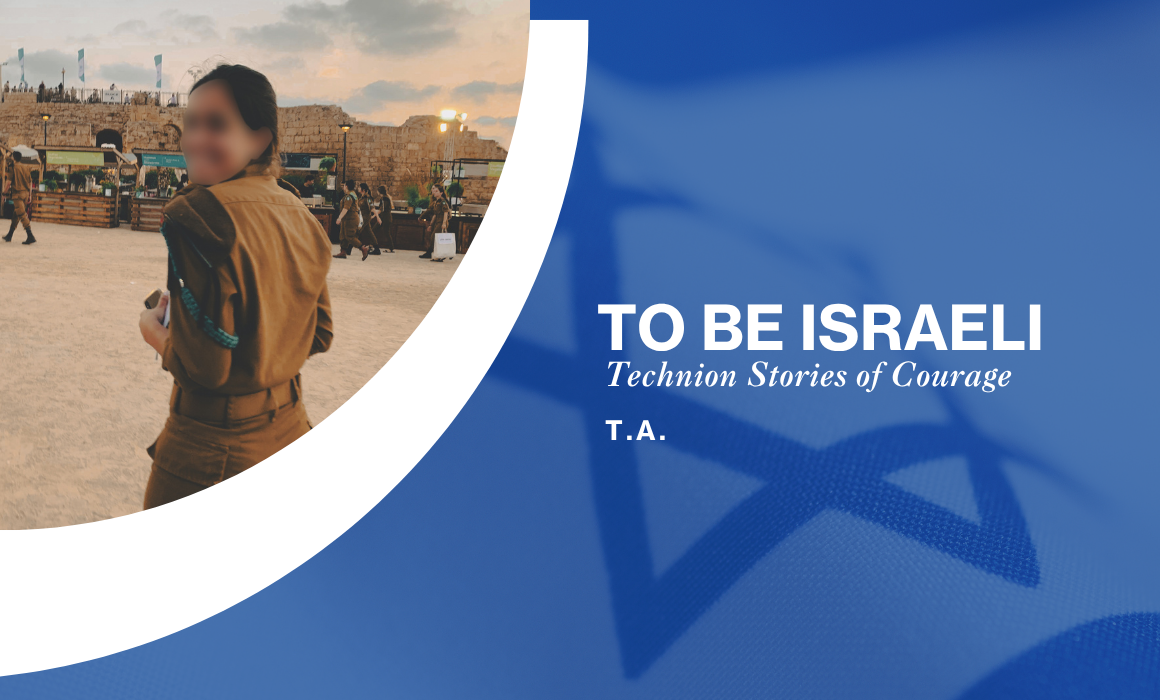
Instead of attending her first day of class in October 2023, Technion medical student T.A. put on her uniform and bravely served in the Israel Defense Forces (IDF) reserves — for over 350 days.
“I had gotten married just a month before, and we returned from our honeymoon on October 5. I was preparing for the start of the academic year, feeling so excited to finally begin my journey as a medical student,” said T.
“On the morning of October 7, we didn’t even wait to be officially called up. We understood the gravity of the situation almost instantly. My husband was out the door by 7:30 a.m., heading straight toward the Gaza border communities. I followed shortly after, rushing to my base to see where I was needed most.”
There were many weekends away from home, long sleepless nights, and days filled with demanding, repetitive work. “But the knowledge that my efforts contributed to a greater cause gave me the strength to persevere,” she said. “That sense of purpose is something I carry with me into everything I do.”
T.’s steadfast resolve and ability to remain focused under pressure was forged long before she entered medical school. Before the war, she had served in the IDF for almost five years, first as a combat-engineering instructor where she taught young soldiers how to survive in the most dangerous environments. She later graduated from the IDF Officers’ Course with distinction, a marker of the discipline and composure that would define her leadership. As marksmanship officer of the Golani Brigade, T. oversaw the brigade’s shooting and weapons training — an extraordinary responsibility at a young age.
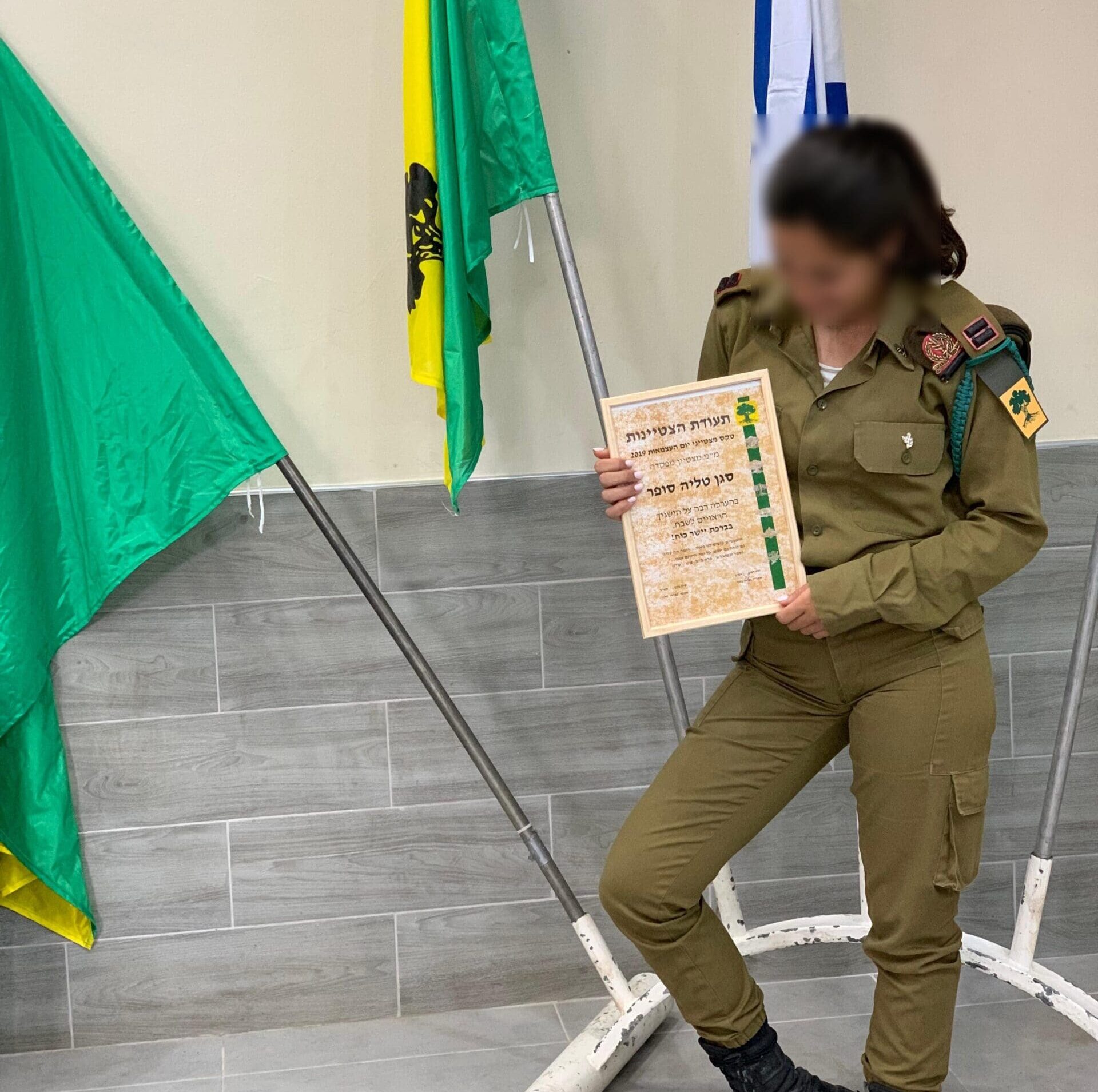
She also served in Oketz, the IDF’s elite K9 Special Forces Unit, where soldiers operate trained dogs to detect explosives, locate terrorists, and support complex operational activities. T. ensured that every handler-and-dog team was prepared for demanding missions. “These dogs saved so many soldiers’ lives. It filled me with such pride: The infrastructure I helped build allowed those teams to succeed.”
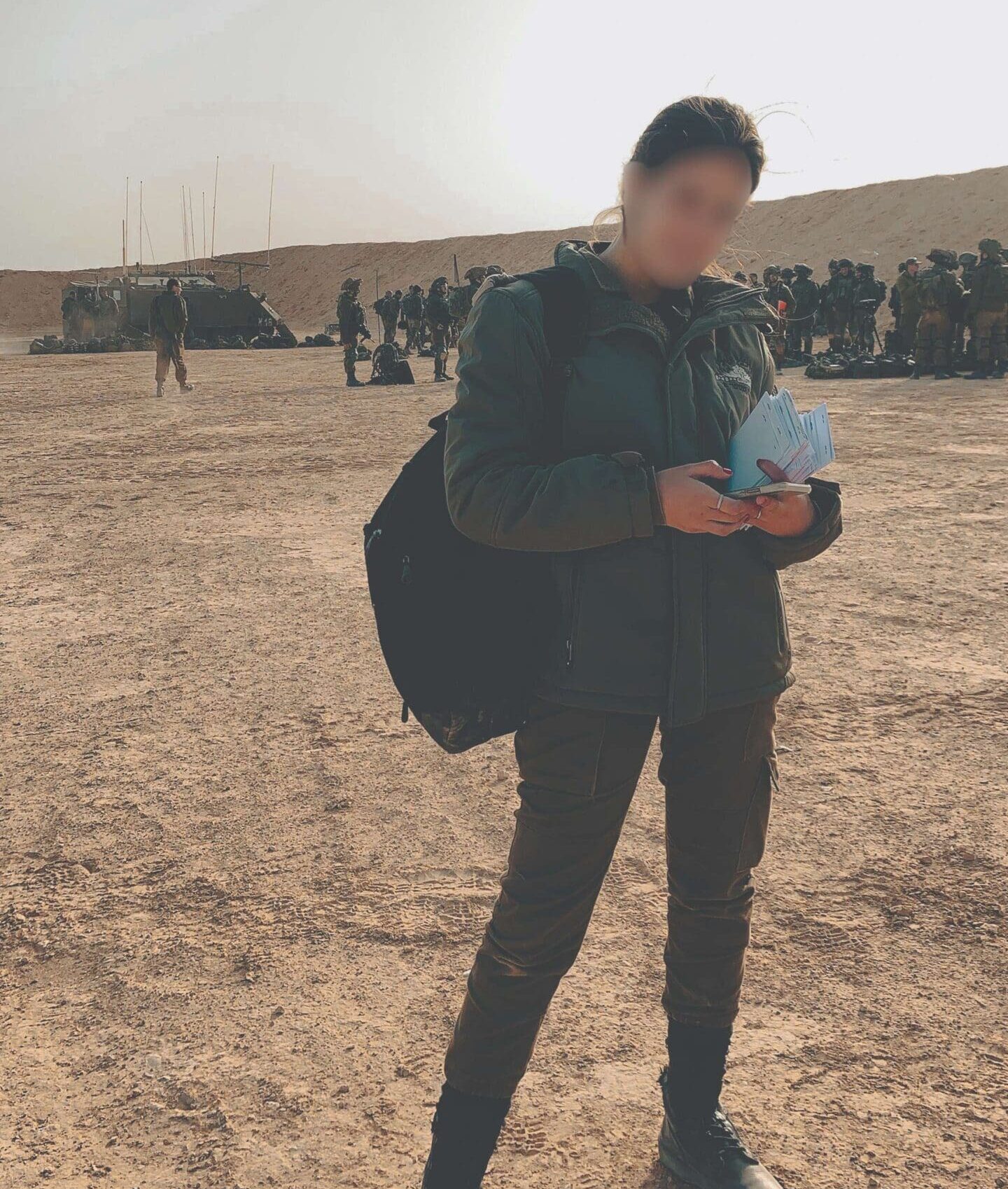
As an active reservist during the war, the uncertainty about when and how T. could start attending classes was unsettling. “I realized I would have to find a way to balance my reserve service with my academic responsibilities,” she said. Even when it meant arriving to labs and critical lectures still in uniform. “I wasn’t the only one — it was a very common sight on campus.”
For T., being able to step into the classroom was a reminder of the future she is working toward. “This is simply our reality: trying to maintain our lives and our studies while doing what is necessary to protect our country.”
And that’s not all T. has on her already full plate. She also leads Sister to Career Officers, an initiative to support the spouses of combat commanders. This work is especially meaningful to T. because her husband is a combat battalion commander. Organizing and participating in meetings helps her cope with the challenges of long and dangerous deployments, while helping other spouses do the same.
Both throughout the war and while she was back in school, T. received significant support from the Technion. “One of the most meaningful moments for me was when Prof. Shira Zelig called to ask how I was doing,” T. said. “She reassured me that the Technion would support me in anything I needed.”
That support became especially critical when T. was unexpectedly stranded in London during the war with Iran in the summer of 2025. The University enabled her to learn remotely until she could get back home. “The academic and emotional support I received then and through two years of war reinforced my sense of belonging to a community that truly cares.”
Today, T. is a third-year medical student in the Ruth and Bruce Rappaport Faculty of Medicine. Whether in uniform or in a white coat, T.’s mission remains the same: to serve. “I’m gaining the knowledge and skills to help patients directly, support their well-being, and contribute to the health of the community.”