Something Fresh in the State of Denmark
October 06, 2026



























The Technion’s story has been intertwined with Israel’s for more than a century, from laying the foundations for a new nation to shaping its future.

Step inside Israeli innovation at the David and Janet Polak Visitors Center. Experience our 360° immersive movie and tech exhibition. Open to individuals and groups.
Learn More
Researchers in the Faculty of Biotechnology and Food Engineering at the Technion have developed “bionic bacteria.” The innovative technology has many potential applications in industry, the environment, and precise medicine. For example, bionic bacteria could be used to sense hazardous substances, or aid in the targeted release of drugs in the body.
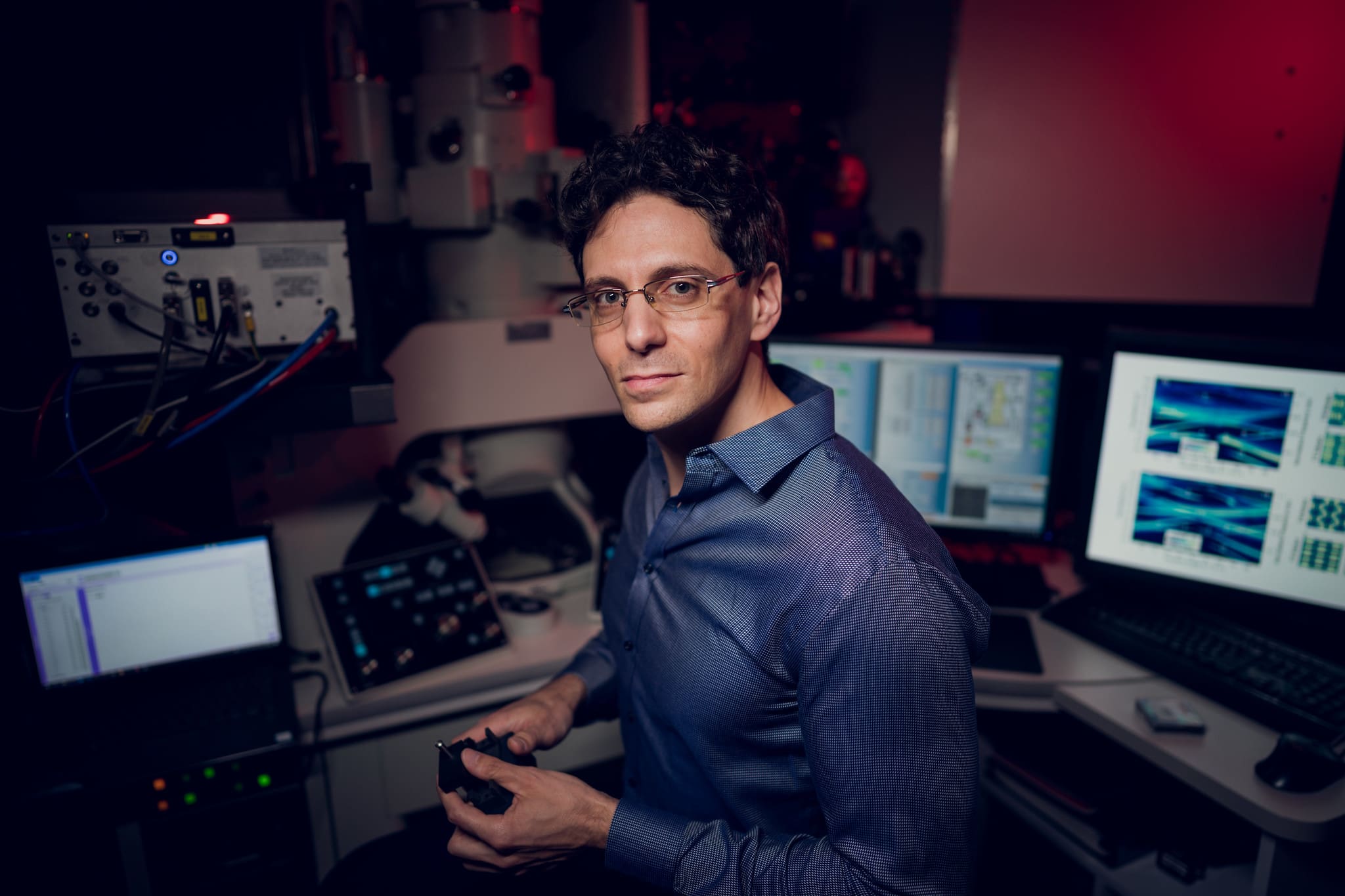
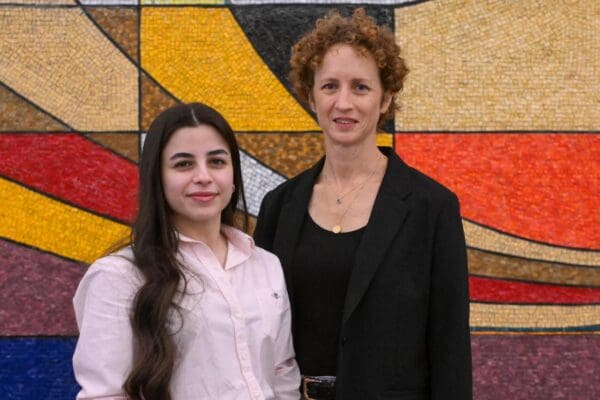
The study was led by Assistant Professor Omer Yehezkeli and Ph.D. student Oren Bachar, and co-authored by doctoral student Matan Meirovich and master’s student Yara Zeibaq.
“My research group deals with the interface between engineering and biotechnology at the nanoscale level,” explained Prof. Yehezkeli. “Our goal is to blur the current boundaries between the different disciplines and mostly between nanometer materials and biological systems such as bacteria. In our research, we use the unique properties of nanoscale particles on the one hand, and the tremendous selectivity of biological systems on the other, to create bionic systems that perform synergistically.”
Nanoscale semiconductor particles are usually produced in chemical processes that require high temperatures and organic solvents. In the current study, the researchers were able to create, using engineered proteins, an environment that enables the growth of nanometer particles under biological conditions and at room temperature. In turn, the grown nanoparticles can lead to light-induced processes of biological components.

Figure depicting how the nanoparticle forms in the protein cavity and is subsequently activated by a light-induced reaction to enable the enzymes NADPH reductase (FNR) and imine reductase that leads to the formation of chiral cyclic amines. Illustration: Neta Kasher
“The use of engineered proteins for the self-growth of nanomaterials is a promising strategy that opens up new scientific horizons for combining inanimate and living matter,” said Prof. Yehezkeli. “In the current study, we demonstrated the use of engineered proteins to grow cadmium sulfide (CdS) nanoparticles capable of recycling nicotinamide adenine dinucleotide phosphate (NADPH) through light radiation. NADPH is crucial in many enzymatic processes and therefore its generation is desired.”
Enzymes are a common biological component involved in all living cell functions. These are proteinaceous structures that drive desirable actions by creating a suitable biochemical environment. Billions of years of evolution have led to the development of a broad spectrum of enzymes responsible for the many and varied functions in the cell.
In their study, the researchers showed that NADPH could be produced (recycled) using the genetically modified SP1 protein. Using biotechnology engineering tools, the researchers made changes in the sub-units to allow a nanometer particle to grow in the protein cavity. The resulting particle can be triggered by light to induce electron flux.
“This is a preliminary demonstration of the direct connection of inanimate matter (abiotic) with living matter (biotic) and a platform for its operation in a way that does not exist in nature,” said Prof. Yehezkeli. “The technology we have developed enables the creation of hybrid components that connect these two types of materials into one unit, and we are already working on fully integrated living cells with promising initial results.”