Something Fresh in the State of Denmark
October 06, 2026






















The Technion’s story has been intertwined with Israel’s for more than a century, from laying the foundations for a new nation to shaping its future.

Step inside Israeli innovation at the David and Janet Polak Visitors Center. Experience our 360° immersive movie and tech exhibition. Open to individuals and groups.
Learn More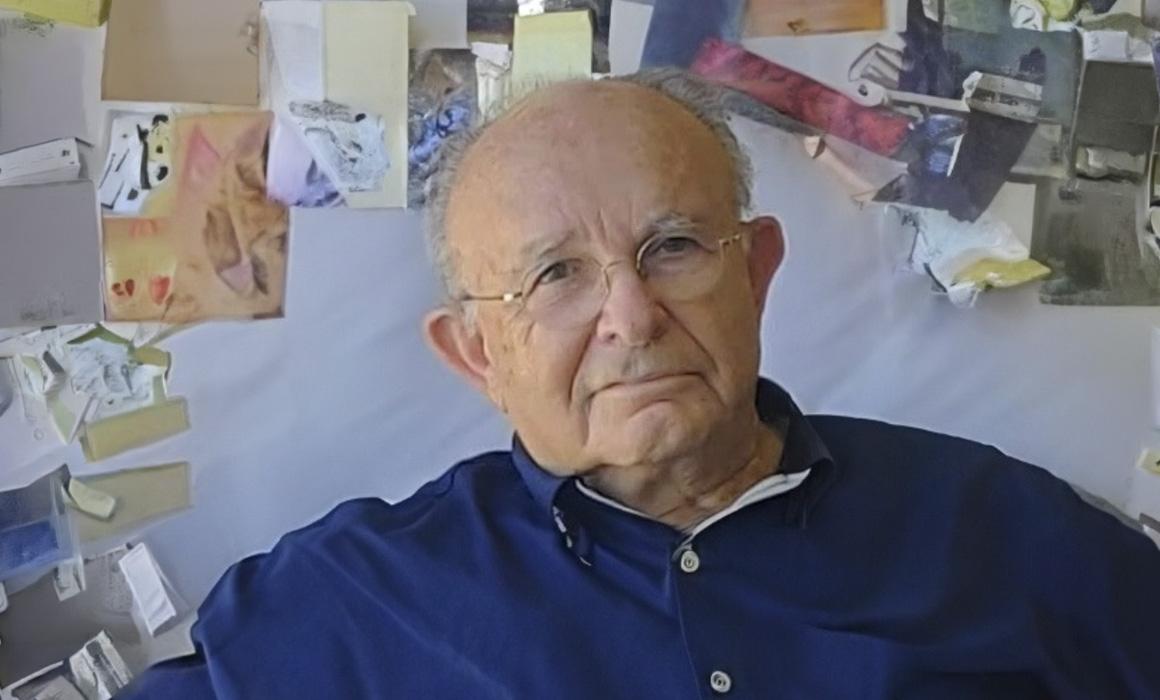
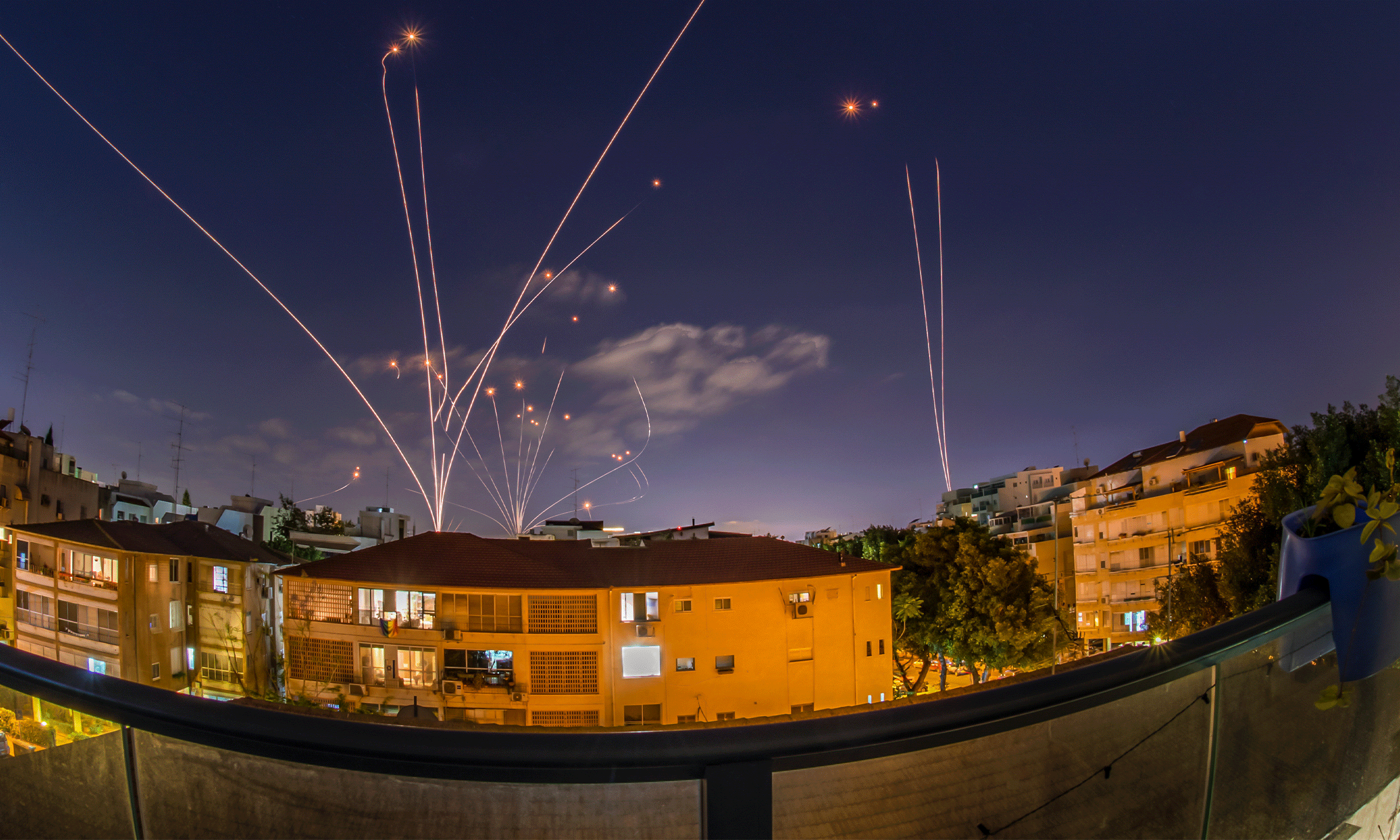
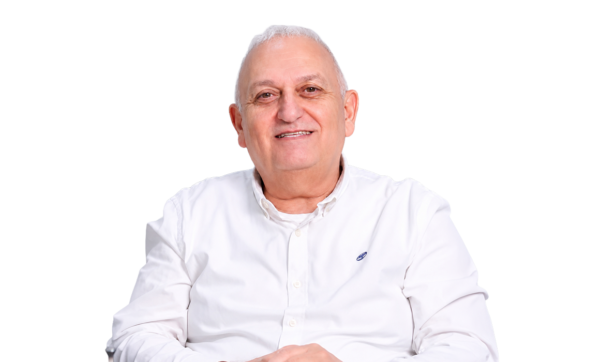
In the late 1970s, when no one thought it could be possible, Dov Raviv, a Technion alumnus, had a fantastical idea for a defensive weapon that could intercept and shoot down long-range incoming missiles. The idea developed into what would become the Arrow Antimissile System, the world’s first missile defense platform, and what would protect Israel from Iran’s missile barrage on April 13, 2024.
Dov Raviv was born in Bucharest, Romania, in 1937. Had he stayed there he was destined to become a tradesman. Fortunately, his family emigrated to Israel in 1947. He initially trained as a locksmith in Israel, but his mother wanted more for her son. After all, he was now living in the Promised Land. So, Dov enrolled at the Technion, unsure what field of study to pursue.
“My father said, ‘why don’t you learn how to make airplanes,’” Dov said. His father, who sold and bought luggage and other travel items, didn’t suggest the field because he believed Dov showed some kind of special acuity for aerospace or engineering, but “just because he liked airplanes. So that’s what I did.”
The Technion has the only faculty of aerospace engineering in Israel. At the time, Moshe Arens, a U.S.-trained aeronautical engineer, was one of its earliest faculty members. “Moshe Arens was very inspiring,” said Dov. “He was an excellent teacher and he drove me.” After leaving the Technion in 1965, Arens served as minister of defense for Israel three times and as ambassador to the United States.
Dov obtained a bachelor’s degree in aeronautical engineering in 1959, and went to work for MLM, a subsidiary of Israel Aerospace Industries (IAI). He excelled at all tasks and brought many new ideas to the company. While at MLM, he was also an officer in the Israeli air force in charge of ballistic missile trajectories.
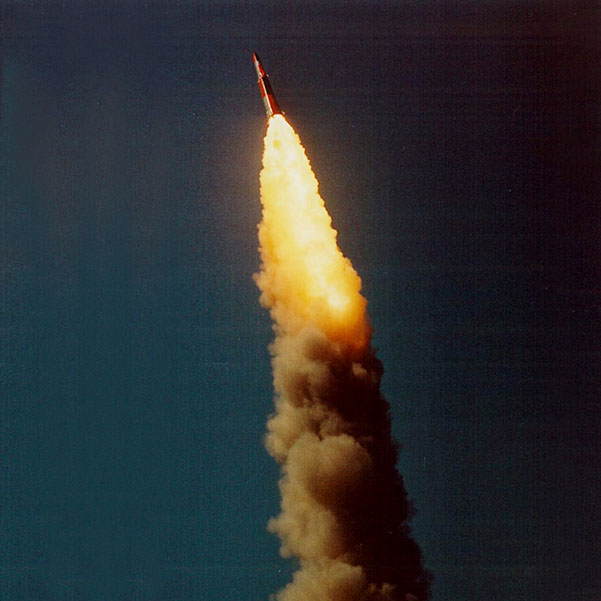
He was promoted to director of MLM in 1978, overseeing 180 employees and transforming it from IAE’s manufacturing plant into an arm for engineering systems and production with 1,100 employees by the time he retired in 1992. During this timeframe, he began development on the Arrow interceptor missile and launcher he had envisioned with a team of all Technion graduates.
The air force didn’t believe a device to intercept missiles was possible. But Dov didn’t give up. “I pushed it so much until people started listening. I had a reputation for getting things done,” he explained. But funding was lacking.
In 1984, a delegation from the United States Air Force visited IAI and Dov was asked to present projects in development. Six months later, U.S. Lt. Gen. James Abrahamson, an aeronautical engineer and astronaut, requested a proposal to support the Arrow experiment. Gen. Abrahamson was the director of the new Strategic Defense Initiative Organization (SDIO), known as the Star Wars Program, to develop a sophisticated anti-ballistic missile system for the U.S.
“I submitted a proposal for $150 million. They couldn’t believe it could be done with so little money and they funded it, I believe, as an exercise to see if it could really be done. In the end, we did it with a lot less.”
In 1986, a formal agreement between the U.S. and Israel was signed to co-fund a multi-billion-dollar Arrow program, and in 1988, SDIO placed an order with IAE for the Arrow 1 technology demonstrator. Arrow 1 was successfully tested in 1990. The Gulf War in 1991 was the impetus for further development of the Arrow. Arrow 2 became the world’s first operational defense system against missiles in 2000.
Arrow 3 — also led by a team of Technion alumni — became operational in 2017. It is capable of intercepting intercontinental ballistic missiles carrying nuclear, chemical, or biological warheads as far as 1,500 miles away during the space-flight portion of their trajectory. Both Arrow 2 and Arrow 3 were used to intercept the long-range ballistic missile barrage from Iran in April.
Dov Raviv, who lives in Rishon LeZion, a suburb just south of Tel Aviv, reflected on his journey. “I would have been a pretty good locksmith. I was the youngest and best in the class.” No doubt. It’s lucky for Israel that his mother wanted him to get a higher education and his father liked airplanes.