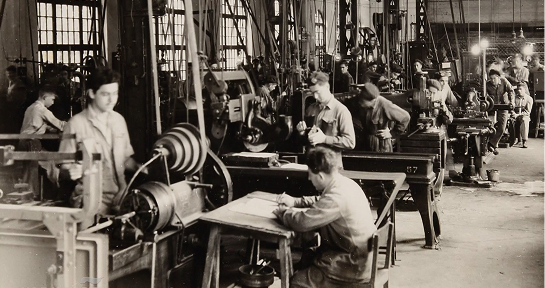
The Technion’s story has been intertwined with Israel’s for more than a century, from laying the foundations for a new nation to shaping its future.
From medicine to security, explore how the Technion is advancing Israel and improving lives around the world.
View All Impact Areas
Explore stories, news, insights, and data across articles, videos, and podcasts.
view all content types
companies founded by graduates and faculty in the last 10 years
of all universities in the world*
in Europe and #21 in the world for aerospace engineering*
The Technion’s story has been intertwined with Israel’s for more than a century, from laying the foundations for a new nation to shaping its future.
Explore ATS, the Technion, and the people behind the breakthroughs redefining what's possible for Israel and the world.
Learn More About ATSATS is a community of supporters, innovators, and champions of possibility united by one mission: transforming Israel and the world through science and discovery.
Learn MoreFor more than 100 years, the Technion has been Israel's technological engine and leading driver of innovation, technology, and entrepreneurship, transforming ideas into impact.
Learn More
Step inside Israeli innovation at the David and Janet Polak Visitors Center. Experience our 360° immersive movie and tech exhibition. Open to individuals and groups.
Learn MoreFrom medicine to security, explore how the Technion is advancing Israel and improving lives around the world.
View All Impact AreasExplore stories, news, insights, and data across articles, videos, and podcasts.
view all content typesDiscover ways to support, connect, and help drive innovation.
Get InvolvedExplore ATS, the Technion, and the people behind the breakthroughs redefining what's possible for Israel and the world.
Learn More About ATSA Breakthrough in Regenerative Medicine
A human ear, engineered and printed in a laboratory, may sound like science fiction — but at the Technion, it is already becoming reality.
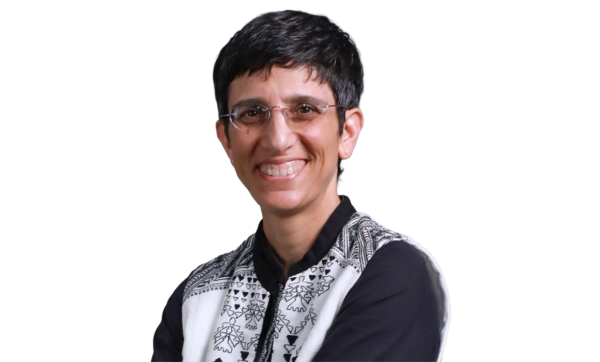
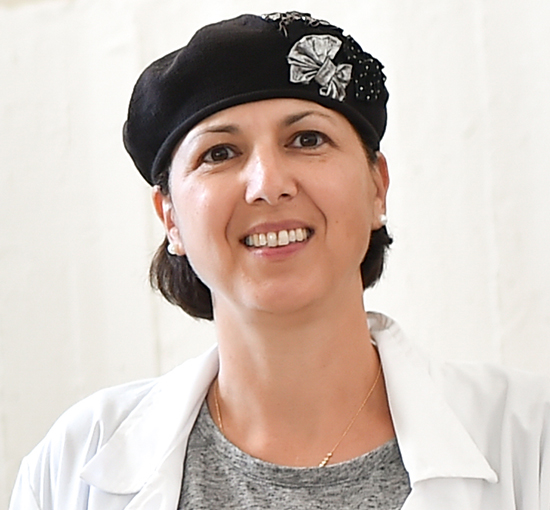
Prof. Shulamit Levenberg, a member of the Faculty of Biomedical Engineering at the Technion, has successfully developed a method to bioprint cartilage structures designed to replace undeveloped ears. Her work represents a major step forward in the rapidly evolving field of tissue engineering.
“The tools given by biological printing have changed the field,” said Prof. Levenberg.
Prof. Levenberg’s method begins in the laboratory. She creates a 3D substrate using a biological substance such as collagen or a synthetic, biocompatible alternative, then combines it with cartilage cells from the patient. Once implanted in the body, the substrate dissolves over time, and eventually only the cartilage remains. She leverages the variety of biological printers in the Technion’s Bio-Print Center to print not only the 3D structure of this matrix, but also the cells within it.
This breakthrough builds on Prof. Levenberg’s previous achievements. As a postdoctoral fellow at MIT, she reached a significant milestone with her adviser, Prof. Robert Langer: they created functioning muscle tissue from embryonic stem cells and successfully implanted the tissue in mice.
Such achievements require both creativity and persistence. The greatest challenge, she explains, is finding a way to integrate implanted tissue with blood vessels so that the tissue receives oxygen and nutrients.
“It’s not enough to know how to produce muscle or fat or bone tissue, but we must have it combined with the blood vessels,” she said.
She describes this work as a “mission,” driven by its potential to improve quality of life for patients whose tissues have been damaged by cancer, injury, or war. Today, parts are taken from other places in the body in an invasive, painful, and sometimes disfiguring process. As scientists advance their ability to produce tissues in the laboratory — or the print center — patients’ suffering will be reduced.
Prof. Levenberg’s ambitious research program, which extends far beyond a single tissue or organ, moves us closer to producing fully functional, implantable human tissues.
“We’ve also shown that we can produce and print multi-layered tissue that has both fat and muscle,” she said. “Until now, we have demonstrated this in small and large animals, and the aspiration is to advance and engineer blood vessels with large tissues, which we can print and grow in the laboratory even for humans.”
May 26, 2026
Learn how printing human tissue is becoming a reality at the Technion with groundbreaking methods to create bioprinted structures.
3 mins
X (opens in a new tab) / Facebook (opens in a new tab) / LinkedIn (opens in a new tab) / Email / Copy Link
What if diagnosing cancer, Parkinson’s disease, or other serious illnesses could be as simple as breathing into a handheld device? That possibility is moving closer to reality thanks to the work of the Technion’s Prof. Hossam Haick, whose groundbreaking research is changing how diseases are detected around the world. In recognition of his extraordinary achievements, […]
Every year, the European Research Council (ERC) identifies some of the world’s most promising early-career researchers and gives them the freedom to pursue bold ideas. This year, two of those ideas came from the Technion – Israel Institute of Technology. From cancer research to artificial intelligence (AI), breakthroughs that shape the future often begin with […]
As more people turn to AI chatbots for companionship, life advice, or even as a stand-in for therapy, experts say the technology offers both new opportunities and risks when it comes to mental health. Prof. Tanzeem Choudhury is the chief of health innovation in the Joan & Irwin Jacobs Technion-Cornell Institute and has been studying AI and mental health for 15 years. She said AI tools are available any time, often at low cost, making it easier for people to access some form of mental health support.
Stay on top of the latest breaking scientific discoveries from Israel and the Technion. Subscribe to the ATS newsletter.