Something Fresh in the State of Denmark
October 06, 2026
























The Technion’s story has been intertwined with Israel’s for more than a century, from laying the foundations for a new nation to shaping its future.

Step inside Israeli innovation at the David and Janet Polak Visitors Center. Experience our 360° immersive movie and tech exhibition. Open to individuals and groups.
Learn More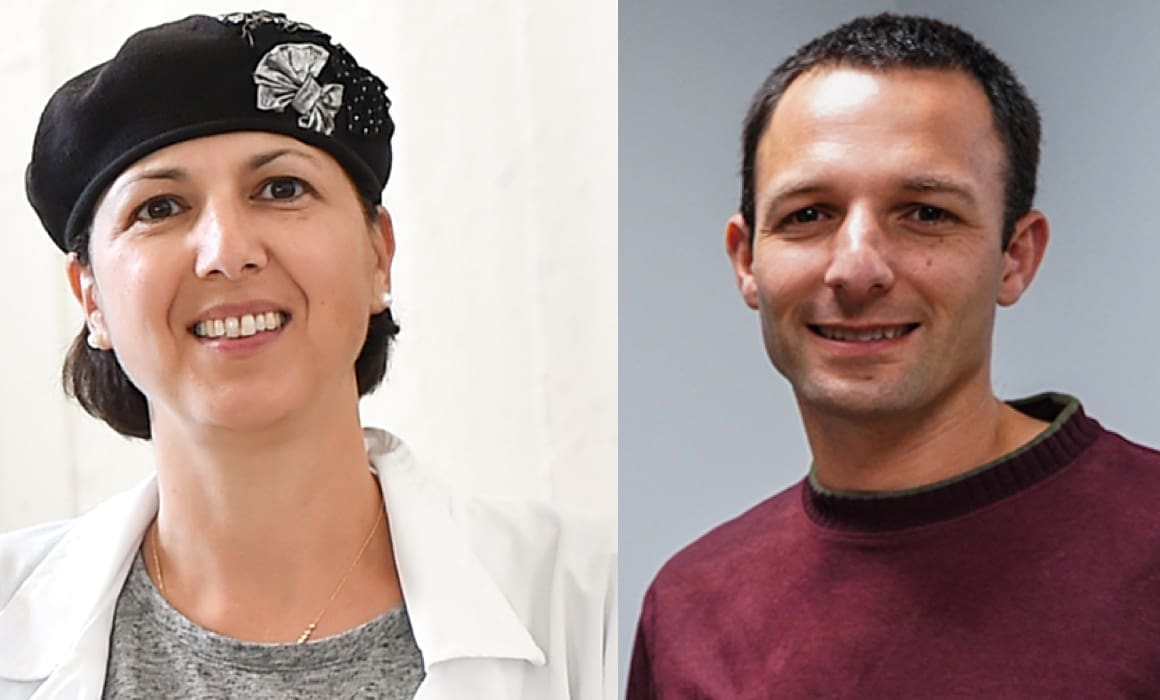
Two Technion faculty members have won Proof of Concept (PoC) grants from the European Commission for Research (ERC). The prestigious grants, each worth $165,000, are intended to promote the application and commercialization of academic research, including the establishment of a start-up company. They are awarded only to researchers who have won an ERC grant in the past.
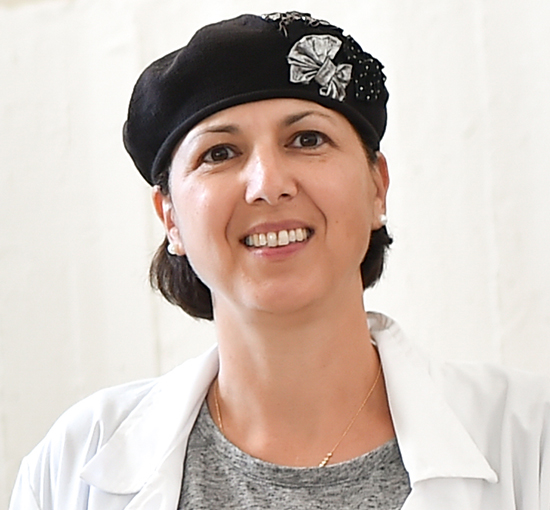
Professor Shulamit Levenberg from the Faculty of Biomedical Engineering won an award for her innovative development for 3D bioprinting and post-printing tissue growth: Print and Grow.
Three-dimensional (3D) bioprinting is one of the most promising technologies in the world for tissue engineering. Bioprinting in suspended hydrogels allows scientists to precisely create complex biological structures. However, turning the resulting structure into quasi-natural tissue requires additional steps after printing, including cell growth in those structures. During these steps, the printed structures undergo various structural changes, including contraction and deformation, which can create a gap between the desired engineered tissue and that actually obtained.
The solution developed by the Levenberg Laboratory is the Print and Grow concept. “With this technology,” explained Prof. Levenberg, “we achieve long-term structural stability of the printed structures, through a unique microwave, improved structural support, and continuous real-time monitoring of tissue growth.”
The first experiments Prof. Levenberg’s team conducted with the method led to a high life of the engineered tissue, while maintaining its desired structural properties (shape and size). They are now working on improving the properties of the support materials and developing techniques suitable for different sizes, different tissue types, and production on a large scale.
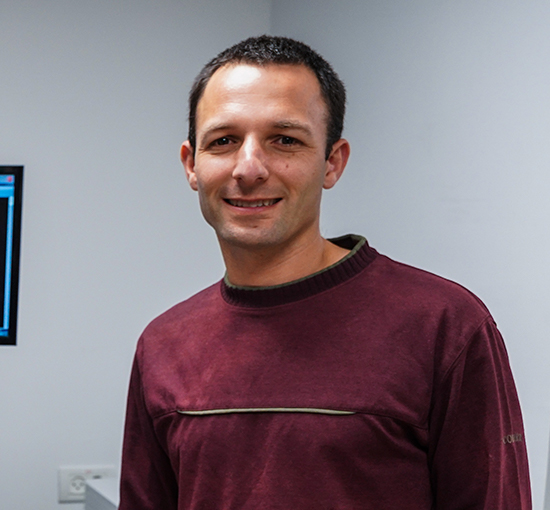
Professor Shahar Kvatinsky, from the Andrew and Erna Viterbi Faculty of Electrical and Computer Engineering, received a grant for the development of Real Processing in Phase Change Memory (PCM).
One of the bottlenecks in computer performance today is the communication between the two “brains” of the traditional computer — the processor and the memory. Although the capabilities of processors are improving at a rapid pace, the “dialogue” between the processor and memory requires a relatively long time that prolongs the performance of tasks on the computer.
Based on the previous ERC grant he received, Prof. Kvatinsky developed an innovative unit called mMPU that combines processing and storage in the same cell. As part of this new grant, he intends to connect this to the “Phase Change Memory” (PCM) technology, which monitors changes in the electrical resistance of the material. This technology is already commercially available, and according to Prof. Kvatinsky, “A successful demonstration of a mMPU unit based on phase change memory may lead to the design and construction of fast and energy efficient computers, that are cheaper than existing computers. Such a breakthrough will dramatically affect different applications such as artificial intelligence, databases, and genomics.”