Something Fresh in the State of Denmark
October 06, 2026

























The Technion’s story has been intertwined with Israel’s for more than a century, from laying the foundations for a new nation to shaping its future.

Step inside Israeli innovation at the David and Janet Polak Visitors Center. Experience our 360° immersive movie and tech exhibition. Open to individuals and groups.
Learn More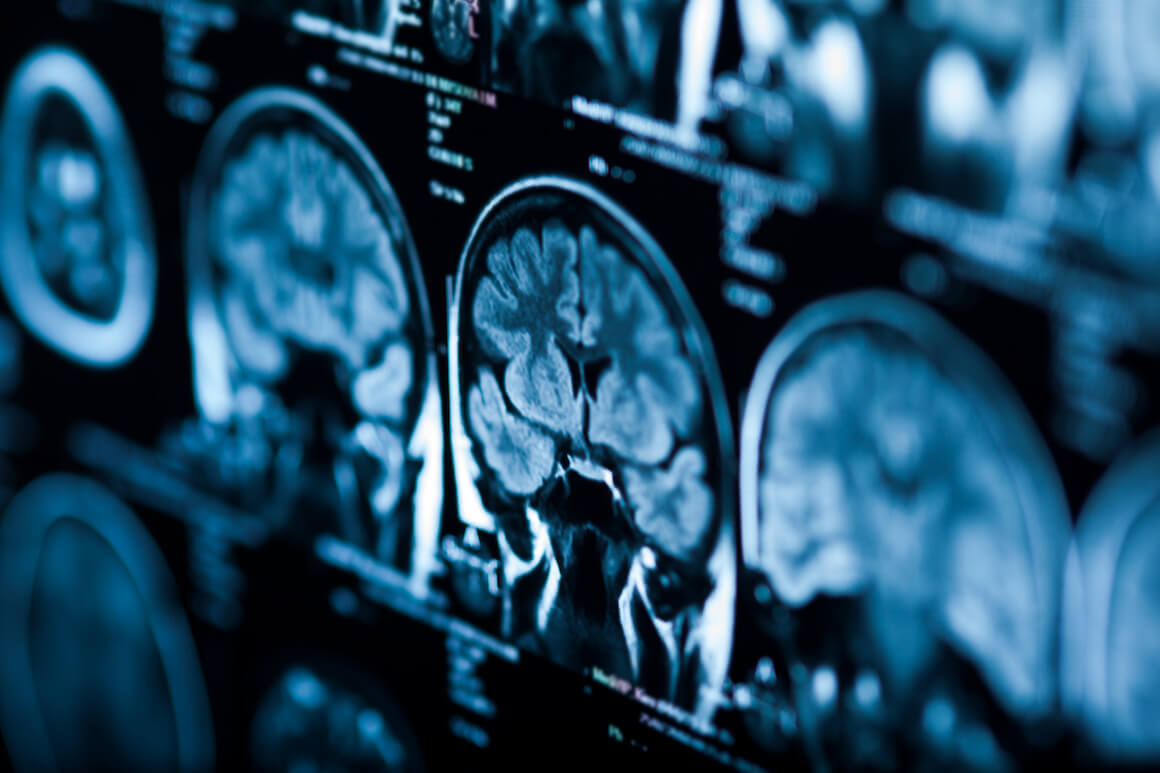
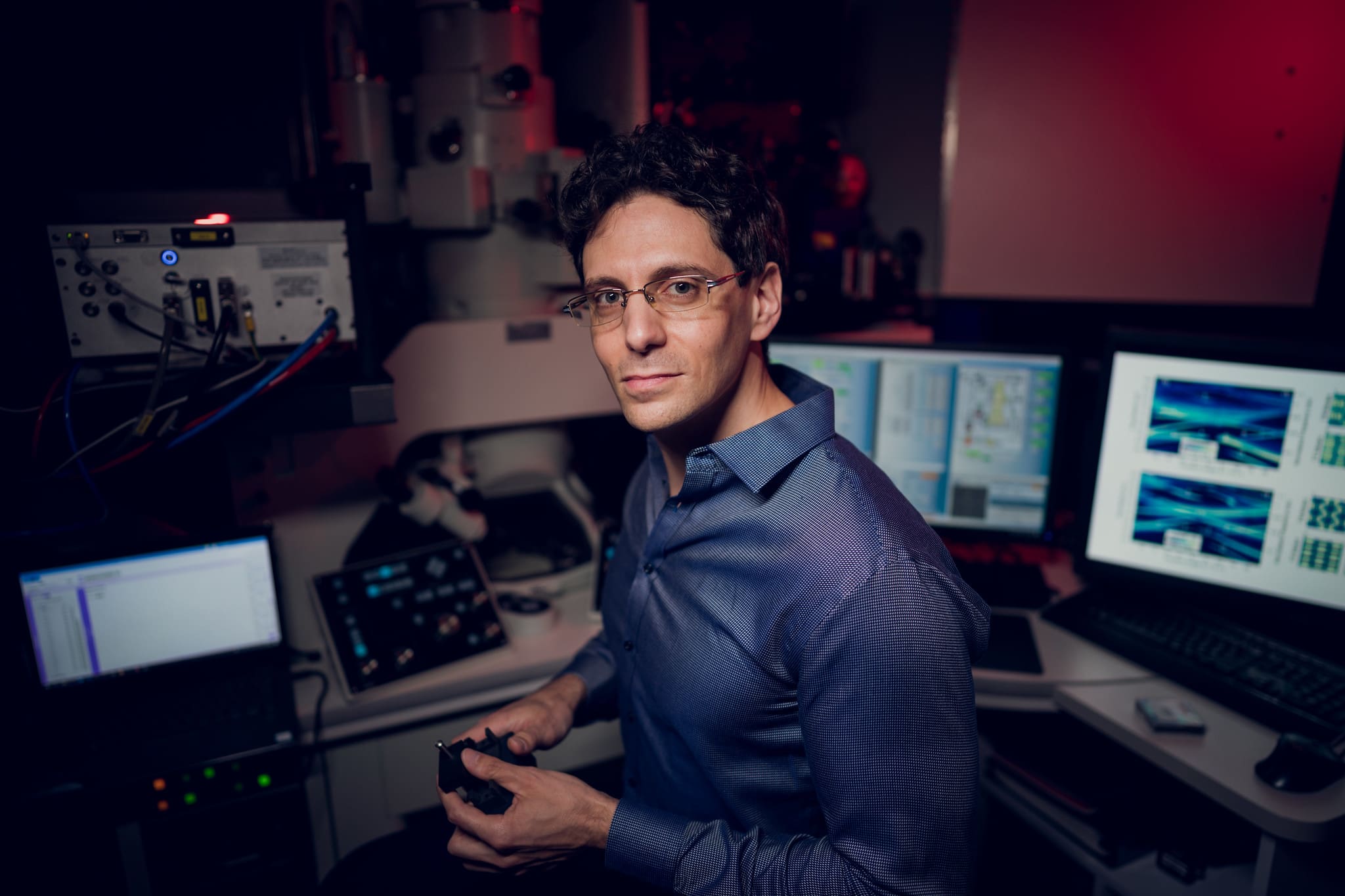
Doron Elad was only 25 years-old when he received a Ph.D. in mathematics from the Technion in 2018. He may be the youngest Ph.D. graduate in the University’s history. But this degree was only the beginning of his education. Today, he is a fourth-year medical student in the Technion’s Ruth and Bruce Rappaport Faculty of Medicine. He intends to combine his expertise in mathematics with medicine to help people with mental illness.
“My primary interests lie in the intersection between mathematics, computer science, statistics, and medicine,” he explained. “Roughly speaking, I am mainly interested in applying tools that are usually considered to be part of applied mathematics on problems arising from biology and medicine, with the hope of gaining insights carrying medical significance.”
Doron wants to use this multidisciplinary knowledge in clinical practice, particularly psychiatry. He feels this discipline allows for a unique human connection and that it is an area of neglect in Israel. He hopes to make a difference in the lives of people and in the field.
His interest in medicine began as a child. Doron’s mother is a perioperative nurse, and he would mimic her, writing discharge papers for his stuffed animals after performing surgery on them. She answered all his questions in detail, and he loved learning about specific medical conditions.
But first he felt compelled to answer the mysteries of mathematics that plagued him. “It really annoyed me that my teachers would just write formulas on the board without explaining where they came from,” he said. “I was very curious about the origins and fundamentals of everything.”
This is why, at the age of 16, Doron began his first degree in mathematics. And his interest in medicine led to a second bachelor’s degree in life sciences — both at Israel’s Open University.
He then went on to obtain a master’s and doctoral degree in mathematics from the Technion, becoming head teaching assistant and being awarded outstanding teaching assistant every semester. He specifically chose a topic in applied mathematics for his Ph.D. that had some connection to medicine. He studied electrolyte solutions, which has relevance for physiology, but it wasn’t enough to satisfy his urge to help people.
Fortunately, a colleague introduced him to a professor from Harvard Medical School who was looking for a postdoctoral fellow to join the Israeli team of an international project at Tel Aviv University. The team was studying the impact of sub-acute repetitive head impacts (RHI) in young soccer players. These are the kind of hits to the head that don’t result in concussion.
Specifically, he examined the effects of “heading” – when players intentionally hit the ball with their heads. Doron gained experience in statistical analysis of data and machine learning on MRI scans. It turns out that such impacts, particularly when sustained within proximity to one another, could cause brain alterations.
In another study, he analyzed deviations in brain scans between patients diagnosed with schizophrenia and a control group of people with typical brains. Because many neuropsychiatric disorders do not present radiologic findings, defining and modeling what is a “normal” brain is a challenging task. Ultimately, he was able to classify the scans as belonging to either the control group or the schizophrenic patient group. Such classification might shed light on how to objectively diagnose disorders and may even tell us something about the pathophysiology behind them.
It was fascinating, but still not enough. Through his research on schizophrenia, Doron’s interest in psychiatry grew. So, he applied and was accepted to medical school at the Technion in 2020.
While in med school, he learned about a research group at University College London (UCL) that was studying computational psychiatry. He reached out and began collaborating on a project with them two years ago.
The group was studying relapse in people who discontinue antidepressants. Doron’s research focused on determining if there was a correlation between impulsivity and relapse. To find out if people with less patience have a higher rate of relapsing into depression, we’ll have to wait for the publication of the paper in just a few weeks.

And if being a medical student and conducting extracurricular research weren’t enough, Doron is also an adjunct lecturer in mathematics at the Technion and has been for the past seven years. He is also the spouse of Shani, a Ph.D. student in the Technion’s Faculty of Mechanical Engineering, a father of two-year-old Gaia, and is expecting a baby in August. Any spare time he has is devoted to his family, their dog, and playing jazz guitar.
What motivates this 31-year-old scholar? “Beyond curiosity, I am aware that life is finite. And it’s really important to me to make the most of each moment.”
His life mantra might be, “Pursuing knowledge, being challenged, and not letting norms or what is expected limit me.”