The Technion’s story has been intertwined with Israel’s for more than a century, from laying the foundations for a new nation to shaping its future.
From medicine to security, explore how the Technion is advancing Israel and improving lives around the world.
View All Impact Areas
Explore stories, news, insights, and data across articles, videos, and podcasts.
view all content types
students
among universities worldwide for producing undergrad entrepreneurs
of all universities in the world*
The Technion’s story has been intertwined with Israel’s for more than a century, from laying the foundations for a new nation to shaping its future.
Explore ATS, the Technion, and the people behind the breakthroughs redefining what's possible for Israel and the world.
Learn More About ATSATS is a community of supporters, innovators, and champions of possibility united by one mission: transforming Israel and the world through science and discovery.
Learn MoreFor more than 100 years, the Technion has been Israel's technological engine and leading driver of innovation, technology, and entrepreneurship, transforming ideas into impact.
Learn More
Step inside Israeli innovation at the David and Janet Polak Visitors Center. Experience our 360° immersive movie and tech exhibition. Open to individuals and groups.
Learn MoreFrom medicine to security, explore how the Technion is advancing Israel and improving lives around the world.

View All Impact AreasExplore stories, news, insights, and data across articles, videos, and podcasts.
view all content typesDiscover ways to support, connect, and help drive innovation.
Get InvolvedExplore ATS, the Technion, and the people behind the breakthroughs redefining what's possible for Israel and the world.
Learn More About ATS
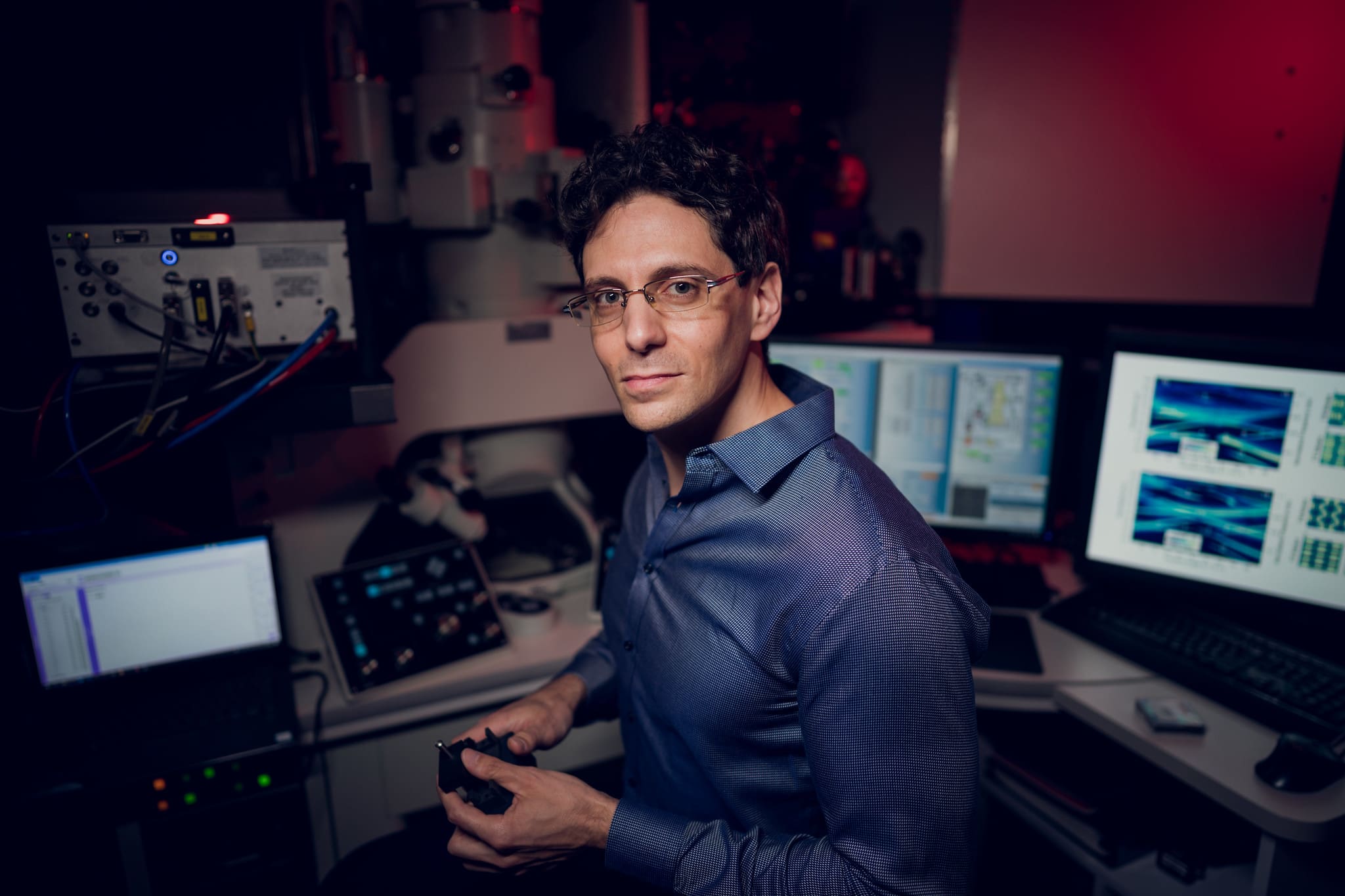
What if computers could process information like humans do? New research conducted at the Technion shows that such a device could be a part of our not-so-distant future. Led by Professor Shahar Kvatinsky of the Andrew and Erna Viterbi Faculty of Electrical and Computer Engineering, researchers combined a computer’s random-access memory (RAM) and central processing unit (CPU) functions into one chip, which allows the device to operate more like a human brain. It could provide future opportunities for using devices to process information differently.
Prof. Kvatinsky and his team tested their chip’s capabilities by showing it different examples of handwriting. The chip was able to process the samples and differentiate between them with 97% accuracy. By combining the ability to store information with the functions for using and processing information, the researchers created a chip that acts more closely to how an organic brain works and is able to analyze information more deeply.
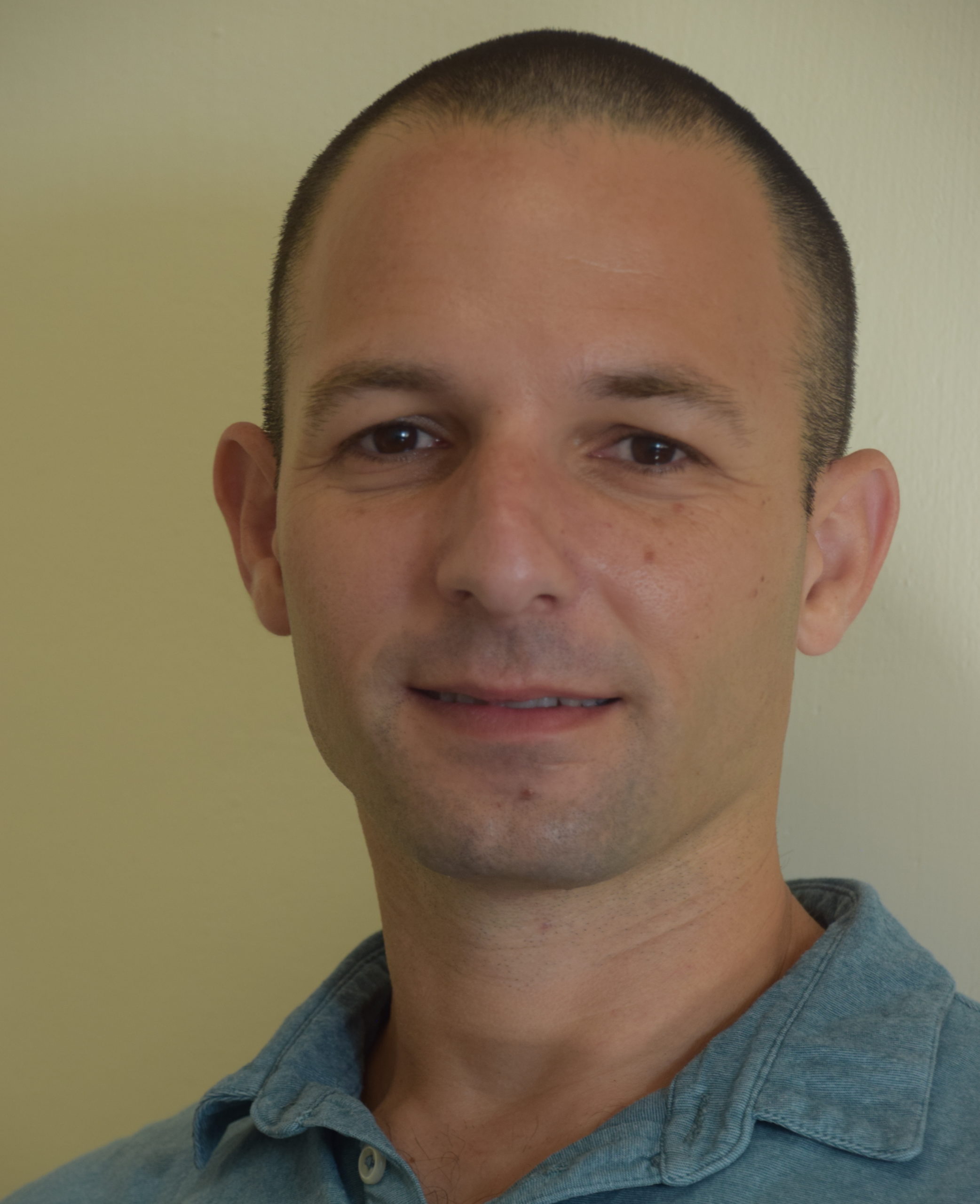
Professor Shahar Kvatinsky
The artificial neural network created by the chip is strengthened by the learning process it undertakes when processing new information, which improves its conductivity. One example of how the chip could be utilized is to improve the picture-taking function in devices such as smartphones. It would allow the phone to process the raw image it is capturing before it stores it instead of converting the physical object into digital data first.
The team hopes to continue to improve the product and release it when it is capable of being competitive on the market. Their findings from the demonstration were recently published in Nature Electronics.
February 28, 2023
Uncover the future of computing with a new chip designed to process information with human-like accuracy and efficiency.
1 min
X (opens in a new tab) / Facebook (opens in a new tab) / LinkedIn (opens in a new tab) / Email / Copy Link
Artificial intelligence is not simply changing higher education — it is detonating old assumptions about how students learn and how professors teach. As universities worldwide grapple with how to respond, the Technion is working to confront the questions head-on. Here, AI is not treated as a threat but a catalyst, prompting careful reexamination at every […]
Every year, the European Research Council (ERC) identifies some of the world’s most promising early-career researchers and gives them the freedom to pursue bold ideas. This year, two of those ideas came from the Technion – Israel Institute of Technology. From cancer research to artificial intelligence (AI), breakthroughs that shape the future often begin with […]
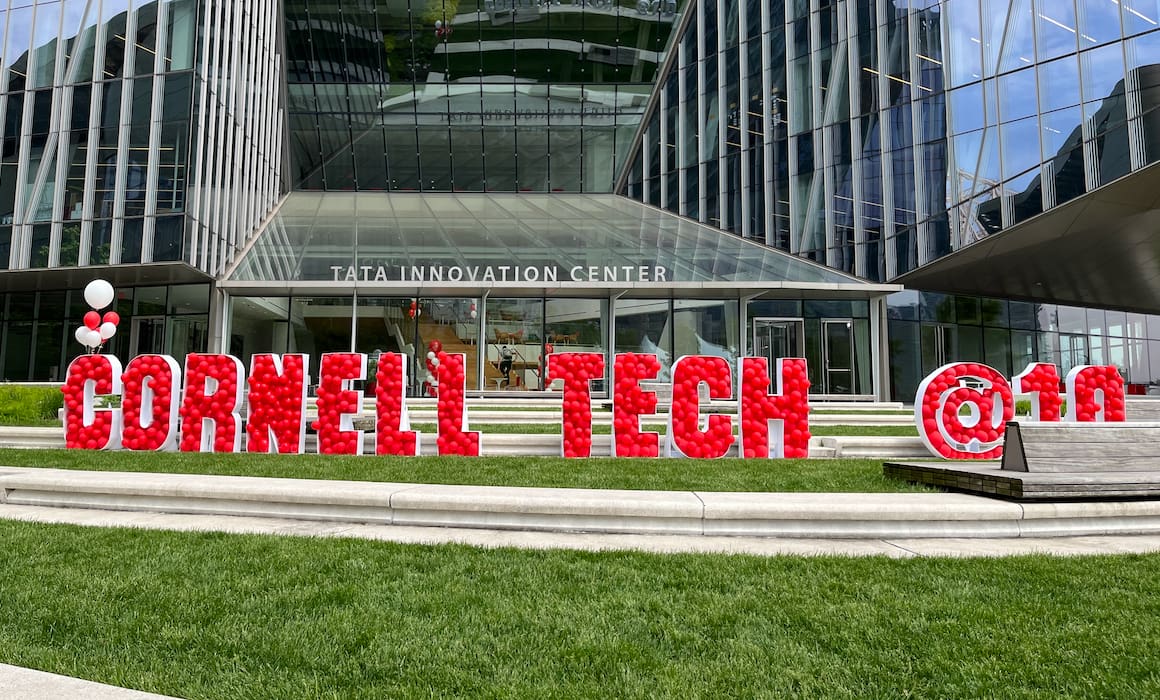
Despite New York City Mayor Zohran Mamdani’s past calls to boycott Cornell Tech because of its partnership with Israel’s Technion-Israel Institute of Technology, city officials and Jewish community leaders on Wednesday announced a $250,000 investment in a Cornell Tech research initiative aimed at expanding New York City’s tree canopy to combat rising temperatures. New York City Council Speaker Julie Menin, the first Jewish woman to hold the post, and other officials unveiled the funding for Cornell Tech’s Urban Tech Hub at the Jacobs Technion-Cornell Institute on Roosevelt Island. The grant will launch the Generative Tree Canopy Project, which will use…
Stay on top of the latest breaking scientific discoveries from Israel and the Technion. Subscribe to the ATS newsletter.