Something Fresh in the State of Denmark
October 06, 2026































The Technion’s story has been intertwined with Israel’s for more than a century, from laying the foundations for a new nation to shaping its future.

Step inside Israeli innovation at the David and Janet Polak Visitors Center. Experience our 360° immersive movie and tech exhibition. Open to individuals and groups.
Learn More
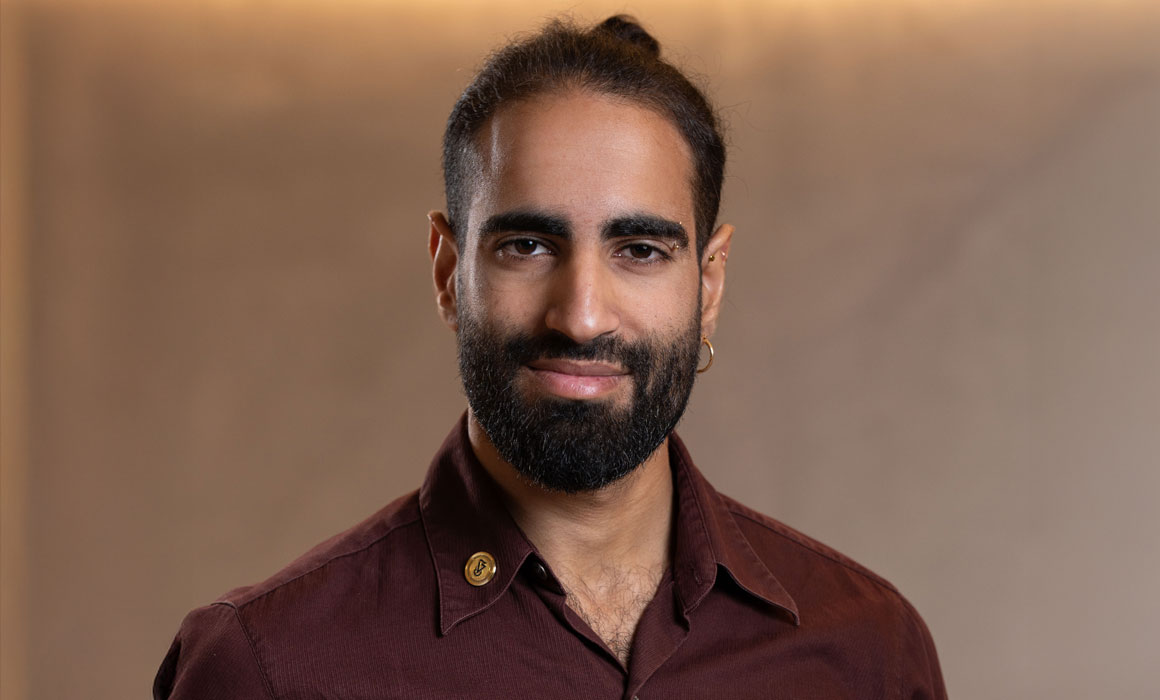
A Dream Realized Four years after first approaching the Technion, I was accepted. Then October 7 happened, postponing the start of classes. Today I am in perhaps the University’s toughest program: a 9-year track to earn an M.D. in the Ruth and Bruce Rappaport Faculty of Medicine and a bachelor’s degree in the Faculty of […]

I thank my late uncle, a fallen IDF soldier, for steering me on to this path. He studied computer engineering at the Technion, and his name is on the University’s memorial wall. I didn’t have the honor of meeting him, but I remember stories about him and knew I wanted to continue his legacy here. […]

I am a fourth-year student in the Faculty of Civil and Environmental Engineering at the Technion, majoring in mapping and geo-information. This field is meaningful to me because it combines technology and real-world impact. For example, using remote sensing and mapping, we can help farmers practice precise agriculture — detecting which parts of a field […]
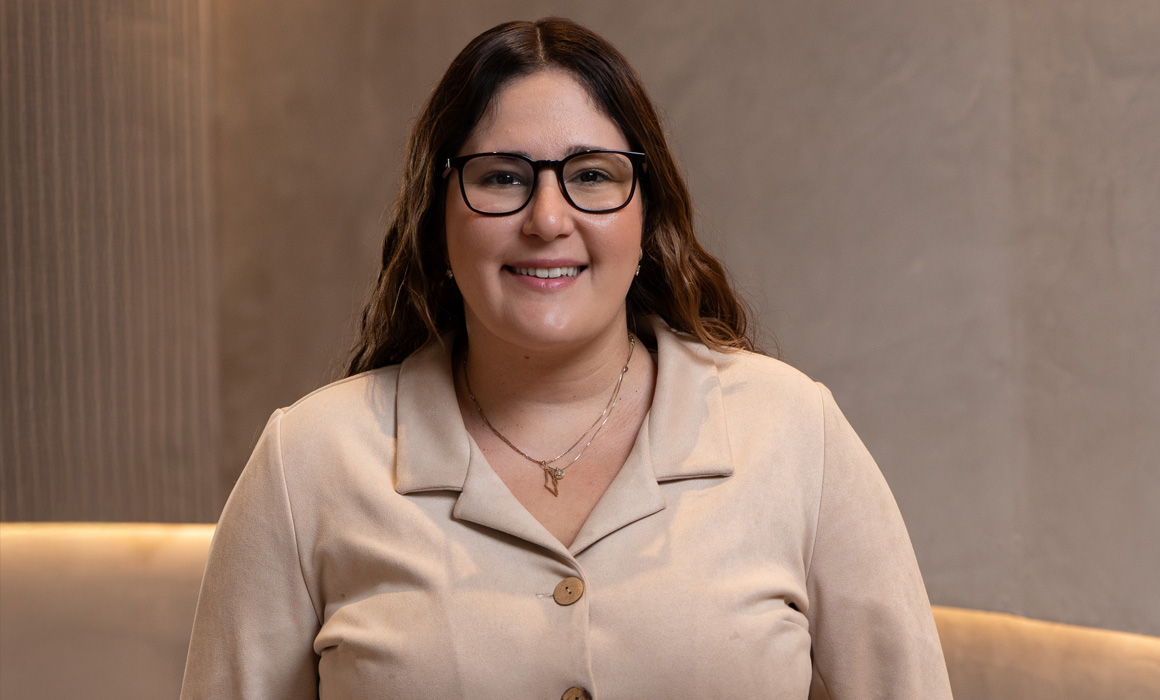
In my final year as a Technion undergraduate, I tested positive for a BRCA mutation. This means I face an increased risk for breast and other cancers. This revelation altered the course of my life — making my longstanding desire to do scientific research not just an academic pursuit, but a personal one. I earned […]

A new Israeli study shows that listening to the sounds fish make while eating can enable real-time monitoring, early detection of disease and more precise feeding in aquaculture ponds. The research will be presented on Tuesday at the International Sea The Future 2026 conference in Eilat, hosted by the Agriculture and Food Security Ministry and the Negev, Galilee and National Resilience Ministry. Contrary to the common perception of the underwater world as silent, it is in fact rich with sound. Marine environments are filled with communication signals between animals, noises created by movement and even sounds accompanying everyday activities such…

Over the past decade, there has been a growing understanding that we need to rethink not just how we build the structures of the future, but from what materials we build them. The main reason is that the construction industry is one of the world’s leading sources of environmental pollution. Cement production—the most widely used building material—alone accounts for roughly 8% of global carbon emissions. In response, science and technology are advancing to develop alternative, sustainable building materials with lower carbon footprints, often based on recycled resources while preserving strength and quality. As part of a joint initiative by researchers…

Israel’s quantum computing sector is experiencing a breakout year. In 2025 alone, five Israeli quantum companies have raised almost $500 million, an influx of capital that places the country among the most active and diversified quantum hubs in the world. The companies – Quantum Art, Classiq, QuamCore, Qedma, and Quantum Machines – span nearly every layer of the quantum stack, from hardware and scaling architectures to control systems and error-correction software. Quantum Art announced a $100 million Series A, bringing its total funding to $124 million. The round was led by Bedford Ridge Capital with participation from Battery Ventures, Destra…

Apple is confronting the prospect of losing one of the most consequential executives behind its modern hardware renaissance. Israeli Johny Srouji, the senior vice president who built the company’s silicon program and oversees its hardware technologies group, has informed CEO Tim Cook that he is considering leaving in the near future, according to Bloomberg. Srouji is the most senior Israeli at the company and a central figure in the multi-year effort that moved Apple from Intel chips to its own highly regarded M-series processors. According to Bloomberg, Srouji has also told colleagues that he intends to join another company if…

LeanCon, an AI startup seeking to overhaul one of the construction industry’s most entrenched bottlenecks, has raised a total of $6 million, doubling its original Seed target. The round was led by Ibex Investors, with participation from Fusion VC, Newman Architects, TCA LA, Connecticut Innovations, Siegel Capital, and a group of sector-focused angel investors, including Phil Bernstein, former Autodesk executive and Deputy Dean at the Yale School of Architecture. Founded by engineers Ziv Levi and Sapir Tubul, LeanCon is positioning itself as the world’s first AI-powered pre-construction engineering team, offering a platform that aims to convert one of the industry’s…

After operating in near-total secrecy for more than eighteen months, Israeli startup Moonshot Space is emerging with an ambition rarely seen outside government laboratories. The company is developing a high-power electromagnetic launcher designed to propel objects to hypersonic speeds using electricity rather than chemical propellants, a technology it believes could reshape both orbital logistics and the global race for hypersonic capabilities. Moonshot has raised $12 million to date, led by Angular Ventures, including a $1 million grant from the Israel Innovation Authority. Founded in 2024, the company brings together a senior group of industry, defense, and government veterans: Hilla Haddad…

A technology developed in the laboratory of Prof. Amit Meller from the Technion—Israel Institute of Technology Faculty of Biomedical Engineering marks a significant advancement toward rapid proteome analysis, with far-reaching implications for both fundamental research and disease diagnosis. A 2023 Nature opinion article identified the seven most important emerging technologies to watch—with single-molecule protein sequencing taking the top spot. The article highlighted the pivotal contributions of Prof. Meller’s research group in advancing key technologies toward the commercialization of protein sequencing systems, paving the way for a true revolution in biological and medical research. Since proteins are the body’s fundamental building blocks, their rapid and…

In a 1966 Hollywood film “Fantastic Voyage”, screenplay by Isaac Asimov, scientists are shrunk to a few millimeters and injected into the bloodstream of a dying scientist who has vital information. Their mission: Navigate to his brain and destroy a blood clot before returning to normal size. Fast forward: On sabbatical in Boston in the early 1980s, Rafael rocket engineer Gabriel Iddan encounters Israeli gastroenterologist, Eitan Scapa. “I can’t reach the small intestine with my endoscope,” he says. Jokingly, to Iddan: “Can you shrink a camera and transmitter small enough to swallow and travel through the intestines?” Iddan’s Israeli startup…