The Technion’s story has been intertwined with Israel’s for more than a century, from laying the foundations for a new nation to shaping its future.

From medicine to security, explore how the Technion is advancing Israel and improving lives around the world.
View All Impact Areas
Explore stories, news, insights, and data across articles, videos, and podcasts.
view all content types
countries
of the student body are Arab Israeli
companies founded by graduates and faculty in the last 10 years
The Technion’s story has been intertwined with Israel’s for more than a century, from laying the foundations for a new nation to shaping its future.
Explore ATS, the Technion, and the people behind the breakthroughs redefining what's possible for Israel and the world.
Learn More About ATSATS is a community of supporters, innovators, and champions of possibility united by one mission: transforming Israel and the world through science and discovery.
Learn MoreFor more than 100 years, the Technion has been Israel's technological engine and leading driver of innovation, technology, and entrepreneurship, transforming ideas into impact.
Learn More
Step inside Israeli innovation at the David and Janet Polak Visitors Center. Experience our 360° immersive movie and tech exhibition. Open to individuals and groups.
Learn MoreFrom medicine to security, explore how the Technion is advancing Israel and improving lives around the world.
View All Impact AreasExplore stories, news, insights, and data across articles, videos, and podcasts.
view all content typesExplore ATS, the Technion, and the people behind the breakthroughs redefining what's possible for Israel and the world.
Learn More About ATS
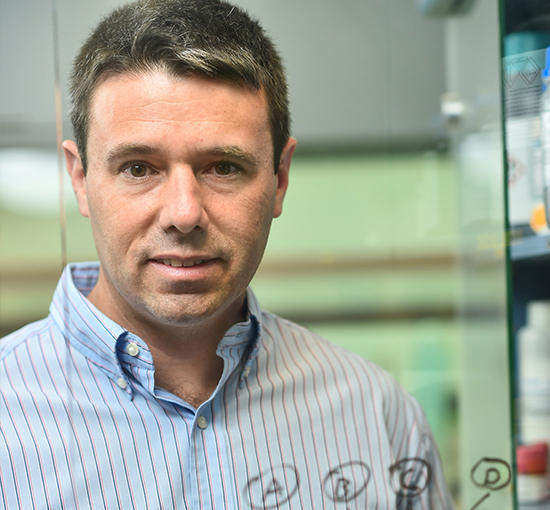
A Webinar with Professor Avi Schroeder
Whether it is the coronavirus behind the global COVID-19 pandemic, or one that causes a devastating disease in shrimp, all viruses require certain proteins in order to pass from one cell to another. Stopping the production of those proteins will effectively stop the virus.
In this special webinar, Technion Professor Avi Schroeder talks about how synthesizing a molecule called siRNA, and using it to replace naturally occurring RNA molecules, has proven effective in stopping the highly destructive white spot virus from passing from one cell to another in shrimp. According to Prof. Schroeder, it could be possible to apply the same technology to help in the fight against COVID-19.
Prof. Schroeder is an associate professor and a member of the Wolfson Faculty of Chemical Engineering at the Technion. He leads the Laboratory for Targeted Drug Delivery & Personalized Medicine Technologies.
Click on the image above to experience this webinar.
March 19, 2020
Learn about Professor Avi Schroeder's work fighting againts COVID-19, and the surprising connection between shrimp and the virus.
1 min
X (opens in a new tab) / Facebook (opens in a new tab) / LinkedIn (opens in a new tab) / Email / Copy Link
Why do so many life-saving technologies never make it out of the lab? Prof. Marcelle Machluf demonstrates how combining scientific rigor with business vision is the only way to bring practical solutions to the patients who need them most. As a case in point, she shares her personal transformation from researcher to entrepreneur. This talk […]
Can the future of nutrition be more personalized, even down to our biology? A new study from the Technion suggests it can. Researchers in the Faculty of Biotechnology and Food Engineering recently discovered that men and women digest milk and plant-based milk alternatives differently — a breakthrough that could have far-reaching implications for nutrition science, […]
This op-ed is authored by Jenny Goldstein, chief development officer of the American Technion Society. For anyone who has faced a cancer diagnosis, or watched someone they love go through one, there is a particular anguish that comes with uncertainty. For me, that feeling is deeply personal. My father, an engineer whose love of science […]
Stay on top of the latest breaking scientific discoveries from Israel and the Technion. Subscribe to the ATS newsletter.