Why the Perfect Pitch is Your Biggest Mistake
September 23, 2026





















The Technion’s story has been intertwined with Israel’s for more than a century, from laying the foundations for a new nation to shaping its future.

Step inside Israeli innovation at the David and Janet Polak Visitors Center. Experience our 360° immersive movie and tech exhibition. Open to individuals and groups.
Learn More

MyFavorEats, an innovative platform designed by Technion alumna Orly Rapaport, will find, sort, and personalize recipes to meet your dietary restrictions. “I’m a home cook as well as a software engineer,” Rapaport explains. “I recognized the need for a tool that would help tweak recipes to individual dietary needs and tastes.” The experienced tech exec says her artificial-intelligence solution combines a chef’s savvy, nutritionist’s knowledge, and personal shopper’s determination to find just the right ingredients to fit your taste preferences and health conditions, such as pregnancy, diabetes, or high blood pressure.

Associate Professor Meytal Landau, doctoral student Nir Salinas, and a research team from the Technion Faculty of Biology may have found a way to make salmonella bacterial infections less aggressive. The discovery could lead to the development of innovative treatments to inhibit antibiotic-resistant bacteria. Years of Research Lead to a Big Discovery In 2017, Prof. Landau’s team discovered that Staphylococcus aureus — an especially virulent bacterium that attacks the T cells of the immune system — does so in part by releasing toxic fibrils. Then, in 2018, Salinas and his team discovered that proteins from the same family as those…
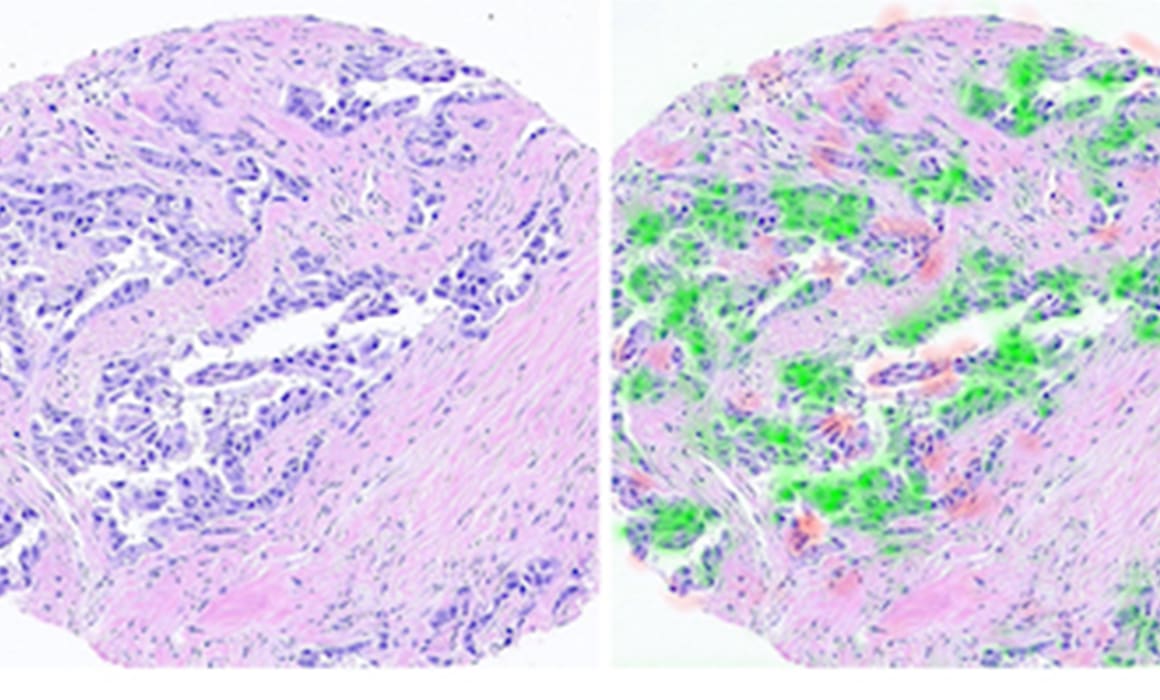
What if the treatment for your cancer was as unique as you are? That’s the promise of a new technology developed at the Technion by doctoral students Gil Shamai and Ron Slossberg and Professor Ron Kimmel of the Technion Faculty of Computer Science, in collaboration with Dr. Yoav Binenbaum of Ichilov Hospital and Professor Ziv Gil of Rambam Medical Center. The deep learning–based method for mapping critical receptors on cancer cells is expected to lead to better, more personalized cancer treatment. The technology extracts molecular information from digital biopsy images that underwent hematoxylin and eosin (H&E) staining. H&E staining allows…
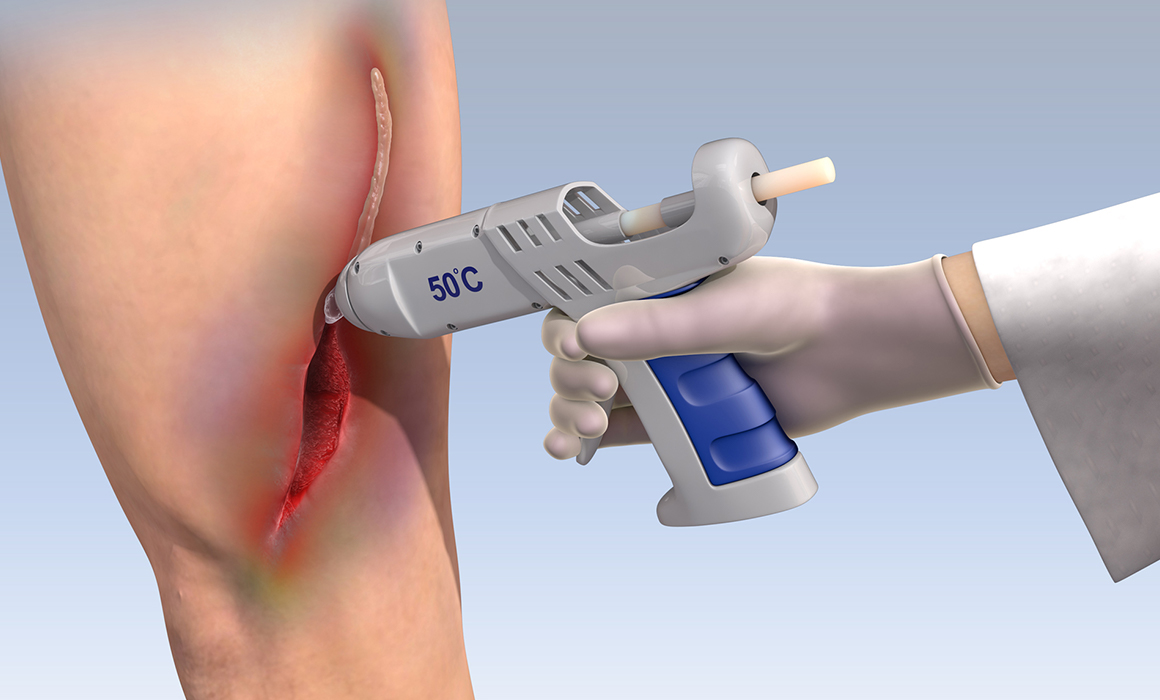
Chances are, you have a hot glue gun somewhere in your home. They’re perfect for scrapbooking, arts and crafts, assembling toys, even the occasional repair around the house. And now, researchers at the Technion–Israel Institute of Technology have adapted hot-glue-gun technology to heal seriously injured human tissues. Better, Faster Healing Most serious injuries are treated with sutures, pins, and staples that can leave painful scars and sometimes require removal after the tissues heal. It also requires a great deal of medical skill to suture or staple skin, which drives up medical costs. Medical glue is different. Already popular in the…
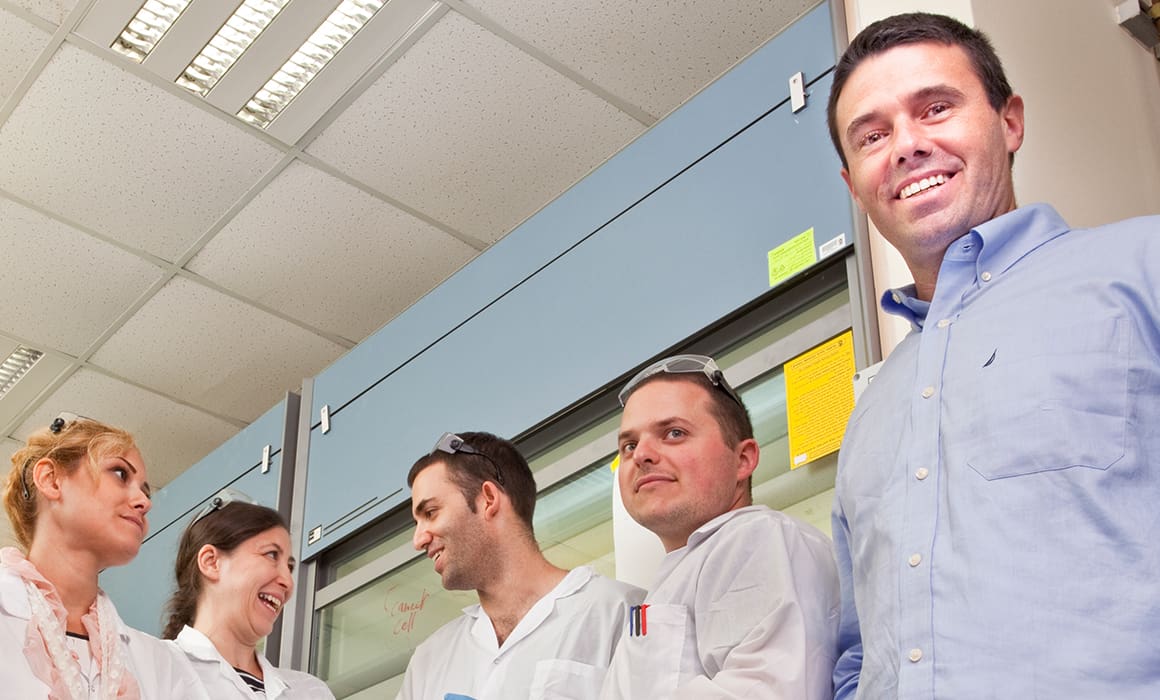
Technion researchers have successfully treated a cancerous tumor from within, using a “nano-factory” — a synthetic cell that produces anti-cancer proteins within the tumor tissue. Just as human cells can generate a variety of biological molecules, the synthetic cell can produce a wide range of proteins. Synthetic cells’ similarities to natural cells hold vast potential in the production of artificial organs and understanding the origins of life. And as this research shows, they could also be the key to fighting cancer. Doctoral student Nitzan Krinsky and Assistant Professor Avi Schroeder at the Wolfson Faculty of Chemical Engineering at the Technion…

Smell is a primary human sense, key to our survival. Like a super-sensitive human nose, an experimental technology can “smell” and identify the chemical composition of a person’s breath and then diagnose up to 17 potential diseases, according to the scientists who developed it. These researchers, led by Hossam Haick of the Technion – Israel Institute of Technology, say their Na-Nose, which uses nanorays to analyze breath, can identify Parkinson’s disease, various cancers, kidney failure, multiple sclerosis and Crohn’s disease with 86% accuracy. “I would say our technology in many cases (is) equivalent to the accuracy of the currently available…
Compelling philanthropic initiatives often sound simple. End child hunger. Educate all people. Spread clean water access. Help earthquake victims. Improve health care. Cure cancer. But these bold objectives are not simple. These are big, complex ideas requiring tremendous resources that research universities are often best equipped to harness. Philanthropy is one of the key resources needed. We at ATS don’t actually execute these initiatives — but we play the critical role of translating the big ideas into action by connecting the diverse and sometimes disparate groups of people who can accomplish these far-reaching goals together. In other words, we don’t…