Something Fresh in the State of Denmark
October 06, 2026
























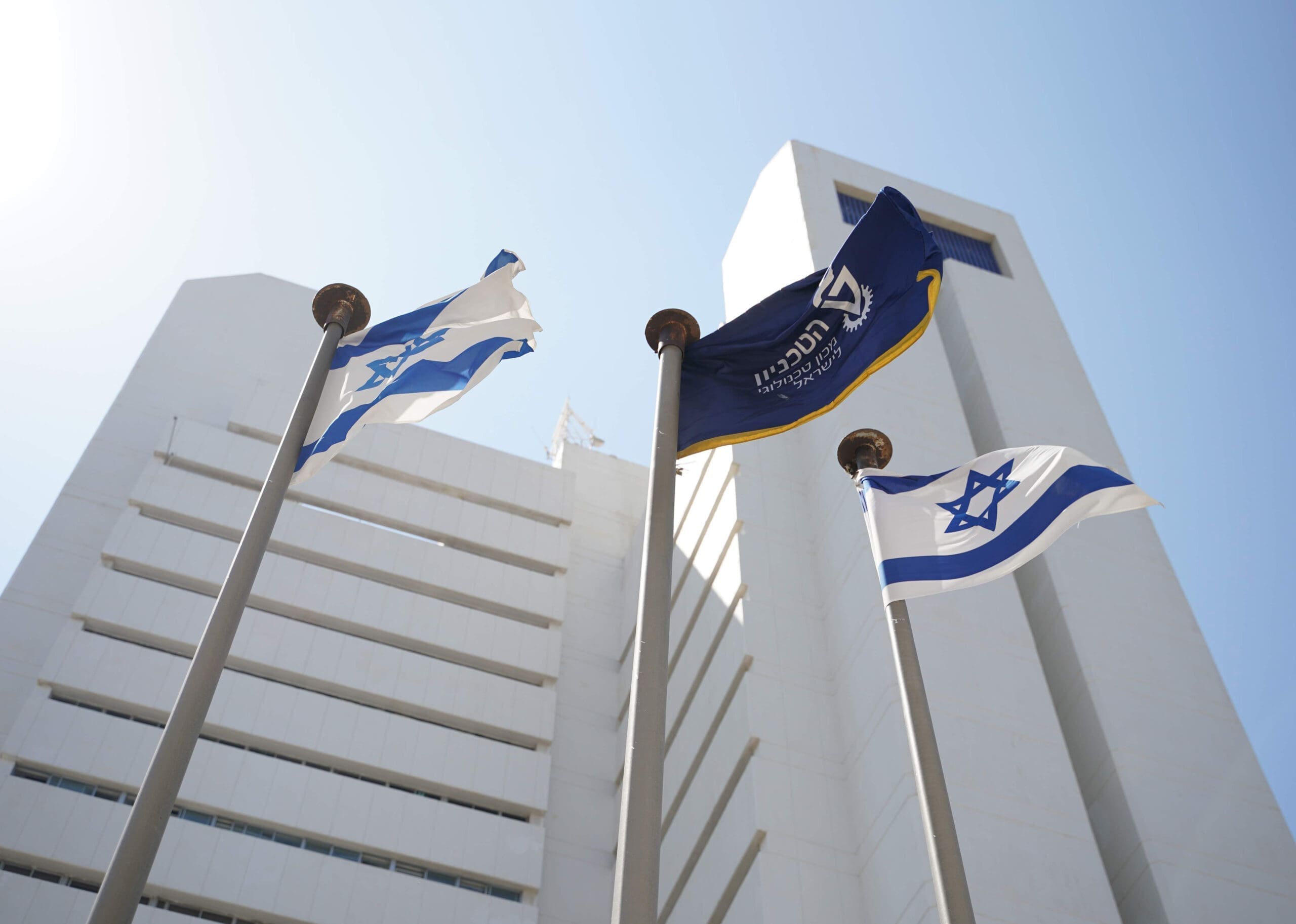







The Technion’s story has been intertwined with Israel’s for more than a century, from laying the foundations for a new nation to shaping its future.

Step inside Israeli innovation at the David and Janet Polak Visitors Center. Experience our 360° immersive movie and tech exhibition. Open to individuals and groups.
Learn More

Built to protect pedestrians from falling debris, the ubiquitous sidewalk shed has become an unfortunate defining feature of New York City life. And while we can applaud the new, improved designs for these eyesores, we need to get smarter about how to keep fewer of them up and for shorter periods of time. Simply making sidewalk sheds prettier is merely putting “lipstick on a pig” — no offense to pigs. We can do better. As of last year, the city had more than 8,000 active sidewalk shed permits on file. More than 400 have been up for more than half…
Artificial intelligence is so much more than the latest buzzword. By blurring the line between human and technology, AI has proven its staying power and will undoubtedly shape the future of life on Earth. It is also no secret that when it comes to AI innovation, Israel punches above its weight class. I recently called upon the brightest minds in Israel to take an active role in shaping AI applications on a global scale, setting ethical standards and ensuring that this technology is used for good. When I think of Israel’s AI prowess, I can’t help but place the Technion…
The magnitude of artificial intelligence’s potential can cloud our imagination when trying to understand its specific real-world impact. Fortunately, the Technion – Israel Institute of Technology and its expansive network of alumni around the world are working each day to ensure that its potential is honed for good and advance true transformation that we can see with our own eyes. One such alum is Jonathan Spitz, founder of AI start-up GaussML. He leverages physical AI—the new frontier of AI innovation that will bring about a future where robots are our helpful friends, rather than the villains of science fiction. I…

California’s most devastating wildfire – the 2018 Camp Fire, which killed 85 and destroyed nearly 19,000 structures – forced nearly half of all residents living within designated fire perimeters to relocate within a year. That local exodus is documented by Cornell-led research that mapped annual moves between U.S. neighborhoods from 2010 to 2019 in detail 4,600 times greater than standard public data. Called MIGRATE, the new, publicly available dataset revealed that most of those displaced remained within the affected county – moves not captured in county-level public migration data aggregated every five years. The case study illustrates how a finer-grained…
While our understanding of artificial intelligence’s exact impact on society remains incomplete, its potential to touch every sector of our lives is well known and highly promising for science and scientific discoveries. However, we are at a critical juncture where we must answer lingering concerns and questions surrounding AI’s influence on society before continuing to scale its power. What kinds of data should AI models be able to access? Is AI safe to use in healthcare? Will AI eliminate much-needed jobs? Ultimately, what does it look like to develop and use AI technology responsibly and ethically? We acknowledge that we…
At the Zimin Institute for AI Solutions in Health Care, innovation meets impact. Founded in 2022 through a partnership between the Zimin Foundation and the Technion’s Tech.AI.BioMed arm, the institute supports transformative research that applies artificial intelligence to real-world medical challenges. From diagnostics to drug discovery and patient care, AI is redefining what’s possible in […]

As technology becomes more ingrained in daily life, domestic abusers and perpetrators of human trafficking are using it in insidious new ways that can target their victims even from a distance. That’s why Nicola Dell, a computer and information scientist at Cornell Tech, studies technology-facilitated abuse and how to stop it. Her pioneering work helps survivors of intimate partner violence and human trafficking so they can regain their personal and digital safety. Dell’s research focuses on predicting and warding off the potential actions of attackers who can bypass many types of security precautions simply through their intimate knowledge of their…
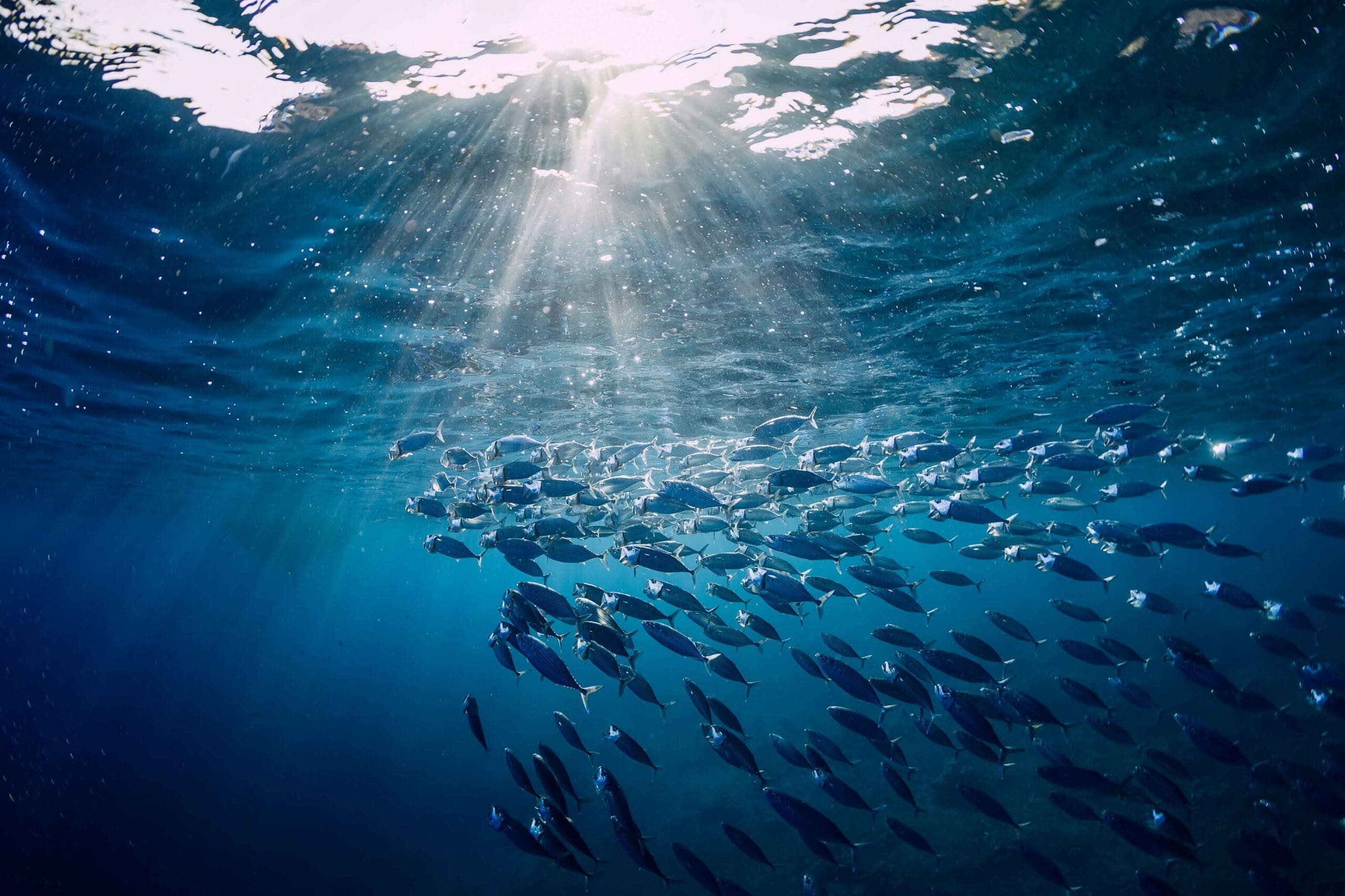
A new Israeli study shows that listening to the sounds fish make while eating can enable real-time monitoring, early detection of disease and more precise feeding in aquaculture ponds. The research will be presented on Tuesday at the International Sea The Future 2026 conference in Eilat, hosted by the Agriculture and Food Security Ministry and the Negev, Galilee and National Resilience Ministry. Contrary to the common perception of the underwater world as silent, it is in fact rich with sound. Marine environments are filled with communication signals between animals, noises created by movement and even sounds accompanying everyday activities such…
Israeli researchers have developed an innovative method that enables medicine to be manufactured within the body itself. The pioneering approach, not yet tested on humans, uses live, harmless bacteria that act like tiny factories, producing therapeutic proteins inside the body, exactly where they are needed. “We are accustomed to thinking that to introduce a drug into the body, it must be manufactured in a factory and then delivered via a capsule or an injection,” said Prof. Boaz Mizrahi of the Technion – Israel Institute of Technology’s lab for biomaterials in the Faculty of Biotechnology and Food Engineering. “This could be…

At the heart of Israel’s innovation ecosystem stands the Technion – Israel Institute of Technology, a place where curiosity meets ambition and ideas become world-changing realities. The Technion’s legacy is not just in its classrooms and labs, but in the remarkable journeys of its graduates, who are shaping the future of artificial intelligence across the […]

There are at least two key resources vital for human existence and progress: Water and power. Israel has partly solved the water problem, with state-of-the-art desalination technology. Engineers figured out how to force high-pressure seawater through semi-permeable membranes that filter out salt and other impurities, leaving behind desalinated water – a process known as reverse osmosis. Some of the desalinated water is actually pumped into the Sea of Galilee, which is desperately shallow. As for energy, offshore natural gas deposits have helped ensure a reliable source of electric power for all Israelis, plus an unprecedented $35 b. gas contract for…