Something Fresh in the State of Denmark
October 06, 2026






















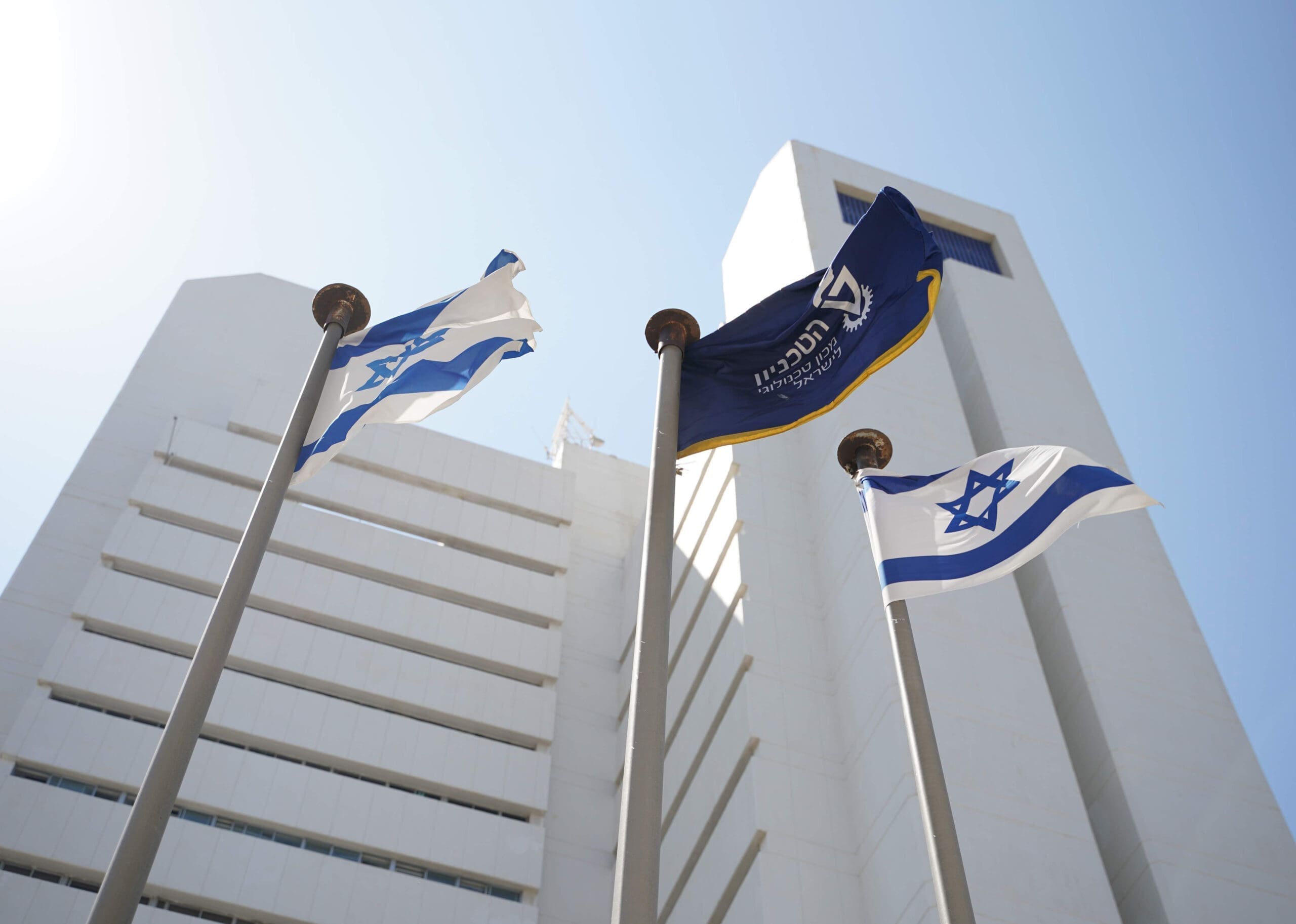






The Technion’s story has been intertwined with Israel’s for more than a century, from laying the foundations for a new nation to shaping its future.

Step inside Israeli innovation at the David and Janet Polak Visitors Center. Experience our 360° immersive movie and tech exhibition. Open to individuals and groups.
Learn MoreProf. Ein-Eli graduated from Bar-Ilan University (1995). He joined the Department of Materials Engineering at the Technion in 2001 after serving three years as the VP of R&D of Electric Fuel Ltd. (Israel). Before that, he was a post-doctoral fellow (1995-1998) at Covalent Assoc. Inc. (MA, USA). He served as Dean of the Department of Materials Science and Engineering for four years, between 2018 and 2021. Current research projects of Prof. Ein-Eli in the field of power sources involve advanced materials for Li-ion batteries, alkaline batteries, metal-air cells, and fuel cells. He is also engaged in research and development of electroplating…
Prof. Gurfil’s research focuses on astrodynamics, distributed space systems, trajectory optimization, celestial mechanics, and satellite dynamics and control. His research lab, DSSL, comprises an interdisciplinary group of researchers including graduate students from the Technion and abroad. In early 2021, the Adelis-SAMSON project intends to launch three autonomous nano-satellites into space, which will fly in a controlled formation for the first time ever. ASRI collaborated with industry to create a sophisticated system that can accurately pinpoint the location of distress signals from Earth for search and rescue missions, along with other applications such as environmental monitoring. Prof. Gurfil received all three…
Professor Ciechanover – together with Technion Distinguished Research Professor Avram Hershko and the late Dr. Irwin Rose of Fox Chase Cancer Center in Philadelphia – was awarded the 2004 Nobel Prize in Chemistry for the discovery of ubiquitin-mediated protein degradation, the process by which the body destroys proteins that are no longer useful. That research has led to the development of several anti-cancer drugs including Velcade® and an entire family of Immunomodulatory drugs. Along the years it has become clear that ubiquitin-mediated proteolysis plays major roles in numerous cellular processes, and aberrations in the system underlie the pathogenetic mechanisms of many…
Assistant Professor Nicola Dell’s research spans Human-Computer Interaction (HCI) and Information and Communication Technologies for Development (ICTD) with a focus on designing, building, and evaluating novel computing systems that improve the lives of under-served populations in low income regions. Prof. Dell’s research and outreach activities have been recognized through several awards and fellowships, including a Graduate Facebook Fellowship and a Google Anita Borg Scholarship. She was born in Zimbabwe and received a B.Sc. in Computer Science from the University of East Anglia (UK) in 2004, an M.S. and Ph.D. in Computer Science and Engineering from the University of Washington in…
The Geva-Zatorsky lab, established nearly three years ago, studies the interaction of gut microbes and the host immune system in health and disease. She has characterized the host response to a variety of intestinal microbes and has developed an approach that fluorescently labels the microbes to visualize them live inside organisms. Other research projects in her lab focus on antibiotic-resistant bacteria; the emerging field of the gut-brain axis, which explores the interaction between intestinal bacteria and the brain; and how gut bacteria can be used for cancer prevention and treatments. Since the COVID-19 pandemic took hold, many of the researchers…
Prof. Fishman and her team address consumer interest in healthy foods and protein alternatives that do not rely on animal sources. Her research mainly centers on green chemistry using natural biocatalysts, alternative proteins as meat replacements, and fermentation technology. For example, she has experimented in developing vegan gels used to produce chocolate pudding or gummy bears with the same texture as their animal-based counterparts, and with less sugar and oil and higher protein content. Her group also conducts soil and water research. Working with the Technion Faculty of Civil and Environmental Engineering, she helped develop an innovative, patented technology to…
An aeronautical engineer by trade, Prof. Bercovici is equally interested in understanding basic physical mechanisms related to fluid mechanics (the flow of liquids or gases) and in leveraging these mechanisms to create new tools and new capabilities. His current focus is on development of the Fluidic Shaping method that his lab pioneered, which uses the physics of fluids to shape liquid volumes into useful optical components (such as lenses) in minutes. The method won the 3D printing award by SPIE (the international society of photonics and optics), and the lab recently received the prestigious ERC award from the EU for…
Prof. Adir served for nearly two decades in the Schulich Faculty of Chemistry, most recently as dean. He holds the Bertha Hertz-Axel Chair in Chemistry. His research focuses on the relationship between the three-dimensional structure of proteins (such as enzymes) and their function. Prof. Adir employs X-ray crystallography to analyze the relative positions of the atoms within a molecule, resulting in a 3D model. Some applications of his work involve the process of photosynthesis – the efficient way in which plants convert solar energy into useful chemical energy. Other projects involve the study of proteins that can serve as targets…
Prof. Friedler is head of the Water Forum Project at the Technion and head of the Stephen and Nancy Grand Water Research Institute. A senior research fellow, he holds the Henry Goldberg Academic Chair. His research interests include developing alternative water sources as part of sustainable management in the urban sector, extensive wastewater treatment systems, and processes occurring in sewer systems and those affecting water quality in catchment basins.
In conjunction with his role a faculty member, Prof. Broday leads the Technion Center of Excellence in Exposure Science and Environmental Health. His research interests include atmospheric and aerosol physics, air pollution, exposure modeling and assessment, applications of GIS for environmental health, dosimetry of inhalable pollutants, and enviroinformatics. His research group studies methods for measuring airborne pollutants at the breathing height, improved acute and chronic exposure estimation in urban areas, and linking geo-referenced databases for better air-quality inference.
Professor Gideon S. Grader joined the Technion Faculty of Chemical Engineering in 1989, and served as the dean from 2016 to 2020. In 2007, he became the founding director of the Nancy and Stephen Grand Technion Energy Project (GTEP), which aims to ensure the university’s role as a key player in energy research; he held that role until 2015. Prof. Grader’s research aims to develop clean technologies that will decarbonize our economy and prevent global climate change. Focuses include the development of ceramics for energy applications, combustion of non-carbon fuels, and hydrogen generation. One project has centered on using advanced…
Prof. Grobman’s work focuses on performance-oriented architectural design, sustainable design, and the use of computers to develop innovative tools in architectural design and fabrication. His Technion Computer Oriented Manufacturing Lab, within T_CODE, is equipped with an advanced Computer Numerical Control machine, and 3D printing, scanning, and laser-cutting machines. It is the only such lab in Israel. As a practicing architect, his projects often test the real-life viability of his research. The Porter School of Environmental Studies building he designed at Tel Aviv University won an international design competition for sustainability. Born in Moscow, Prof. Grobman graduated from the Israeli Air…