Something Fresh in the State of Denmark
October 06, 2026



























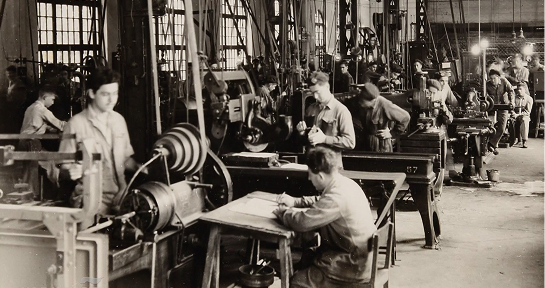
The Technion’s story has been intertwined with Israel’s for more than a century, from laying the foundations for a new nation to shaping its future.
Step inside Israeli innovation at the David and Janet Polak Visitors Center. Experience our 360° immersive movie and tech exhibition. Open to individuals and groups.
Learn MoreAnother groundbreaking Technion invention.

I made many mistakes, but failure is part of the learning process.”
Dov Moran, Technion Alumnus and USB Inventor
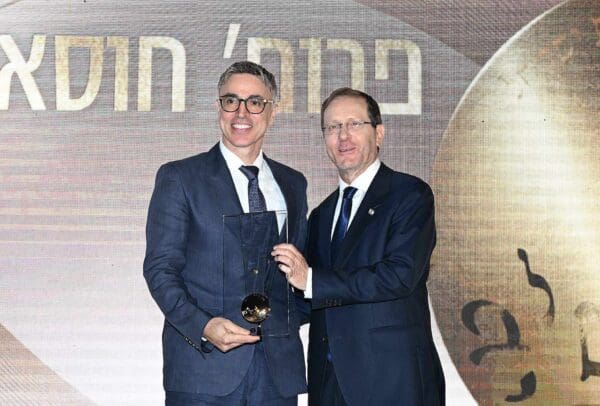
Twenty-five years ago, carrying your data meant lugging around floppy disks or burning CDs — today, terabytes (TB) of information fit into a device no larger than a key. That transformation was recently celebrated at the Technion – Israel Institute of Technology with a special event marking 25 years since the invention of the USB flash drive, originally known as the Disk On Key. The event honored its inventor, Technion alumnus Dov Moran, who toured the school and met with researchers shaping the next wave of global innovation.
Moran, a graduate of the Andrew and Erna Viterbi Faculty of Electrical and Computer Engineering, is a serial entrepreneur, an honorary doctorate recipient from the Technion, and one of the most influential Israelis in the global high-tech industry. He founded M-Systems in 1989, long before Israel was known as the “startup nation.” At the time, only a handful of new technology companies were launched each year. “During the day, I worked in outsourcing and subcontracting to make a living,” Moran recalled. “At night, I worked on my own developments. I had no time to sleep.”
During work trips to the United States, Moran was exposed to military data-storage systems and came to a pivotal realization: the future lay in static storage with no moving parts: flash memory.
The specific idea for the USB flash drive arrived in an unexpectedly ordinary moment. While preparing to give a presentation in the U.S., Moran’s laptop battery began to fail. Someone offered to lend him another computer, but there was no practical way to transfer the presentation.
“At that moment, I decided I would never again go to a presentation without a backup in my pocket,” he said. That frustration became the seed of a revolution. The patent for the Disk On Key was approved on November 14, 2000, and it quickly replaced CDs as the primary way people stored and transferred data. The original models stored 8 MB (the equivalent of about two to three high-quality smartphone photos) or 32 MB (eight to 12 photos) in the premium version. Today, a USB drive can hold up to 4 TB — that’s over one million photos!

In 2006, M-Systems was acquired by SanDisk for $1.6 billion, cementing the USB flash drive as a global standard. In the years following his invention, Moran has received numerous international honors, including the IEEE Reynold B. Johnson Data Storage Device Technology Award in 2015. In 2012, he received the prestigious Eduard Rhein Award and then donated €20,000 of the prize back to the Technion. It was more than a generous gesture; it reflected his belief in strengthening the ecosystem that nurtures the next generation of breakthroughs.
In conversation with Prof. Shahar Kvatinsky in the Faculty of Electrical and Computer Engineering, Moran was candid about the challenges along the way, particularly early missteps. “If the current Dov Moran, the venture capitalist, were to meet the young Dov Moran, he wouldn’t invest in him,” he said. “I made many mistakes, but failure is part of the learning process.” Many of the students in the audience were not yet born when the USB flash drive entered the market, making Moran’s reflections all the more relevant to a new generation of engineers and entrepreneurs.
Moran drew parallels between past technological revolutions and the artificial intelligence (AI) era. He described innovation as a cyclical process: new infrastructure enables new applications, which in turn demand even more advanced infrastructure. “The same will happen with AI,” Moran explained. “New infrastructures will be required, and they will unlock innovations we can’t yet imagine.”
One area especially close to his heart is AI in health care. “Medicine lags behind technology,” he said. “That gap is preventing major medical breakthroughs, and closing it is one of the most important challenges of our time.”
When asked what advice he would give today’s students, Moran emphasized depth over speed. “We succeeded because we were true experts in flash technology. We knew what others were doing, and then we connected the dots.”
He encouraged students to invest in learning, pursue advanced degrees, and avoid spreading themselves too thin. Entrepreneurship, he noted, can be rewarding, but it comes with real costs. “It requires hard work, risk-taking, and an imbalance between family and work life. It’s not for everyone. In the end, entrepreneurship is a kind of itch, and I’m very itchy.”
Moran’s small but mighty invention continues to shape the work of new generations of Technion innovators. His journey from a student with an idea to an inventor who changed the world shows what Technion ingenuity can achieve when bright minds are given room to grow. These bold thinkers carry forward that spirit, driving discovery, and fueling breakthroughs that benefit us all.