Something Fresh in the State of Denmark
October 06, 2026
























The Technion’s story has been intertwined with Israel’s for more than a century, from laying the foundations for a new nation to shaping its future.

Step inside Israeli innovation at the David and Janet Polak Visitors Center. Experience our 360° immersive movie and tech exhibition. Open to individuals and groups.
Learn More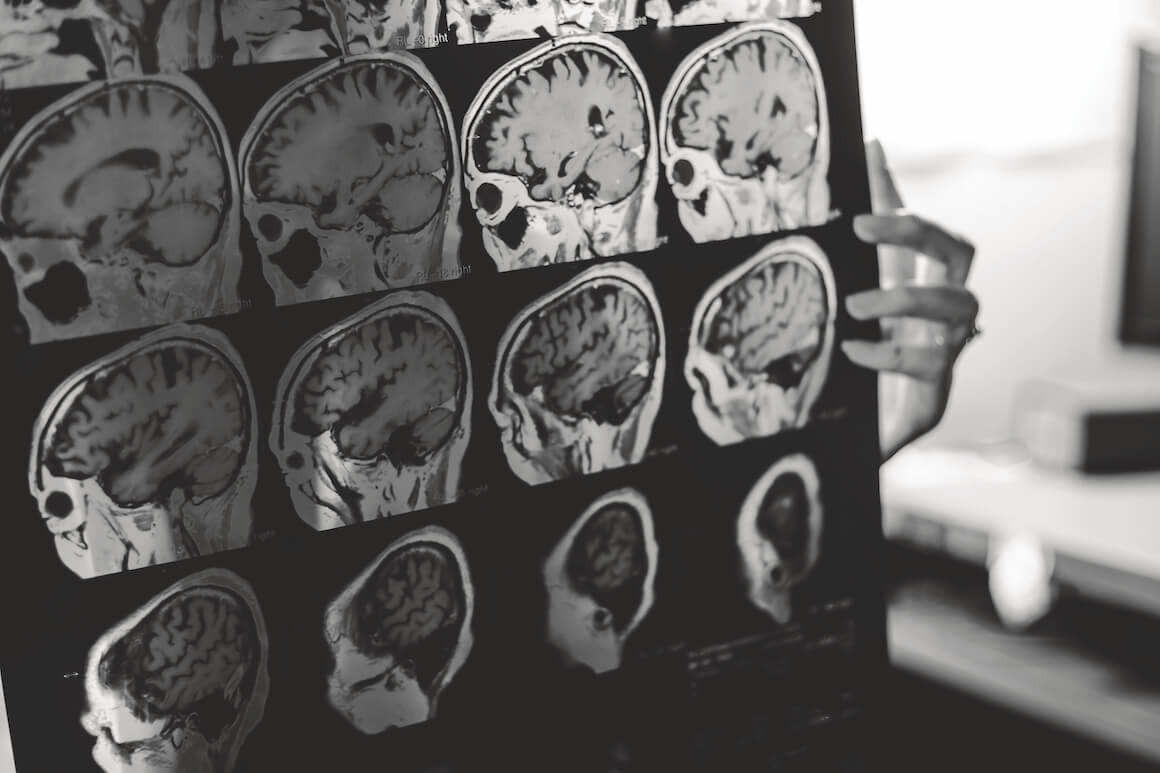
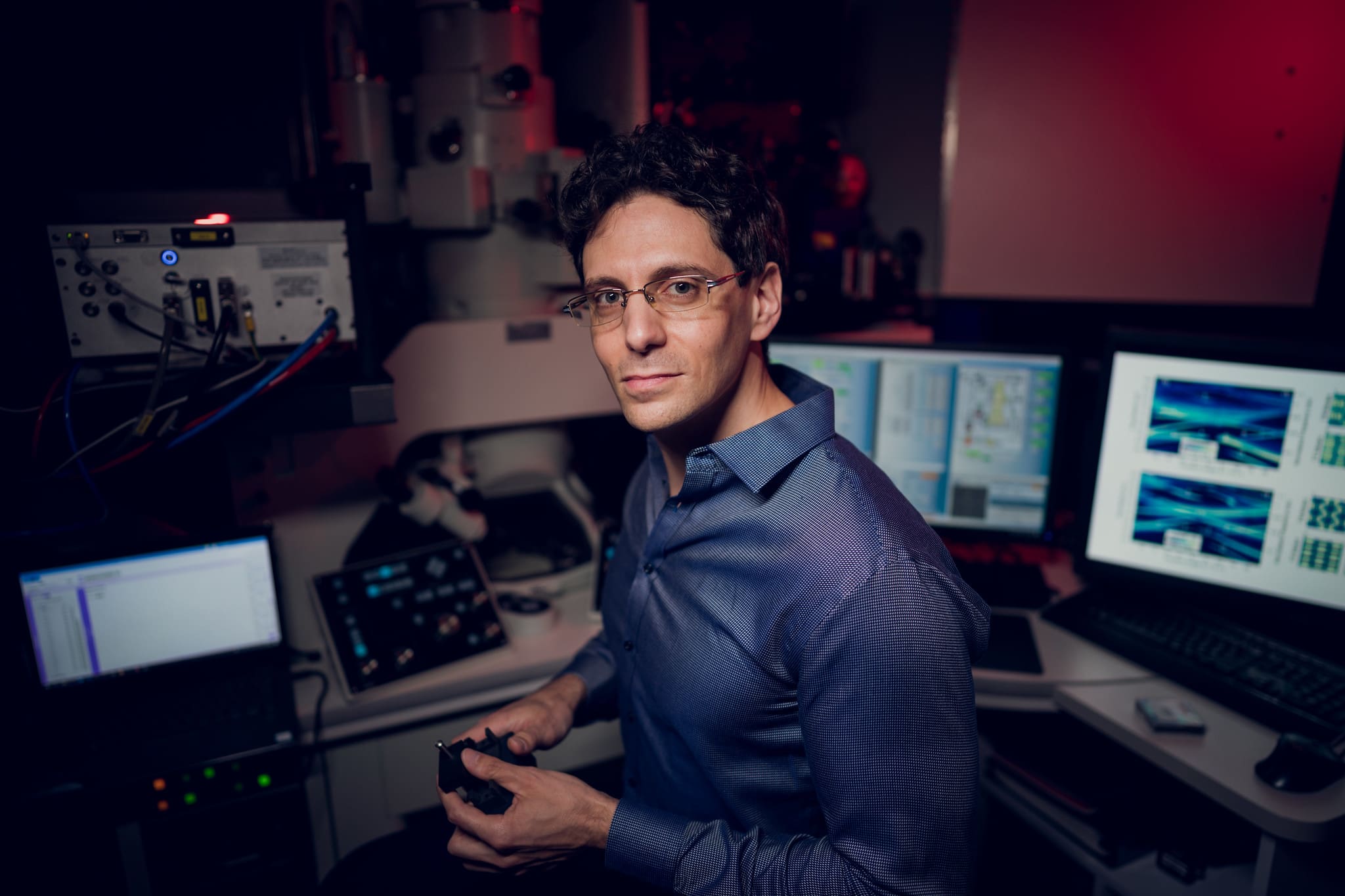
Imagine this: One day you wake up to find the steering wheel that had been on one car in your garage is now on your other car, and the parking brakes are also interchanged. According to research conducted by Professor Noam Ziv, something very similar is happening in our brains, because the parts that make up our synapses are constantly moving.
This brain research, which could have implications for memory loss and aging, is just one of the many exciting projects underway in the new Technion Human Health Initiative (THHI), headed by Prof. Ziv.
As the global population skews older, aging-related diseases are more prevalent and complicated, requiring an integrative approach to problem-solving. The THHI focuses on healthy aging from childhood through the golden years, with a multidisciplinary approach that combines researchers from all 18 Technion faculties with clinicians at Technion-affiliated hospitals and industry partners.
“Rather than telling our investigators what they should be doing, we bring them together, and the magic is guaranteed to happen,” said Prof. Ziv, whose own eclectic interests range from neurobiology to automated imaging.
Explaining his research, Prof. Ziv said the synapses, or connections between brain cells, comprise proteins that are in perpetual motion. Given that the synapses control the encoding of memories, he and his team are exploring how such instability might affect memory and forgetfulness. Their research could shed valuable light on the onset of age-related neurodegenerative diseases, such as Alzheimer’s, as we age.
While forgetting often has a negative connotation, it can also be useful to rid ourselves of memories that are no longer relevant. “The memory of an animal is basically to serve it to succeed in a changing world,” said Prof. Ziv, meaning that forgetting might be a good thing in some cases. Research related to this aspect of forgetting had been on the back burner, so Prof. Ziv is excited about moving this work forward from molecular experimentation to pre-clinical testing.
Working on the earlier end of the aging spectrum, Professor Philippa Melamed is investigating how a woman’s childhood environment affects her reproductive longevity. In a recent study, Prof. Melamed’s team showed that British-Bangladeshi women who grew up in Bangladesh, where they suffered a higher incidence of childhood inflammatory disease, had later puberty onset, and thus went into menopause earlier than Bangladeshi women who migrated before the age of 8 to England, which has a cleaner environment and better health care system. Her group was then able to decipher some of the molecular mechanisms responsible for this shift.
“This is crucial for us,” said Prof. Melamed, “because once a woman goes into menopause, we have a more rapid onset of aging diseases. Healthy aging starts in childhood.” True to the THHI multidisciplinary mandate, scientists involved in Prof. Melamed’s research hail from the areas of biology, anthropology, bioinformatics and big data, molecular biology, and even biophysics.
The THHI’s collaborative approach is “extremely exciting because people learn about ideas they would not have heard about working in their own silos,” said Prof. Ziv. And as they do, these talented researchers hope to discover solutions to some of the biggest challenges we face — including diseases that adversely affect healthy aging.