The Technion’s story has been intertwined with Israel’s for more than a century, from laying the foundations for a new nation to shaping its future.

From medicine to security, explore how the Technion is advancing Israel and improving lives around the world.
View All Impact Areas
Explore stories, news, insights, and data across articles, videos, and podcasts.
view all content types
in Europe and #21 in the world for aerospace engineering*
students
of the student body are Arab Israeli
The Technion’s story has been intertwined with Israel’s for more than a century, from laying the foundations for a new nation to shaping its future.
Explore ATS, the Technion, and the people behind the breakthroughs redefining what's possible for Israel and the world.
Learn More About ATSATS is a community of supporters, innovators, and champions of possibility united by one mission: transforming Israel and the world through science and discovery.
Learn MoreFor more than 100 years, the Technion has been Israel's technological engine and leading driver of innovation, technology, and entrepreneurship, transforming ideas into impact.
Learn More
Step inside Israeli innovation at the David and Janet Polak Visitors Center. Experience our 360° immersive movie and tech exhibition. Open to individuals and groups.
Learn MoreFrom medicine to security, explore how the Technion is advancing Israel and improving lives around the world.
View All Impact AreasExplore stories, news, insights, and data across articles, videos, and podcasts.
view all content typesDiscover ways to support, connect, and help drive innovation.
Get InvolvedExplore ATS, the Technion, and the people behind the breakthroughs redefining what's possible for Israel and the world.
Learn More About ATS
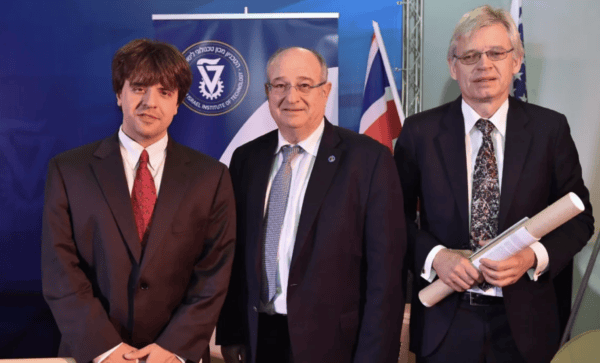
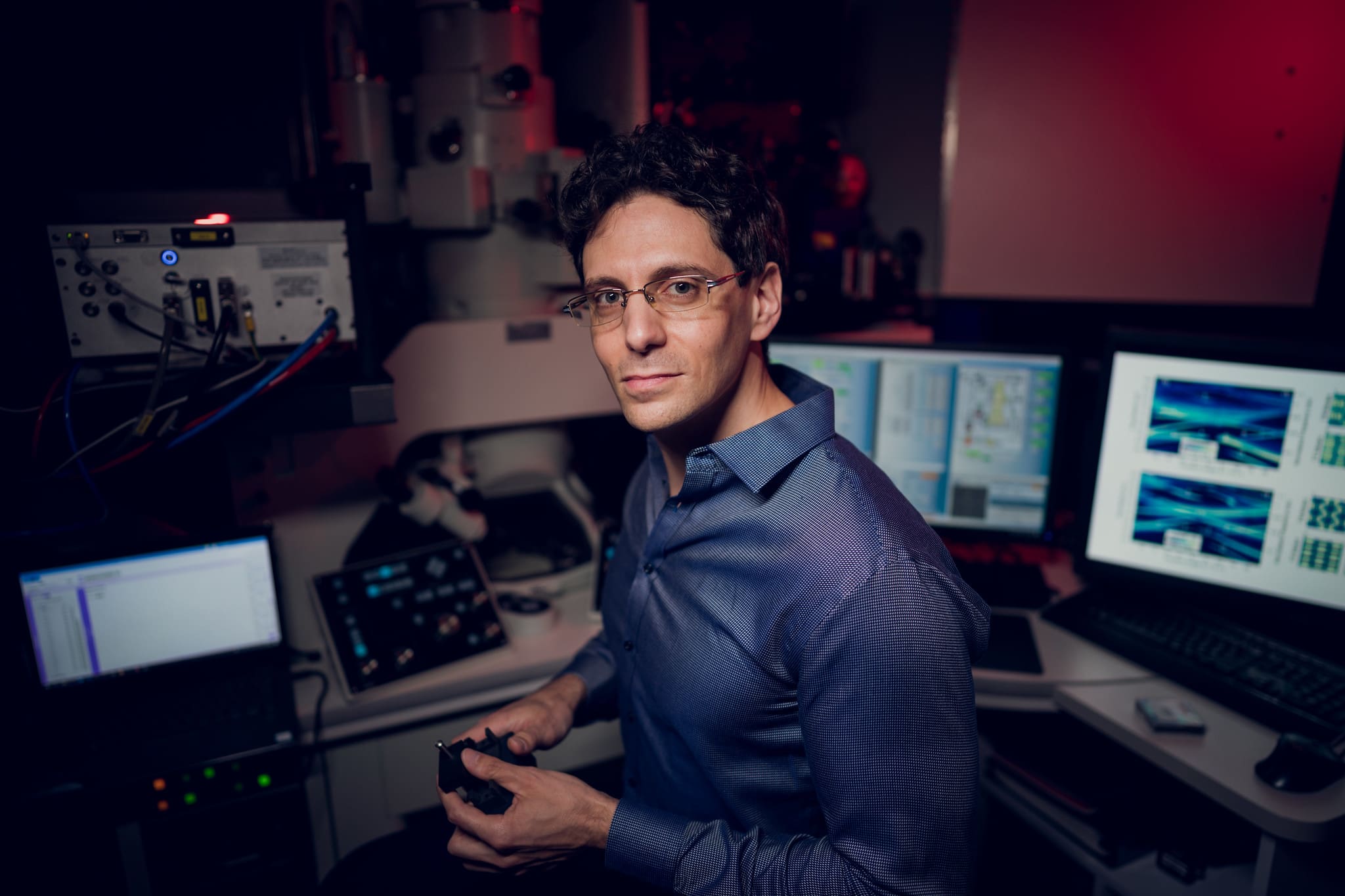
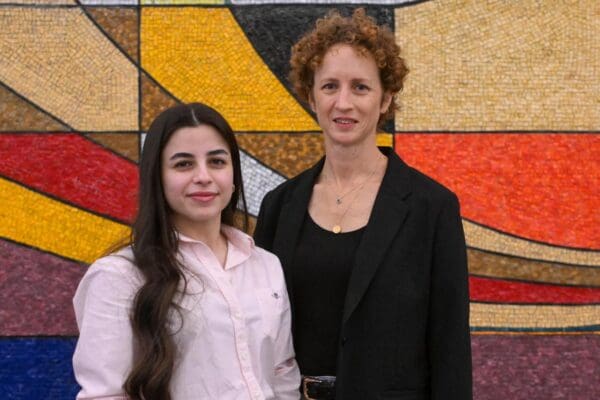
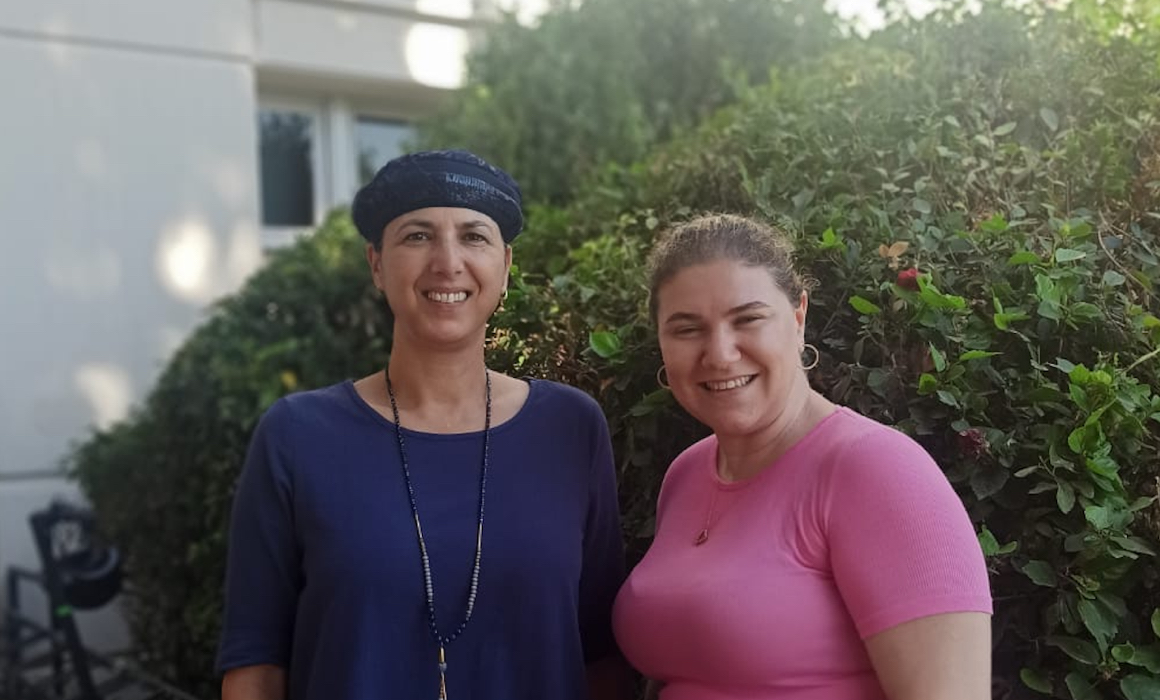
Pictured above: Professor Shulamit Levenberg (Left) and Ph.D. student Rita Beckerman
The Technion has developed a novel approach to treat type 2 diabetes. Led by Professor Shulamit Levenberg and Ph.D. student Rita Beckerman, the treatment uses an autograft of muscle cells engineered to take in sugar at increased rates. Mice treated in this manner displayed normal blood sugar levels for months after a single procedure.
Prof. Levenberg is the director of the Rina & Avner Schneur Center for Diabetes Research and the Technion Center for 3D Bioprinting, and holds the Stanley and Sylvia Shirvan Chair in Cancer and Life Sciences in the Faculty of Biomedical Engineering.
Diabetes is caused by insulin resistance and a reduction of cells’ ability to absorb sugar. Its long-term complications include heart disease, strokes, damage to the retina that can result in blindness, kidney failure, and poor blood flow in the limbs that may lead to amputations. It is currently treated by a combination of lifestyle changes, medication, and insulin injections, but ultimately is associated with a 10-year reduction in life expectancy.
In their study, Prof. Levenberg’s group isolated muscle cells — one of the main targets of insulin, as they absorb sugar from the blood — from mice and engineered these cells to present more insulin-activated sugar transporters (GLUT4). These cells were then grown to form an engineered muscle tissue, and finally transported back into the abdomen of diabetic mice.
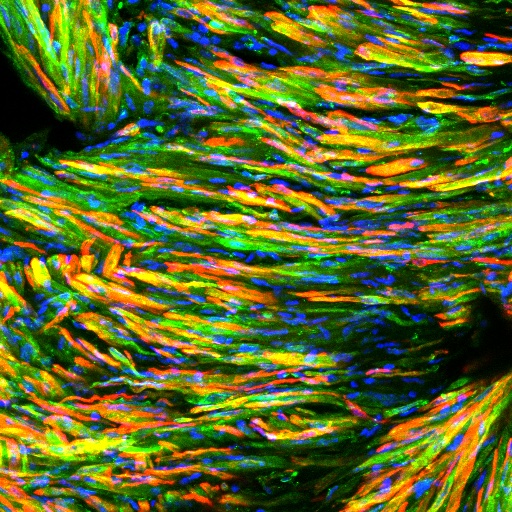
The implanted construct: the engineered muscle fibers (in red) express the GLUT4 (in green)
October 28, 2021
Explore a groundbreaking treatment for diabetes developed at Technion, utilizing engineered muscle cells for better sugar absorption.
1 min
X (opens in a new tab) / Facebook (opens in a new tab) / LinkedIn (opens in a new tab) / Email / Copy Link
Engineering / Faculty / Women /
What if diagnosing cancer, Parkinson’s disease, or other serious illnesses could be as simple as breathing into a handheld device? That possibility is moving closer to reality thanks to the work of the Technion’s Prof. Hossam Haick, whose groundbreaking research is changing how diseases are detected around the world. In recognition of his extraordinary achievements, […]
Every year, the European Research Council (ERC) identifies some of the world’s most promising early-career researchers and gives them the freedom to pursue bold ideas. This year, two of those ideas came from the Technion – Israel Institute of Technology. From cancer research to artificial intelligence (AI), breakthroughs that shape the future often begin with […]
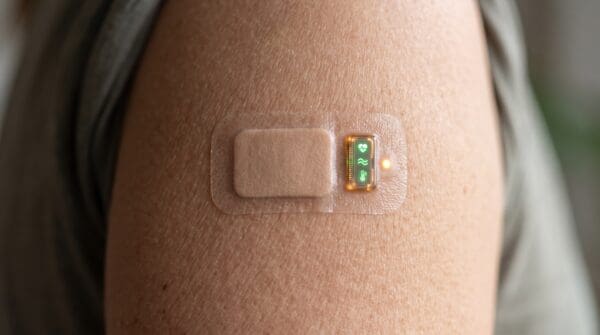
As more people turn to AI chatbots for companionship, life advice, or even as a stand-in for therapy, experts say the technology offers both new opportunities and risks when it comes to mental health. Prof. Tanzeem Choudhury is the chief of health innovation in the Joan & Irwin Jacobs Technion-Cornell Institute and has been studying AI and mental health for 15 years. She said AI tools are available any time, often at low cost, making it easier for people to access some form of mental health support.
Stay on top of the latest breaking scientific discoveries from Israel and the Technion. Subscribe to the ATS newsletter.