Something Fresh in the State of Denmark
October 06, 2026










The Technion’s story has been intertwined with Israel’s for more than a century, from laying the foundations for a new nation to shaping its future.

Step inside Israeli innovation at the David and Janet Polak Visitors Center. Experience our 360° immersive movie and tech exhibition. Open to individuals and groups.
Learn More
Since October 7, tens of thousands of wounded soldiers and civilians in Israel have embarked on rehabilitation processes. According to relevant professionals, a large share of them is not only coping with physical challenges but also with anxiety, depression, post-traumatic stress disorder (PTSD), problems adapting, problems communicating, and psychotic conditions. Consequently, it’s crucial to find efficient solutions related to mental resilience.
To that end, the Technion’s Henry and Marilyn Taub Faculty of Computer Science dedicated its annual social–technological hackathon, CS Hack: Doing Good, to developing solutions to improve mental resilience. Each year, the hackathon chooses a theme for innovation that benefits society.
During the weeks that preceded the hackathon, the participants — 140 students from all computer science degree tracks — met with patients and professionals to learn in depth about the mental health of trauma victims. They visited a post-trauma healing center and attended a lecture by a clinical psychologist. The hackathon took place over 24 hours in June.
Colonel (Res.) Professor Eyal Fruchter, an alumnus of the Ruth and Bruce Rappaport Faculty of Medicine and a member of its faculty and the former head of the IDF’s Mental Health Department, spoke at the start of the hackathon. “Today, we know many things about PTSD,” he said. “But we still don’t know how to diagnose and evaluate PTSD using objective tools, and this is where your field — technology and computers — can make a big difference.”
The 5,000-shekel ($1,366) first prize went to a group of five students that developed a technology to treat PTSD through cooking. Their innovation uses a virtual reality headset, combining cooking, nature, and music selected by the user in a virtual kitchen. The idea was conceived by the daughters of the late Faiz Hihi, who was killed during his IDF service 20 years ago.
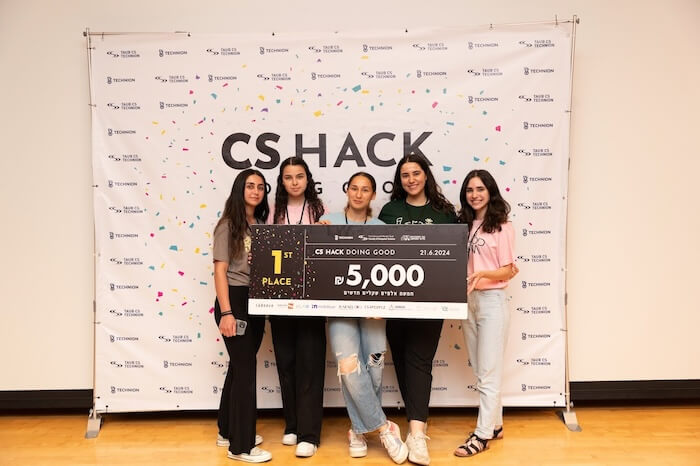
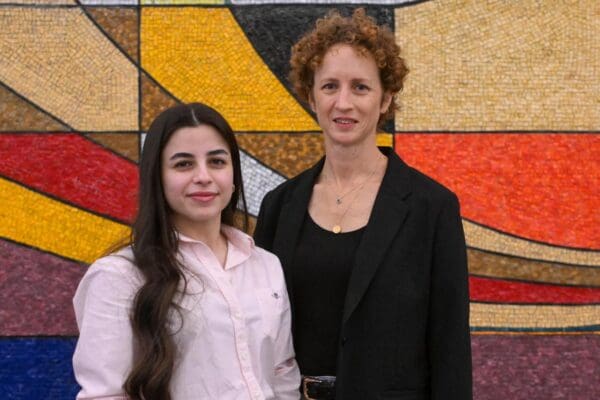
“On the day Dad was killed, Mom waited for him with a dish of stuffed grape leaves, and since then, she hasn’t been able to prepare this dish,” explained Amal Hihi. “Not long ago, on Memorial Day, Mom took part in a cooking workshop meant to help people cope with loss — and that’s where the change happened, and she went back to making stuffed grape leaves. That is how we understood the enormous potential of cooking as a means of therapy.”
Four students who developed an AI tool that improves in-home treatment of PTSD through personally adapted assignments were awarded 4,000 shekels ($1,100) for second place. Third place and 3,000 shekels ($820) was awarded to four students who developed a system that cancels out loud sounds, such as ambulance sirens and fireworks that might trigger PTSD symptoms.
The hackathon partnered with Restart, an NGO established by wounded soldiers during Operation Protective Edge in 2014. Other partners included the Israel Ministry of Defense, Mobileye, Cadence, KLA, Rafael Advanced Defense Systems, the Technion’s Center for Student Counseling and Support, and the Technion’s Social Hub. These organizations helped mentor the students and evaluate the solutions. The various projects were presented to a jury of tech experts and mental health professionals, including psychiatrists, psychologists, and social workers.