Something Fresh in the State of Denmark
October 06, 2026























The Technion’s story has been intertwined with Israel’s for more than a century, from laying the foundations for a new nation to shaping its future.

Step inside Israeli innovation at the David and Janet Polak Visitors Center. Experience our 360° immersive movie and tech exhibition. Open to individuals and groups.
Learn More
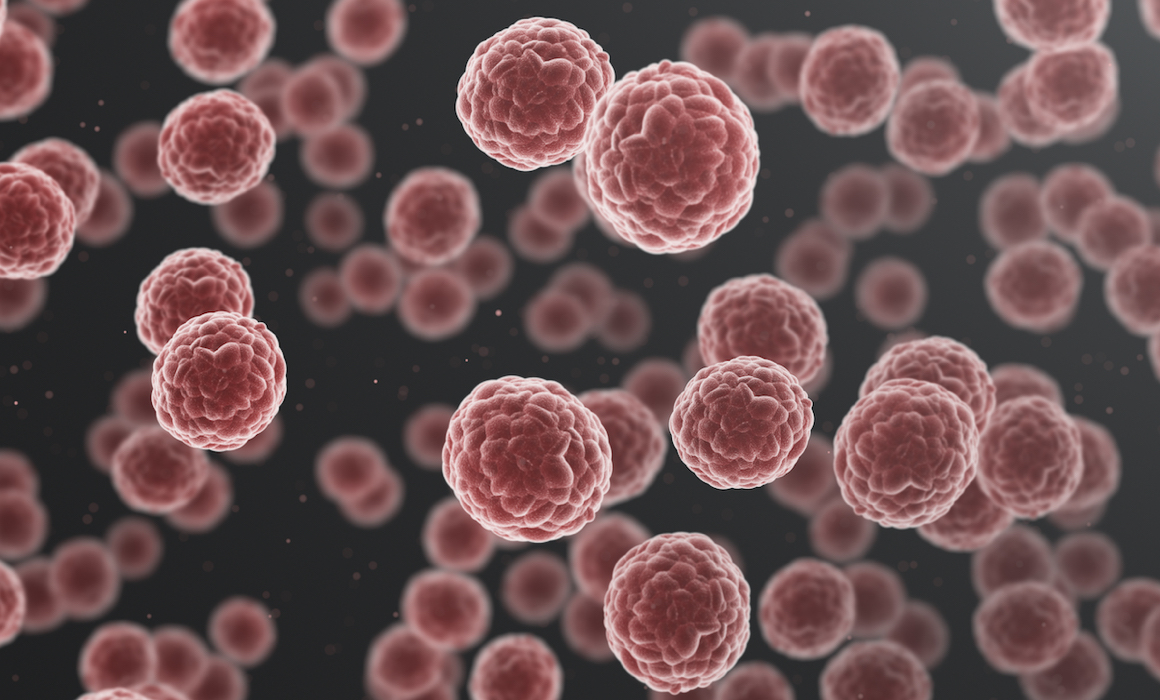
The technology, based on the Nano-Ghosts platform, makes it possible to reduce the drug dose a million-fold without reducing its efficacy. Researchers in the Faculty of Biotechnology and Food Engineering at the Technion developed a technology that inhibits development of melanoma using one-millionth of the active ingredient. The study, published in Advanced Functional Materials, was led by Professor Marcelle Machluf, dean of the faculty, and Ph.D. student Lior Levy. This development is a significant breakthrough in the field of immunotherapy — an innovative medical approach that uses the body’s own immune system to destroy cancer cells. Immunotherapy can destroy cancer…
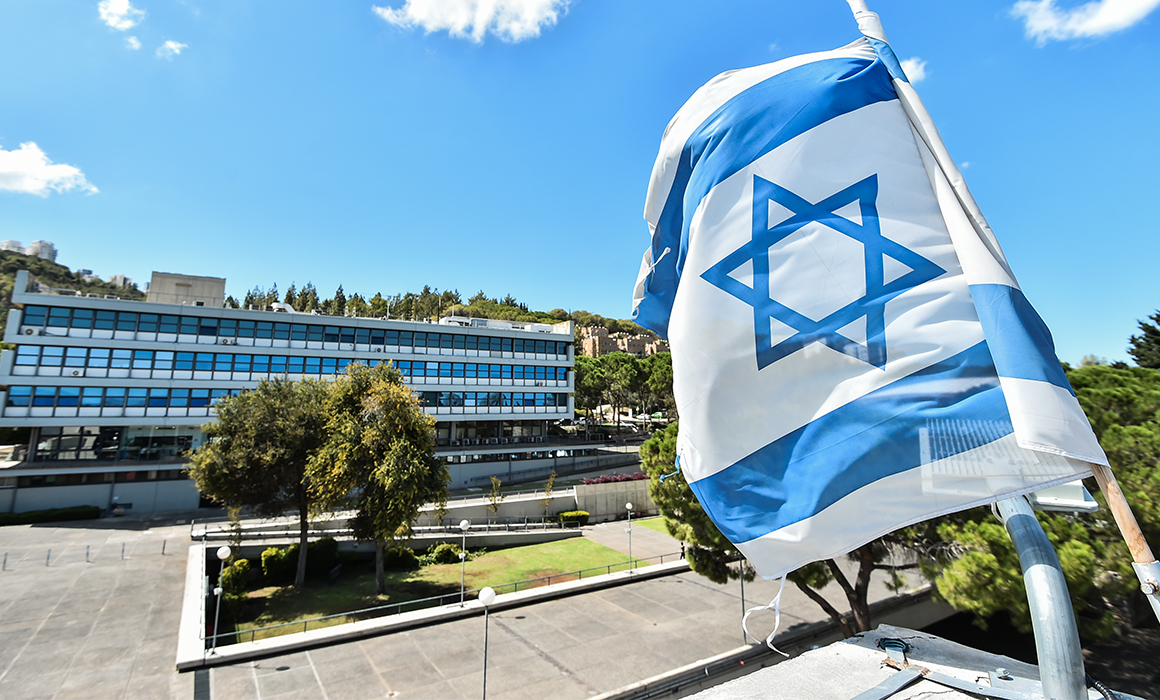
The National Academy of Inventors and the Intellectual Property Owners Association (collectively known as NAI-IPO) has ranked the Technion – Israel Institute of Technology as one of the top 100 worldwide universities granted U.S. utility patents. The achievement is yet another international recognition of the Technion’s rigorously entrepreneurial and innovative spirit on campus — an ethos that has produced thousands of inventions from both researchers and alumni, including a device that uses AI to detect the scent of more than 23 specific disease biomarkers in a person’s breath, the USB flash drive, and a robotic suit that enables paraplegics to…

Researchers at the Technion – Israel Institute of Technology, in collaboration with researchers from Le Centre National de la Recherche Scientifique (CNRS) in Toulouse, France, discovered an artificial molecule that may inhibit the development of Alzheimer’s disease. The molecule breaks down the toxic chemical complex Cu–Aβ, inhibiting the cell death that is thought to be related to Alzheimer’s. The study was led by Professor Galia Maayan and doctoral student Anastasia Behar from the Schulich Faculty of Chemistry, in collaboration with Professor Christelle Hureau from the Laboratoire de Chimie de Coordination du CNRS.

A new algorithm developed by the Technion – Israel Institute of Technology helps doctors select more effective, personalized antibiotic treatments for patients. After doctors at Maccabi Healthcare Services adopted the algorithm for patients with urinary tract infections (UTIs), they saw a 35% drop in the need to switch a patient’s antibiotic regimen. Maccabi first applied the algorithm to patients with urinary tract infections (UTIs) – the most common bacterial infection among women. Around 30% of women suffer from UTIs at least once during their lifetimes, and up to 10% experience recurrent infections. Until now, in most cases general treatment has…

Every day, manufacturing companies face costly equipment failures. What if they could detect that leaky valve before it leaked? Alumni-founded Feelit Technologies Ltd. predicts and solves machinery problems before they happen — preventing potentially dangerous equipment failures and reducing the cost of manual inspections and production downtime associated with finding and fixing faults. Feelit technology is based on sensor-packed stickers printed with nanoparticle ink. When affixed to pipes, pumps, or valves, the sensors monitor pressure, temperature, vibration, leakage, wall integrity, thickness, and other industrial parameters. The data is then analyzed in the cloud in real time and sent back to…


Pictured Above / Prof. Mirela Ben-Chen To anyone who’s seen videos of robotic arms in motion, lifting and interlocking parts in construction, it’s clear that computer science has everyday applications. In fact, the use of increasingly sophisticated robots in architectural design and manufacturing is seen as a major technological trend in the construction industry. But while complex architectural projects are often planned on computers, they are executed using construction methods that have remained virtually unchanged for decades. Human intervention is usually necessary, especially when architectural planning is based on complex spatial systems such as thin, doubly curved surfaces, known as…

Technion – Israel Institute of Technology Assistant Professor Assaf Zinger and Dr. Caroline Cvetkovic from the Center for Neuroregeneration at the Houston Methodist Research Institute have created a novel means of delivering medicine to neurons in a targeted manner. The biomimetic nano-vesicles, or nature-mimicking, nanometer-scale “vehicles,” are capable of specifically targeting neurons such as nerve cells. These nano-vehicles pave the way for the treatment of multiple neurodegenerative diseases and traumatic brain injuries.
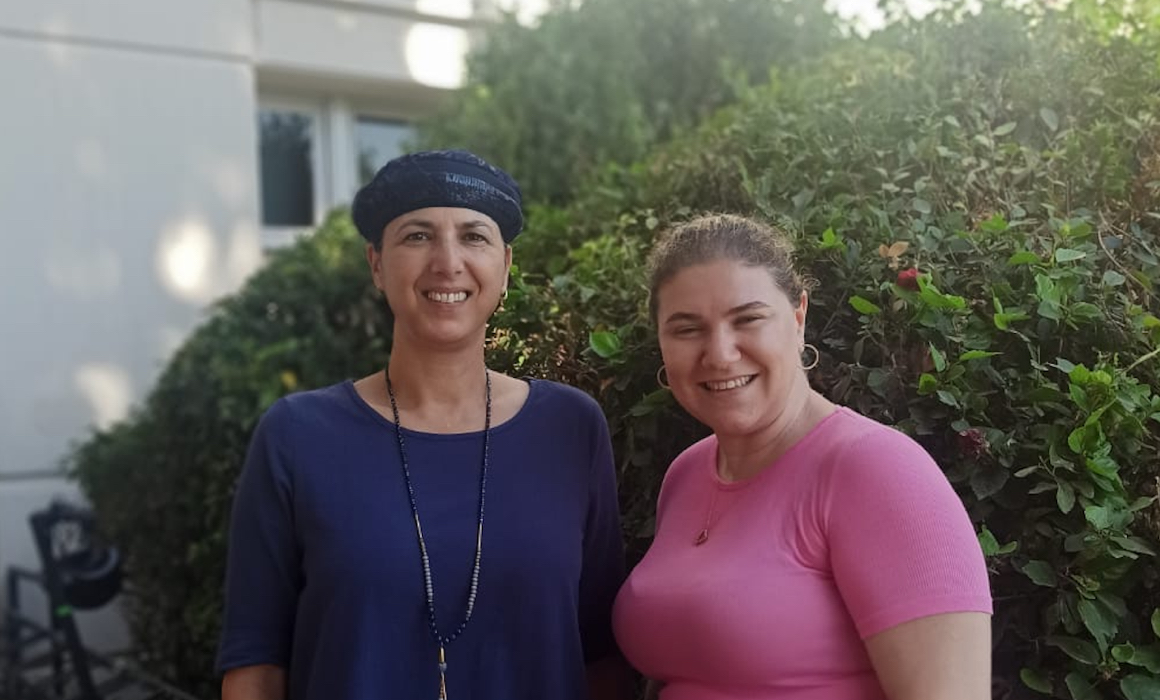
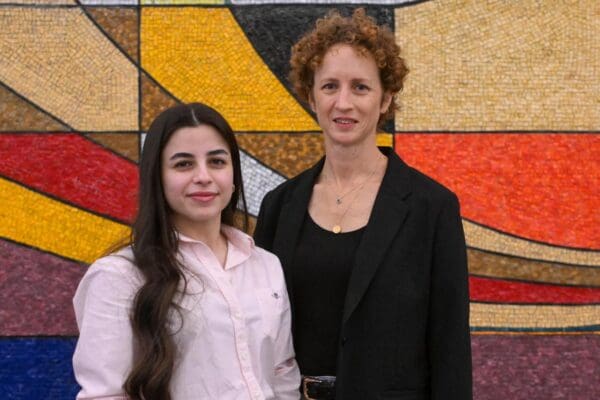
Pictured above: Professor Shulamit Levenberg (Left) and Ph.D. student Rita Beckerman The Technion has developed a novel approach to treat type 2 diabetes. Led by Professor Shulamit Levenberg and Ph.D. student Rita Beckerman, the treatment uses an autograft of muscle cells engineered to take in sugar at increased rates. Mice treated in this manner displayed normal blood sugar levels for months after a single procedure. Prof. Levenberg is the director of the Rina & Avner Schneur Center for Diabetes Research and the Technion Center for 3D Bioprinting, and holds the Stanley and Sylvia Shirvan Chair in Cancer and Life Sciences…
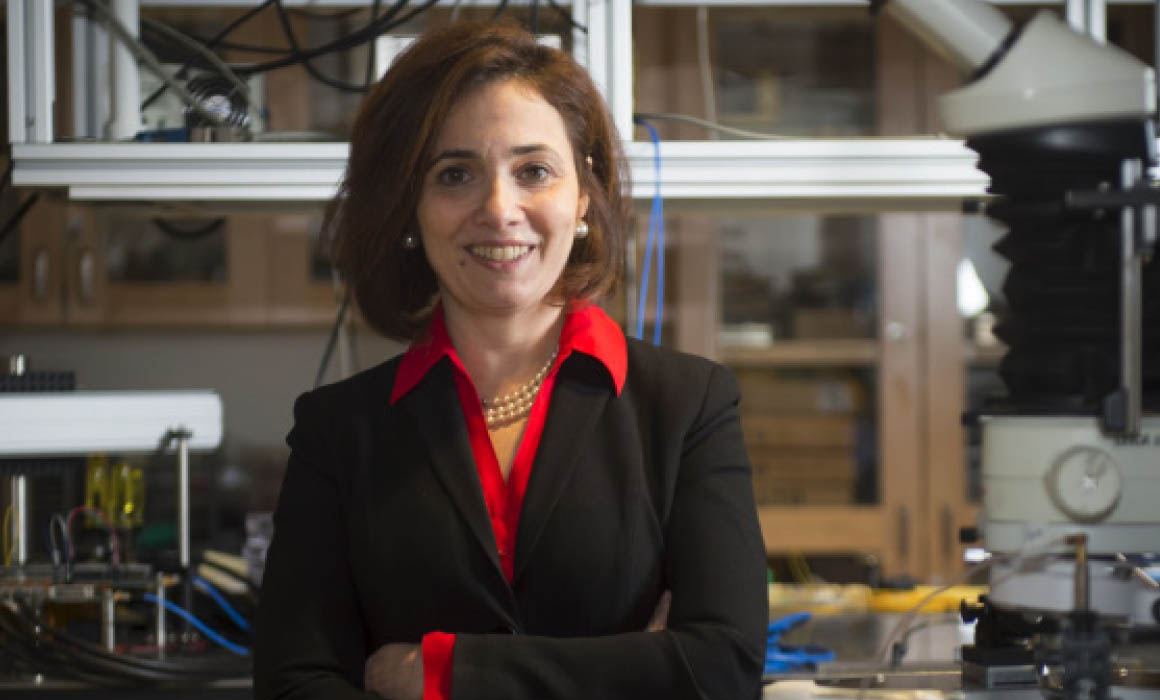
Photonics Pioneer Reflects on Her Journey to Success Professor Michal Lipson ’92, M.S. ’95, Ph.D. ’98, is the Eugene Higgins Professor of Electrical Engineering and Professor of Applied Physics at Columbia University, president-elect of the Optical Society, a 2010 MacArthur Fellow, and a pioneer in the field of nanophotonics. More than 1,000 papers published yearly involve devices and circuits based on her research. The Technion is family, as her father and father-in-law were both professors at the university. In 2021, you became the first woman to receive the John Tyndall Award for outstanding contributions to optical-fiber technology. What inspired you to…

Technion’s Ties to Industry Helped Her Become a Biotech Leader Iris Grossman always thought she’d become a neurologist, but as a Ph.D. candidate at the Technion, she worked closely with Teva Pharmaceuticals and fell in love with personalized medicine. Her expertise in science and analytics has opened doors to high-level positions and consultancies at Teva, GlaxoSmithKline, Eli Lilly, and Takeda, as well as chief scientific officer roles at CAMP4 Therapeutics and Amide Technologies. Currently, she is chief strategy officer at the Israeli-British Eleven Therapeutics. Dr. Grossman, a modern Orthodox mother of four who currently resides in Boston, is part of…