Something Fresh in the State of Denmark
October 06, 2026























The Technion’s story has been intertwined with Israel’s for more than a century, from laying the foundations for a new nation to shaping its future.

Step inside Israeli innovation at the David and Janet Polak Visitors Center. Experience our 360° immersive movie and tech exhibition. Open to individuals and groups.
Learn More
The technology, based on the Nano-Ghosts platform, makes it possible to reduce the drug dose a million-fold without reducing its efficacy.
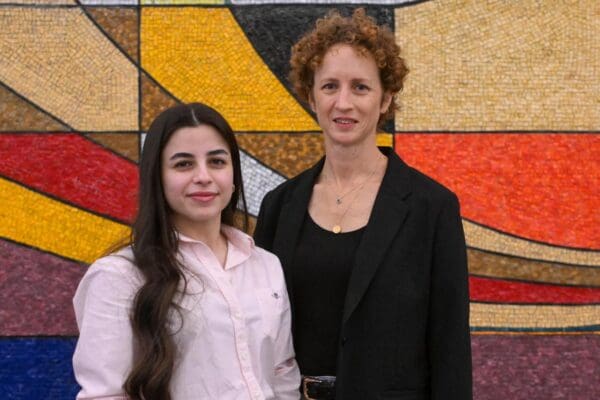
Researchers in the Faculty of Biotechnology and Food Engineering at the Technion developed a technology that inhibits development of melanoma using one-millionth of the active ingredient. The study, published in Advanced Functional Materials, was led by Professor Marcelle Machluf, dean of the faculty, and Ph.D. student Lior Levy.
This development is a significant breakthrough in the field of immunotherapy — an innovative medical approach that uses the body’s own immune system to destroy cancer cells. Immunotherapy can destroy cancer cells more accurately and specifically than synthetic anti-cancer drugs. But since malignant tumors are heterogeneous and evasive, they can sometimes fool the immune system.
At the core of Prof. Machluf’s new development is a protein called TRAIL, which exists in the body’s immune system and knows how to induce apoptosis (programmed cell death) in cancer cells. TRAIL is selective, affecting only cancerous cells — not other healthy cells in the body. While TRAIL can help the body spot evasive cancer cells, TRAIL proteins don’t survive in the body for very long — until now.
Nano-Ghosts for Cancer Care
Prof. Machluf’s highly inventive nano-ghosts technology empties specific biological cells (mesenchymal stem cells) in a way that leaves only the cell membrane and reduces their size to a nanometer scale. Any drug can be inserted into the membrane and injected directly into the bloodstream. Because the body’s immune system treats nano-ghosts as natural cells, it delivers them to the affected site. They do not release the drug on the way, and therefore do not harm healthy tissue.
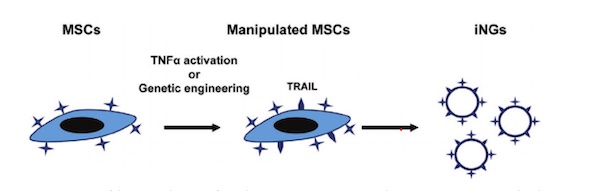
A schematic description of preparing Nano-Ghosts from cells that underwent genetic or metabolic manipulation and now carry the TRAIL protein. These cells, with Nano-Ghost targeting for cancer and with the TRAIL protein, can reach the cancer site and fight effectively while using one millionth the concentration of the active ingredient required without this system.
By using nano-ghosts to deliver TRAIL proteins to cancerous cells, Prof. Machluf is able to turn her nano-ghost technology from a “taxi” that delivers drugs to a target into a “tank” in the war against cancer. The innovative platform delivers the drug to the tumor, successfully treating the tumor while using just one millionth of the concentration of the drug dosage required without this system.
While Prof. Machluf demonstrated the success of nano-ghosts in treating melanoma, she is optimistic nano-ghosts could be deployed to fight many other types of cancer.