Something Fresh in the State of Denmark
October 06, 2026












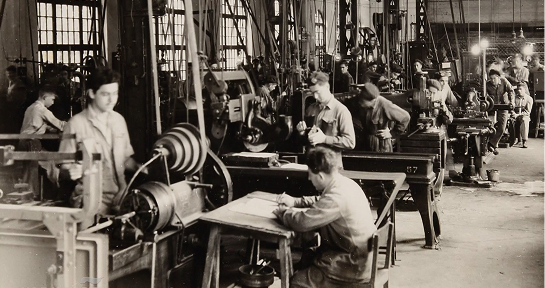
The Technion’s story has been intertwined with Israel’s for more than a century, from laying the foundations for a new nation to shaping its future.

Step inside Israeli innovation at the David and Janet Polak Visitors Center. Experience our 360° immersive movie and tech exhibition. Open to individuals and groups.
Learn MoreA Technion scientist reimagines medicine — no more needles, and earlier detection for all.
I really believe that by giving the gift of life, you can make a worldwide impact.”
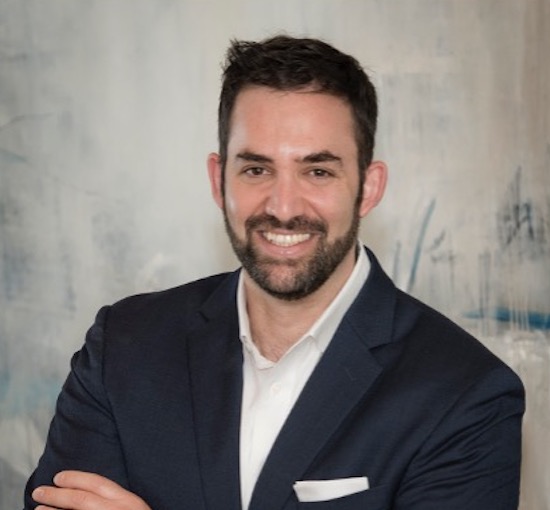
Prof. Assaf Zinger
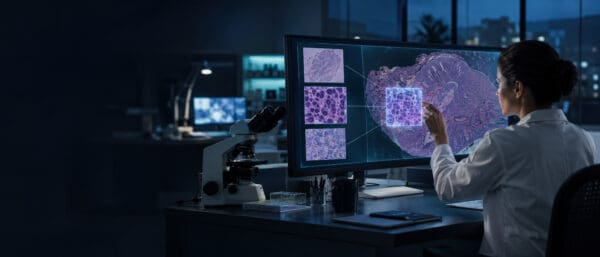
The next 100 years in my field of bio-inspired engineering will be focused on early detection of cancer and neurodegenerative diseases.
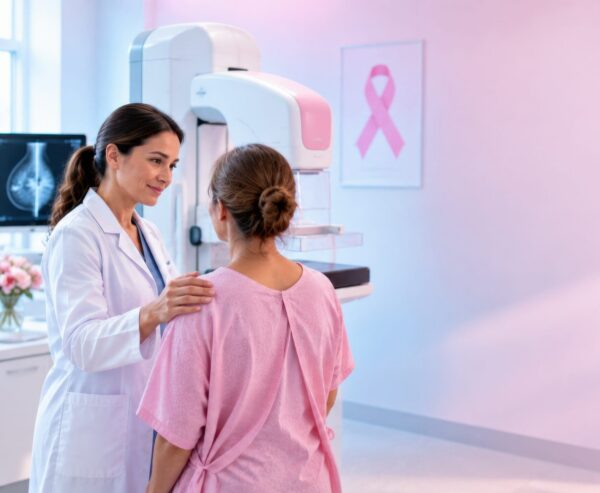
Right now, we might have the ability to treat cancer and we might have the ability to reduce the side effects — but can we detect it early, before it causes any harmful symptoms and before it spreads throughout the body? I think this is the main challenge: Keep treating, but do a better job of detecting.
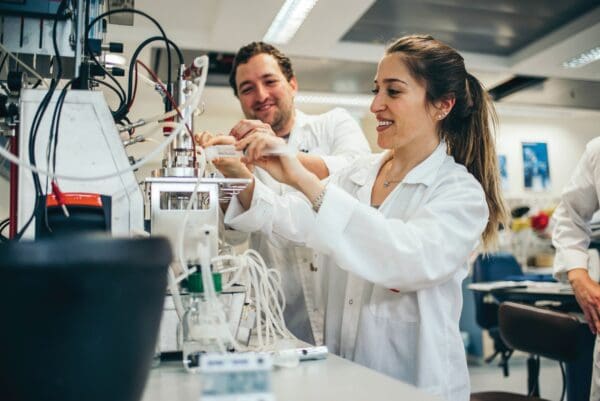
Hopefully, we do that using some of the biomimetic nanoparticles being developed by my team. Nature is the best engineer. It has billions of years of training and does billions of years of working experiments every day.
I ask my team, “How can we use nature’s tools or mimic them to open new doors to new translational therapeutics? ”Think of it: We are in 2024 and we still have Parkinson’s, Alzheimer’s, and ALS patients. In my field, we are taking all the lessons we’ve learned from cancer and are applying them to the brain.
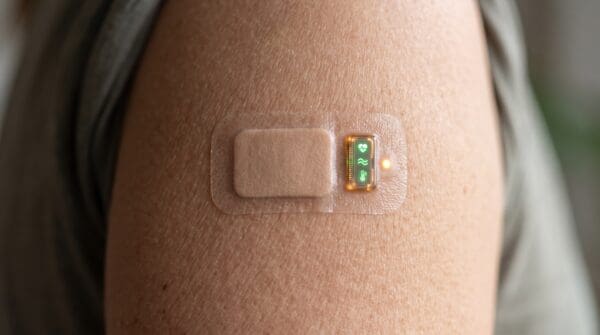
I think the use of mRNA delivery systems in COVID-19 vaccines accelerated and profoundly expanded the ways the scientific community thinks about delivering medicine. But in the future, the route of delivery will change: no more needles.
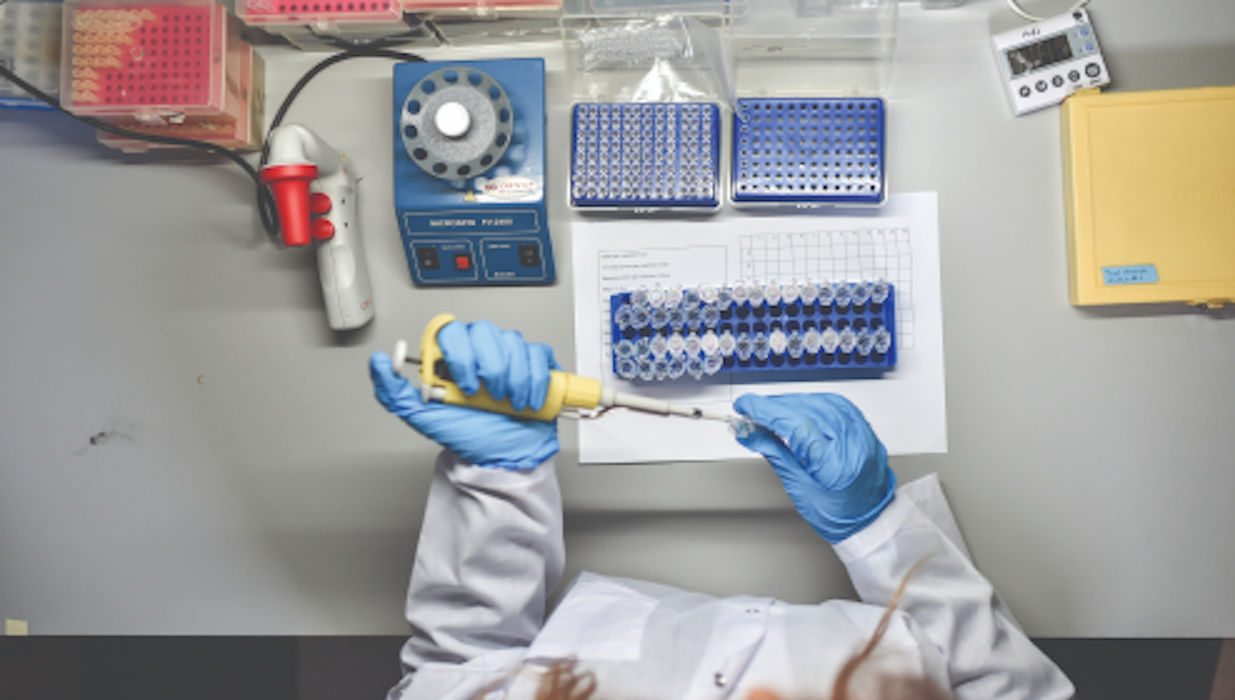
We are working on intranasal delivery, or the sniffing of mRNA particles to allow more affordable and portable delivery. When you smell a flower or a baby’s diaper, the molecules cross directly to your olfactory bulb in the brain.
We have proof-of-concept experiments that if you sniff our nanoparticles, you find them in the olfactory bulb. And now the question is, what kinds of cells do you target in this bulb, and what can you deliver to them?
I really believe that by giving the gift of life, you can make a worldwide impact. Disease and human health are issues that affect us all.
No matter your race, religion, gender, nationality, or class, you know people who have cancer, who have a neurodegenerative disease, and families that have the burden of treating them.
If you ask me what I hope my research at the Technion will do — and I truly believe this — it would be to give the gift of life and good health not only for people in the Middle East, but also for everyone on the planet.
Science brings people together, and it may be one thing that can cure wounds that we are all now bleeding from.
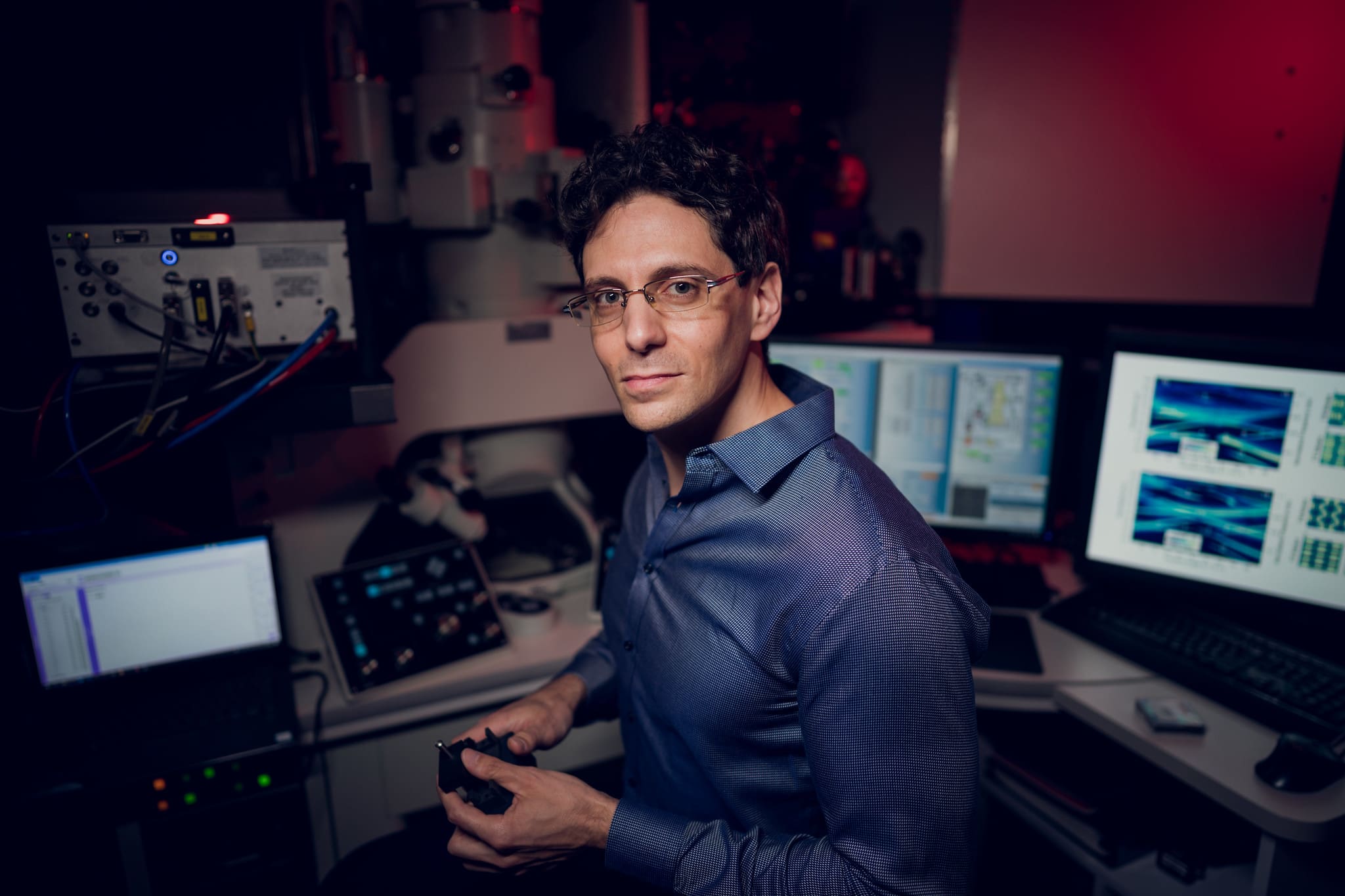
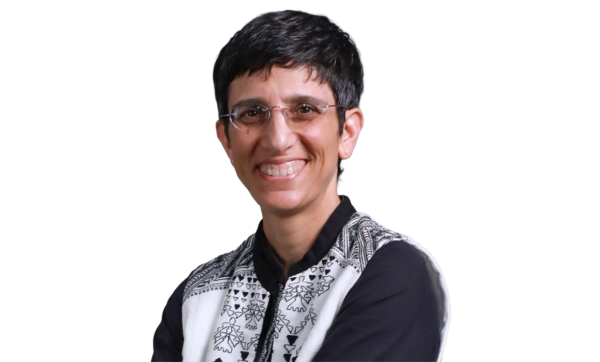
This article was written by Assistant Professor Assaf Zinger of the Wolfson Faculty of Chemical Engineering.