Something Fresh in the State of Denmark
October 06, 2026
























The Technion’s story has been intertwined with Israel’s for more than a century, from laying the foundations for a new nation to shaping its future.

Step inside Israeli innovation at the David and Janet Polak Visitors Center. Experience our 360° immersive movie and tech exhibition. Open to individuals and groups.
Learn More

Professor Isaac Keslassy is the Louis and Miriam Benjamin Chair in Computer-Communication Networks in the Andrew and Erna Viterbi Faculty of Electrical and Computer Engineering. Together with his students, he focuses on how to make the internet faster and better. The internet relies on many server farms called data centers. For instance, when an item is ordered on Amazon, the order goes to a data center, where several servers process it. Prof. Keslassy looks at the networks that connect the servers within these data centers so orders can be processed more quickly. His team also works to improve the networks…

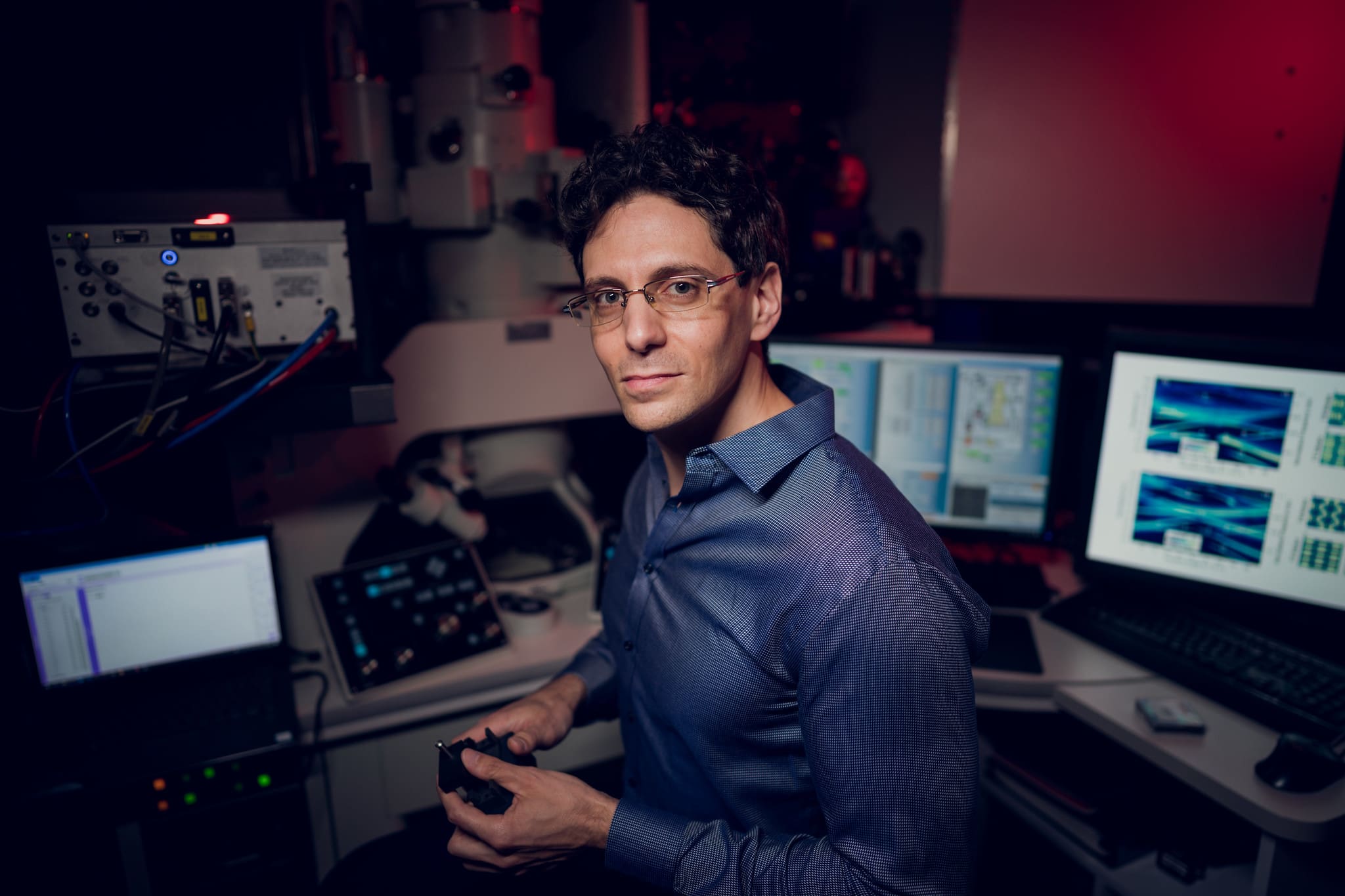
Associate Professor Ido Kaminer of the Andrew and Erna Viterbi Faculty of Electrical and Computer Engineering at the Technion recently won an ERC Consolidator grant. The grants support select scientists who propose pioneering, groundbreaking research ideas – presented by the European Research Council (ERC). Prof. Kaminer and his team will use the grant to develop a theory and innovative experimental platform for a new field in electron microscopy: Q-in-PINEM. The research combines use of an electron microscope with a femtosecond pulsed laser, which is the first system of its kind in Israel and one of just a few in the…

Professor Shulamit Levenberg of the Technion Faculty of Biomedical Engineering, director of both the Technion Center for 3D Bioprinting and the Rina & Avner Schneur Center for Diabetes Research, was recently chosen as a fellow of the American National Academy of Inventors (NAI). Her nomination will be officially announced during NAI’s annual conference in North Carolina in June. Prof. Levenberg is among a handful of Israeli women scientists who have created the most innovative technologies and has registered dozens of patents. She has founded several startups, including Aleph Farms, which creates cultivated steak using cattle cells with no harm to…

In 2018, Cornell Tech—a graduate school campus of the Ivy League university—was believed to have been a strong factor for Amazon deciding to bring a new headquarters to New York City. At the time, the school boasted of the creation and investment in more than 50 start-up companies in which over $60 million in investment was raised and hundreds of jobs were created, according to the New York Times. While the Amazon headquarters was later nixed because of backlash from local politicians, Cornell Tech is continuing to leave its mark on the region—and the world.

Dan Shechtman (born 24 January 1941) is an Israeli scientist. He received the 2011 Nobel Prize in chemistry for his discovery of quasicrystals. He was born on 24 January 1941, in Tel Aviv, Israel. His early education laid the foundation for his later achievements in the field of science. He attended the Technion–Israel Institute of Technology, where he pursued his undergraduate and graduate studies in materials engineering. His fascination with the properties of materials and crystal structures became a guiding force in his academic and professional life. Shechtman earned his Bachelor’s degree in Mechanical Engineering from the Technion in 1966. He…

The war in Gaza has hurt the interconnected American-Israeli tech ecosystem, but there’s still opportunity for growth, say entrepreneurs and experts. On the day of the October 7 terrorist attack, Sigal Gafni, an entrepreneur and resident of the southern Israeli town of Arad, was at the Association of the U.S. Army (AUSA) summit in D.C. “When I returned to Israel, it was immediately clear to me that my business will now face a period where I won’t be able to work,” she said. Gafni predicts that the war will impact all Israeli businesses exporting hi-tech services to the U.S.

Researchers from Cornell Tech have developed a method to identify delays in the reporting of incidents such as downed trees and power lines, which could lead to practical insights and interventions for more equitable, efficient government service. Their method, which works without knowing exactly when an incident occurred, uses the frequency of reports of the same incident by separate individuals to estimate how long it took for the incident to be first reported. The first report establishes that the incident occurred, and subsequent reports are used to establish the reporting rate. Applying their method to more than 1 million incident reports in…
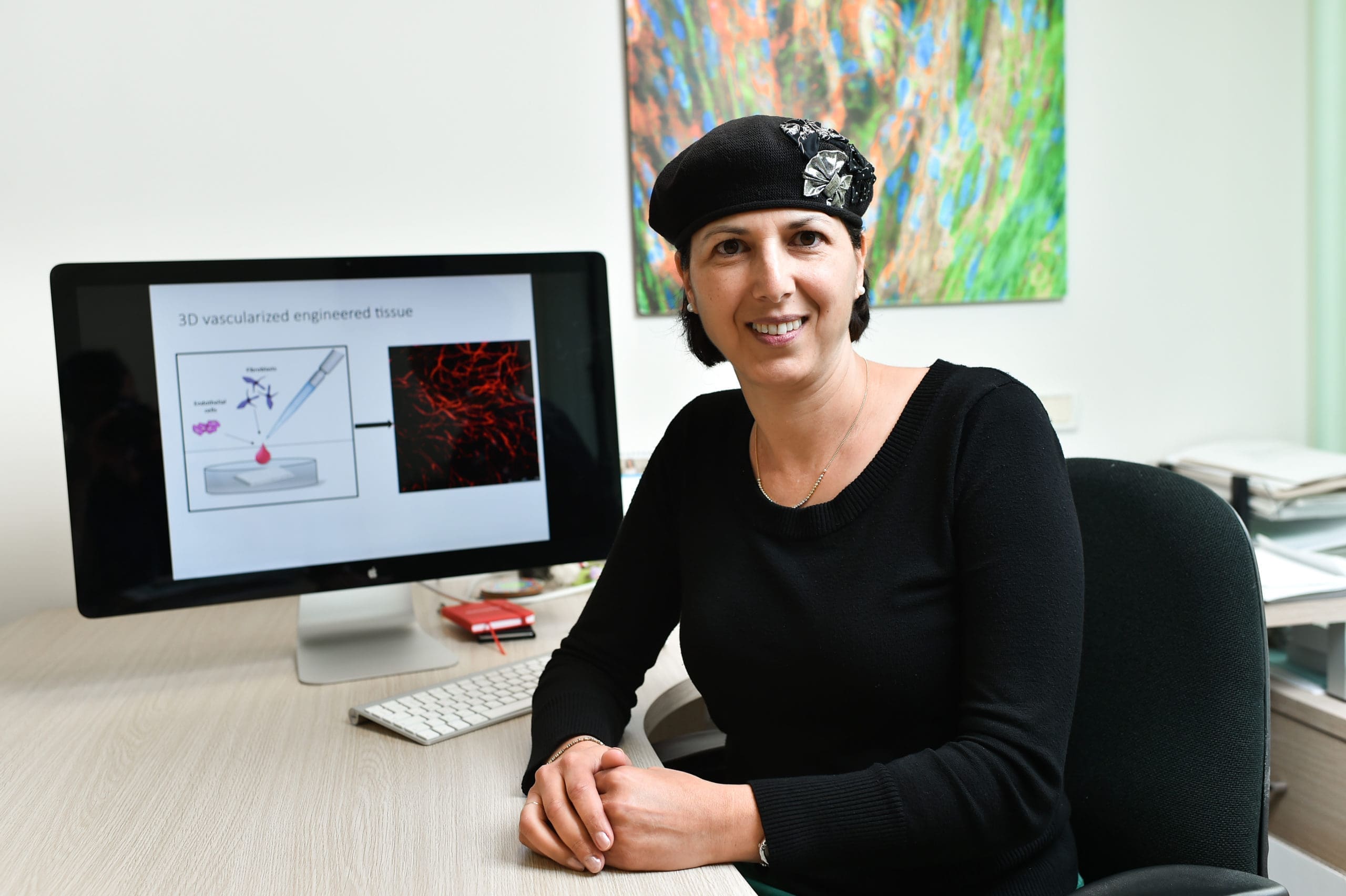
We interview Sandhya Sriram (SS) from Shiok Meats, Shulamit Levenberg (SL) from the Technion and Aleph Farms and Timothy Olsen (TO) from Merck on the current status, challenges and future directions of cultured meat. SS: Shiok Meats, established in 2018, is a cultivated, cell-based meat and seafood company, headquartered in Singapore. It is the first of its kind in Singapore and South-East Asia with a mission to bring delicious, sustainable and healthy shrimp, lobster, crab and meats to your table, by harvesting from cells instead of animals. Our meats are animal-, health- and environment-friendly with similar taste and texture compared to…

As journalists and professional fact-checkers struggle to keep up with the deluge of misinformation online, fact-checking sites that rely on loosely coordinated contributions from volunteers, such as Wikipedia, can help fill the gaps, Cornell research finds. In a new study, Andy Zhao, a doctoral candidate in information science based at Cornell Tech, compared professional fact-checking articles to posts on Cofacts, a community-sourced fact-checking platform in Taiwan. He found that the crowdsourced site often responded to queries more rapidly than professionals and handled a different range of issues across platforms. “Fact-checking is a core component of being able to use our…

The Fluidic Telescope (FLUTE) project team, jointly led by NASA and Technion – Israel Institute of Technology, envisions a way to make huge circular self-healing mirrors in-orbit to further the field of astronomy.Larger telescopes collect more light, and they allow astronomers to peer farther into space and see distant objects in greater detail.The state-of-the-art 21 foot (6.5 meter) aperture James Webb Space Telescope needed to be folded up origami-style – including the mirror itself – to fit inside the rocket for its ride to space. The aperture of an optical space observatory refers to the size of the telescope’s primary…

In a bid to unlock the full potential of hydrogen fuel cells as a cleaner alternative to conventional energy sources, researchers from the Department of Energy’s SLAC National Accelerator Laboratory, Stanford University, and the Toyota Research Institute (TRI) have made significant strides in reducing the cost of fuel cell technology. The breakthrough involves a radical shift in the catalyst composition, traditionally reliant on expensive platinum group metals (PGM), according to an SLAC release. Hydrogen fuel cells have long been recognized for their promise in energy storage and conversion, but the prohibitive cost of PGMs in the catalyst has hindered widespread adoption. Michaela Burke…

Parkinson’s disease is a complex, progressive neurological disorder affecting up to 10 million people worldwide. Probably caused by clumps of alpha-synuclein protein that damage dopamine-producing cells governing motor control, Parkinson’s is characterized by tremor, rigidity, poor posture and slow movement. About 150 Israeli startups are developing technologies to help prevent, stop or even cure Parkinson’s. Azilect (rasagiline), one of the most successful drugs for managing Parkinson’s symptoms, was developed in Israel by Prof. Moussa Youdim and is manufactured by Teva Pharmaceuticals.