Something Fresh in the State of Denmark
October 06, 2026



























The Technion’s story has been intertwined with Israel’s for more than a century, from laying the foundations for a new nation to shaping its future.

Step inside Israeli innovation at the David and Janet Polak Visitors Center. Experience our 360° immersive movie and tech exhibition. Open to individuals and groups.
Learn More

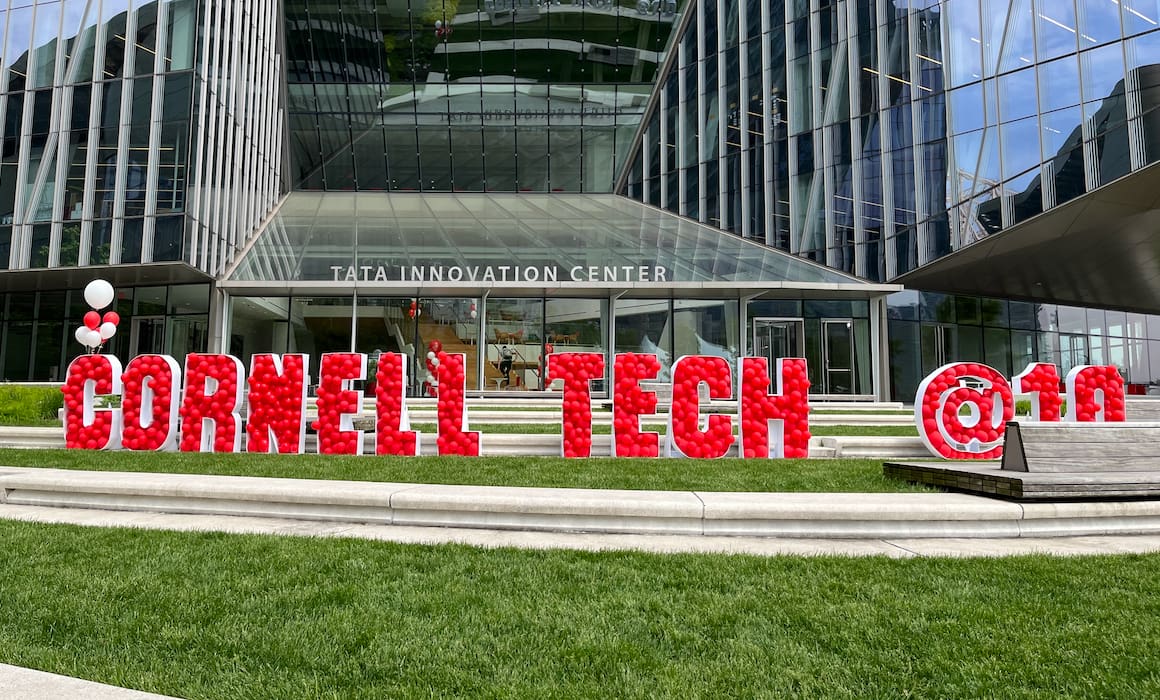
In 2011, Cornell entered into an academic partnership with the Technion — Israel Institute of Technology to compete for an ambitious goal: build an innovative New York City campus to educate a new generation of tech leaders, conduct breakthrough research and development, inspire startups and propel the city to becoming a global hub for the tech industry. Beating national competitors in the bidding process, Cornell and the Technion won the opportunity to create Cornell Tech on Roosevelt Island. Without the Technion, there would be no Cornell Tech. Nearly 15 years later, Cornell Tech has educated more than 2,700 students and…
As the world is told about the war between Iran, Israel and the United States in the language of strategy and security, my prism is memory. For many, this is geopolitics. For me, it never really is. All my grandparents were Persian Jews. They left their homes when the country they had known most of their lives had become home no longer. They felt unsafe under a regime that was fast becoming more rigid and fundamentalist. They left behind property, wealth, community and family. Some relatives who stayed were imprisoned. Many others were killed. In our family, those stories are…

As anti-Israel sentiment rises, many are concerned. A pressing question looms: Will the international scientific and business collaborations so vital to Israel’s prosperity withstand this moment? In the heart of NYC, the Joan & Irwin Jacobs Technion-Cornell Institute, housed at Cornell Tech and one of the first major Israel-U.S. academic collaborations, is a shining example of the innovation and economic output that emerge when brilliant minds from the U.S. and Israel come together through science. This unique partnership tackles some of the world’s toughest challenges while generating measurable growth for New York City and the Startup Nation. Lihi Zelnik-Manor of…

In recent decades, growing resources have been invested in the field of hydrogen as a raw material that aligns with the vision of a green economy and the use of sustainable energy. Hydrogen production is not a new process, but the aspiration to protect the environment and improve efficiency presents numerous technological challenges. A group of researchers at the Technion – Israel Institue of Technology and Sweden’s Chalmers University of Technology is presenting a breakthrough in the field – a development expected to significantly improve hydrogen storage capacity for future use. Growing awareness of the environmental damage caused by human…

When one of the world’s largest aerospace companies chooses an academic partner, it sends a powerful message. When that partner is the Technion – Israel Institute of Technology, the message is even clearer: world-changing innovation is happening in Israel — and it is being driven by excellence. Boeing and the Technion have marked a major […]


A new implant developed at the Technion – Israel Institute of Technology may offer a self-regulating treatment for diabetes, according to a new study in collaboration with MIT, Harvard, Johns Hopkins University, and the University of Massachusetts. The study, led by Assistant Professor Shady Farah of the Faculty of Chemical Engineering at the Technion, was peer-reviewed and was published in Science. It introduced a “living, cell-based implant” that works as a pancreas and is protected against immune rejection by a novel system. According to the statement, the implant “continuously senses blood-glucose levels, produces insulin within the implant itself, and releases…

If New York City hopes to maintain its international reputation as a technological powerhouse, then it must recognize and accelerate the vital role international collaboration plays in its progress. Cornell Tech and the Joan & Irwin Jacobs Technion–Cornell Institute on Roosevelt Island make clear the undeniable local and global benefit of academic collaboration across borders and how its impact extends far beyond the sum of its parts. In 2010, when the city requested proposals from leading universities to create an academic hub focused on applied sciences, entrepreneurship and job creation, Cornell University and the Technion – Israel Institute of Technology…

Under the shadow of geopolitical tension and global uncertainty around the future of Israel, doubling down on international academic collaboration can serve as an antidote that allows us to envision a brighter version of this future. Calls for boycotts of Israeli institutions ignore the fundamental function of academia as an open forum of ideas and eliminates the infinite potential for innovation when cross-cultural work prevails. Reflecting on Israel’s global collaborations reminds us of what is possible when we meet face-to-face with our peers from halfway across the world and harness the full power of our compassion for each other. The Michigan-Israel…

From Steve and Ilene Berger When we attended our first American Technion Society event, we had no idea how profoundly the experience would impact our lives. Meeting a brilliant Technion professor and three of her students, we were deeply impressed by their professional work and personal stories — stories of ambition, courage, and resilience. The […]
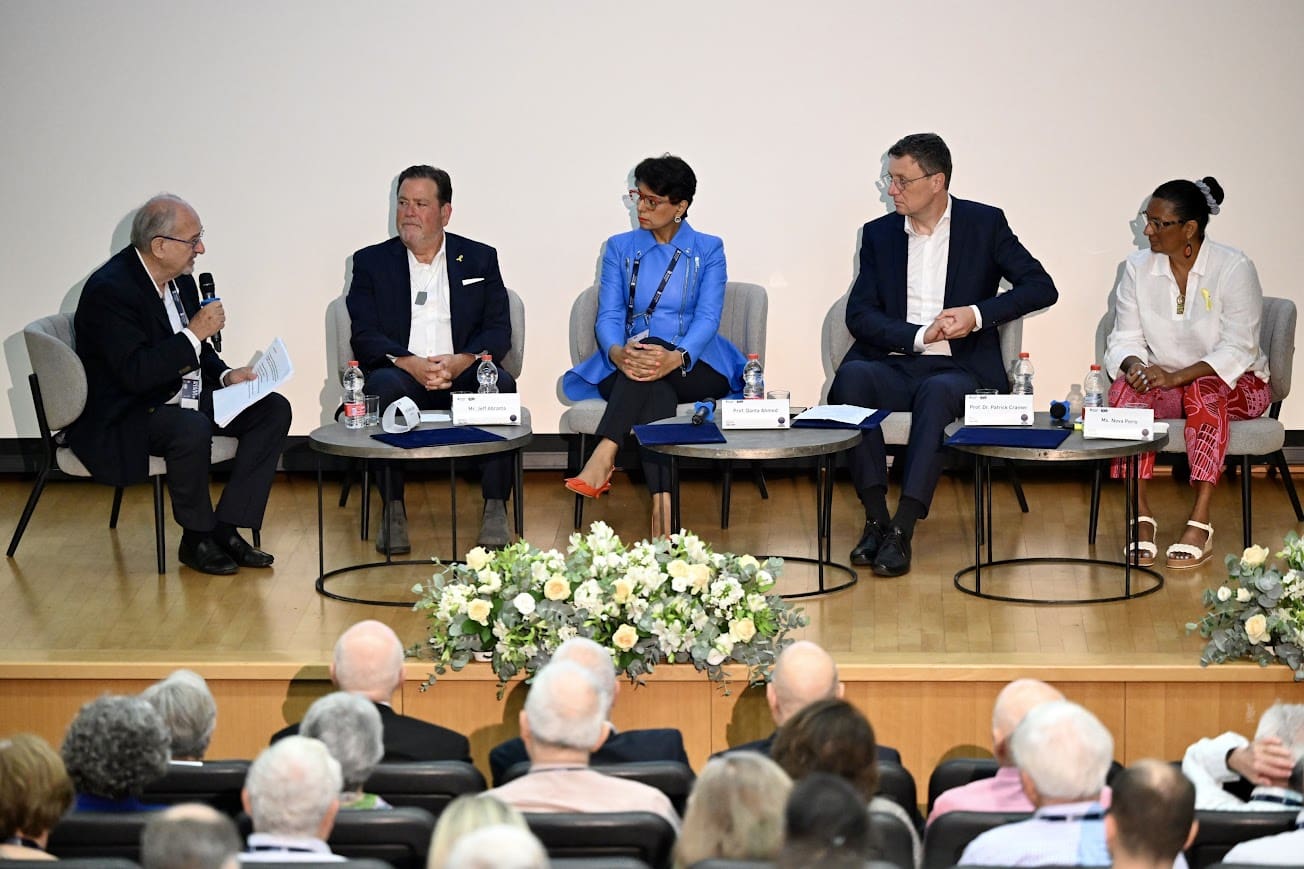
During the Technion’s Centennial Board of Governors Meeting in June, Prof. Uri Sivan bestowed the President’s Award for Exceptional Achievement on four leaders from academia, science, and human rights advocacy for their efforts to combat antisemitism and defend the State of Israel. Following the ceremony, the distinguished honorees participated in a panel on confronting the […]
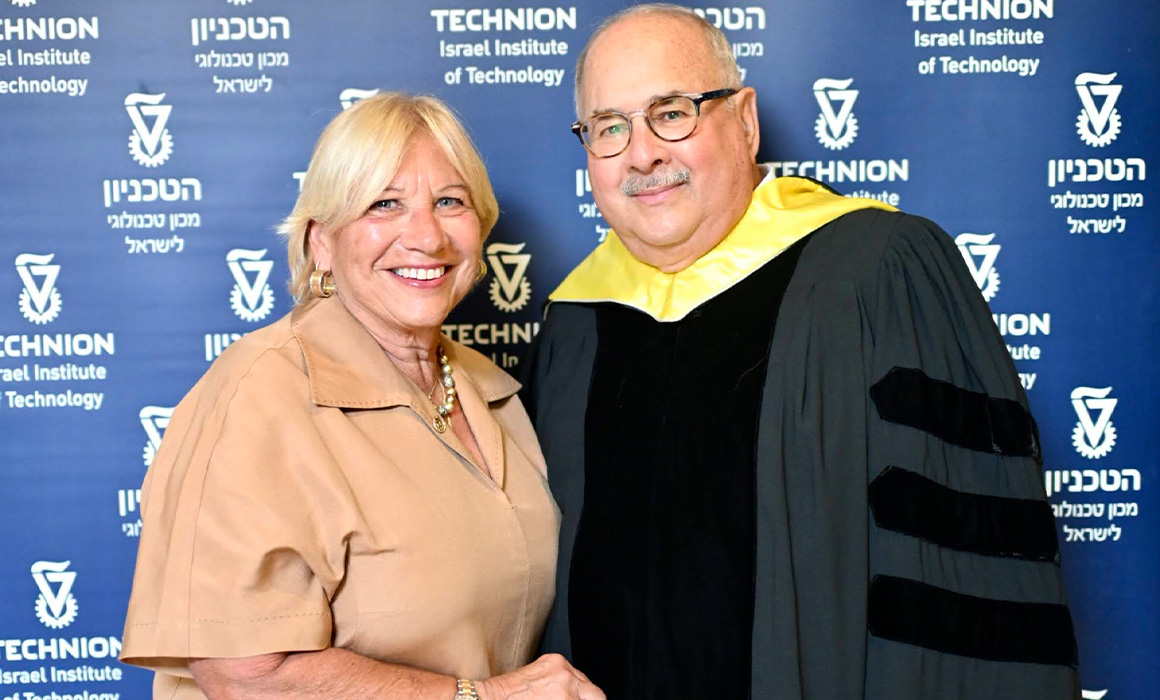
Bennett Rechler is continuing a long legacy of supporting the Technion that began with his parents, the late Morton and Beverley Rechler. The Technion was a natural fit for the couple given Morton’s career as an aeronautical engineer and the couple’s deep-seated love for Israel. “They did a lot to teach my siblings and me […]