How the Technion Is Helping Secure Israel’s Energy Future — From the Skies Down
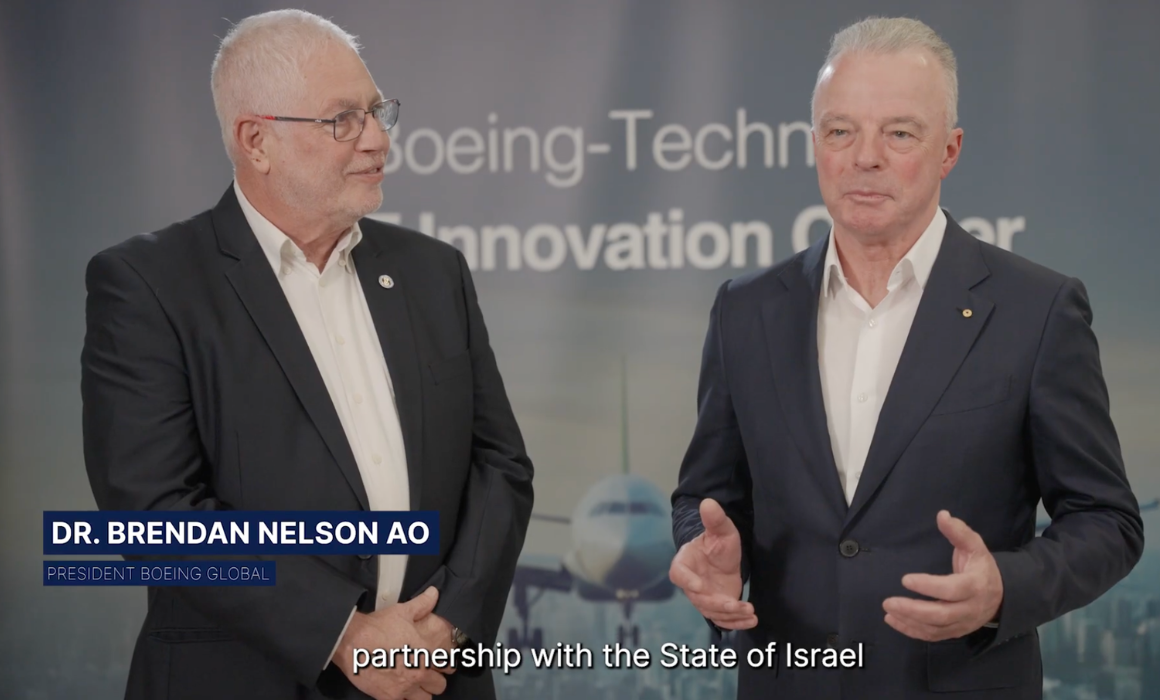
When one of the world’s largest aerospace companies chooses an academic partner, it sends a powerful message. When that partner is the Technion – Israel Institute of Technology, the message is even clearer: world-changing innovation is happening in Israel — and it is being driven by excellence.
Boeing and the Technion have marked a major step forward in their partnership to develop sustainable aviation fuel (SAF), a cleaner alternative to traditional jet fuel that could reduce pollution from air travel while boosting energy security — Israel’s ability to produce reliable, affordable energy without relying heavily on foreign fuel sources — and economic growth.
With early testing now complete, the Boeing–Technion SAF Innovation Center is moving into hands on- development, turning promising ideas into solutions that can be used in the real world.
“This is a historic collaboration of national importance for the State of Israel,” said Technion President Prof. Uri Sivan. “The partnership with the global aviation leader, Boeing, is a vote of confidence in the Technion, its researchers, and our technological capabilities.”
What Is Sustainable Aviation Fuel — and Why Does It Matter?
Commercial aviation is essential to the global economy, but it also produces significant carbon emissions. SAF offers a promising solution. Unlike traditional jet fuel made from fossil sources, SAF can be produced from cleaner inputs such as green hydrogen and captured carbon dioxide — and used in existing aircraft.
In simple terms, SAF allows planes to fly using fuels that are cleaner, more secure, and better for the planet, without requiring an entirely new aviation system. The challenge is making this fuel efficiently, safely, and at a cost that allows it to be widely adopted. That is where the Technion’s expertise comes in.
A Milestone Collaboration That Will Fuel a Healthier Environment
Launched in 2023, the Boeing–Technion SAF Innovation Center brings together one of the world’s leading aerospace companies and Israel’s premier technological university. Boeing President of Global Affairs Dr. Brendan Nelson visited the Technion to launch the project’s next phase — an endorsement of both the scientific progress and the people behind it.
For Boeing, the partnership reflects a long-term commitment to energy security, sustainable growth, and innovation. For Israel, it represents something even larger: global confidence in Israeli science, engineering, and problem-solving.
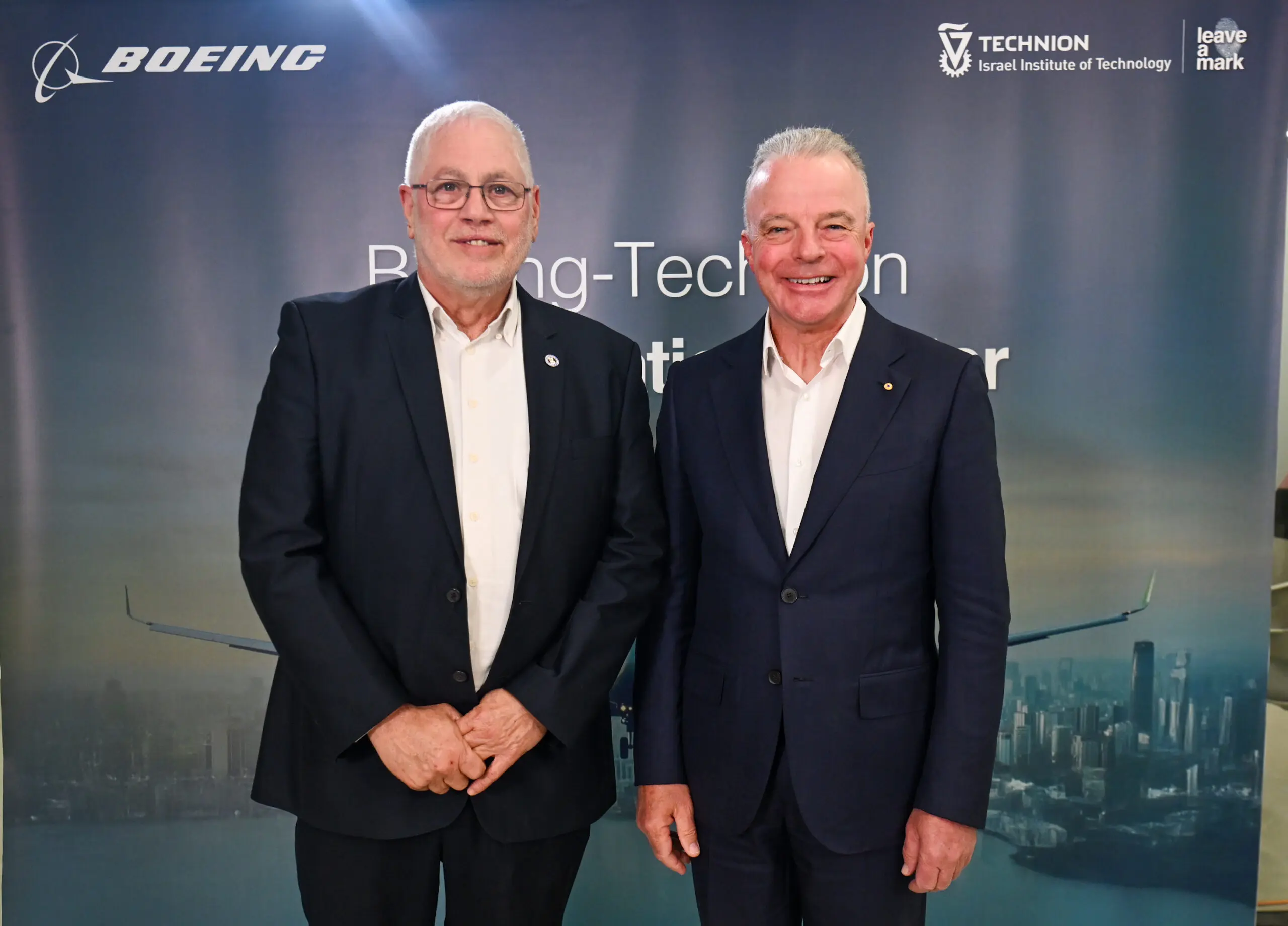
Boeing Global President Dr. Brendan Nelson (right) with Technion President Prof. Uri Sivan
Through this collaboration, Prof. Sivan said, Technion researchers are taking on “a tremendous mission: to develop technologies for producing clean fuels through sustainable processes, making a significant contribution to aviation, and no less importantly, to human health and the environment.”
Led by Prof. Gideon Grader of the Wolfson Faculty of Chemical Engineering, the center brings together 11 Technion faculty members and dozens of doctoral students from five different faculties. Their work spans every stage of sustainable fuel development, including:
- Designing efficient and cost-competitive manufacturing processes
- Studying the chemistry behind fuel reactions and combustion
- Ensuring safety and reliability
- Analyzing the full environmental life cycle of the fuel
- Building and operating an advanced fuel-testing facility at the Technion — which will be only the second of its kind in the world
The goal is to advance SAF production to a level that supports commercial-scale use, helping aviation companies reduce emissions while remaining economically viable.
Strengthening Israel’s Energy Security and Economy
Beyond its environmental benefits, this work directly supports Israel’s energy independence by reducing reliance on imported fuels and building advanced technological capabilities at home. It also contributes to economic growth by training highly skilled scientists and engineers and strengthening Israel’s role in the global aerospace supply chain.
Even in the aftermath of October 7 and the war that followed, the partners chose to continue the work — underscoring resilience, long-term vision, and confidence in Israel’s ability to lead.
More importantly, SAF is not just an environmental solution. It represents the future Israel is building — one powered by knowledge, collaboration, and bold thinking. At the center of that future is the Technion: training the next generation of innovators, partnering with global leaders, and turning scientific excellence into technologies that strengthen Israel, protect the planet, and move the world forward.
And this is exactly how impact begins.
More Protecting Our Planet stories