The Technion’s story has been intertwined with Israel’s for more than a century, from laying the foundations for a new nation to shaping its future.

From medicine to security, explore how the Technion is advancing Israel and improving lives around the world.
View All Impact Areas
Explore stories, news, insights, and data across articles, videos, and podcasts.
view all content types
among universities worldwide for producing undergrad entrepreneurs
in Europe and #21 in the world for aerospace engineering
of the student body are Arab Israeli
The Technion’s story has been intertwined with Israel’s for more than a century, from laying the foundations for a new nation to shaping its future.
Explore ATS, the Technion, and the people behind the breakthroughs redefining what's possible for Israel and the world.
Learn More About ATSATS is a community of supporters, innovators, and champions of possibility united by one mission: transforming Israel and the world through science and discovery.
Learn MoreFor more than 100 years, the Technion has been Israel's technological engine and leading driver of innovation, technology, and entrepreneurship, transforming ideas into impact.
Learn More
Step inside Israeli innovation at the David and Janet Polak Visitors Center. Experience our 360° immersive movie and tech exhibition. Open to individuals and groups.
Learn MoreFrom medicine to security, explore how the Technion is advancing Israel and improving lives around the world.
View All Impact AreasExplore stories, news, insights, and data across articles, videos, and podcasts.
view all content typesExplore ATS, the Technion, and the people behind the breakthroughs redefining what's possible for Israel and the world.
Learn More About ATS
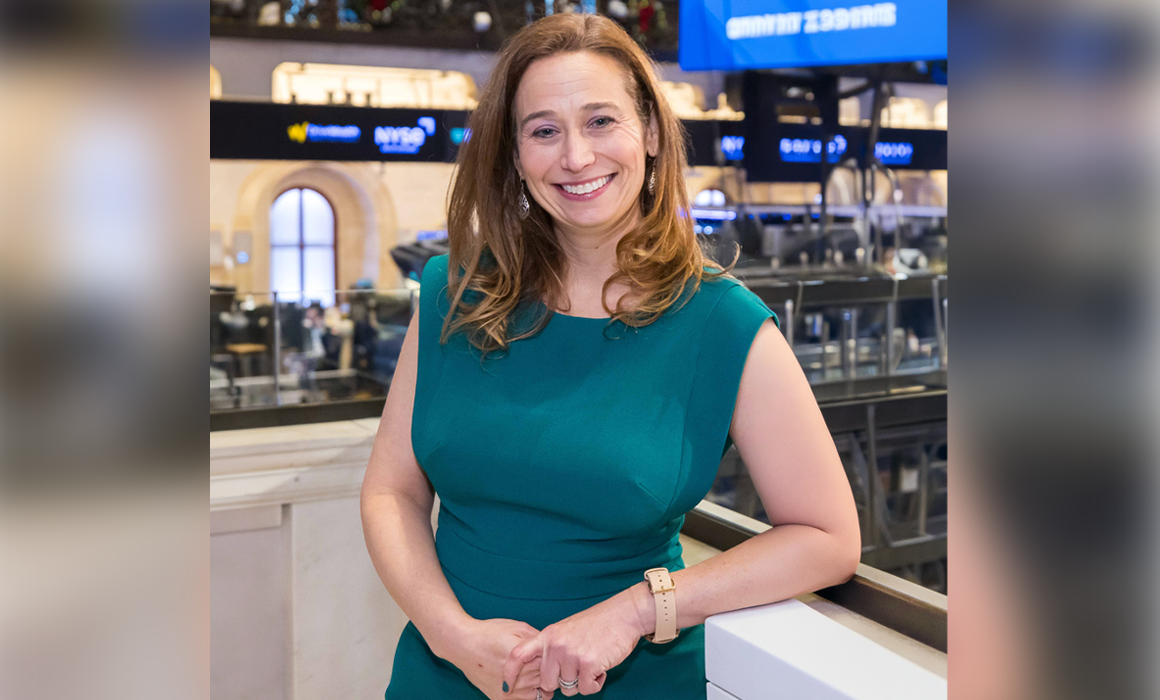
Charlotte studies industrial processes with the aim of improving them or inventing new, more sustainable processes. Such processes include, for example, recycling carbon dioxide from industrial waste, or generating green ammonia used as fertilizer. Drawing on her expertise in spectroscopy of catalysis, the interaction of light with various catalysts while they are operating, she studies details of catalysts that could not be explored otherwise.
Charlotte joined the Technion Schulich Faculty of Chemistry in March 2021 to help launch the Stewart and Lynda Resnick Sustainability Center for Catalysis. She is a member of the Grand Technion Energy Program and a Technion Faculty Ambassador.
Her company, Ceal (opens in a new tab), is developing technology to remove carbon dioxide from the environment and heal the world. The technology startup upgrades seawater-cooled power plants while enabling the removal of gigatons of atmospheric CO2 and providing sustainable alternatives to mining.
Charlotte was born in the Netherlands and spent some time in the U.S. with her family before returning to the Netherlands for schooling. She received her bachelor’s degree, a combined master’s degree in inorganic chemistry and catalysis and business management, and a doctorate in catalysis from Utrecht University in the Netherlands. A large part of her Ph.D. research was spent at synchrotrons (particle accelerators) around the world, including the Stanford Linear Accelerator Center, the Lawrence Berkeley National Laboratory in the U.S., and the Paul Scherrer Institute in Switzerland. Alongside her coursework, she had a clothing business and volunteered with schoolchildren in Mongolia.
Prior to joining the Technion, she was a visiting Ph.D. student and postdoctoral researcher at the Weizmann Institute of Science and also conducted postdoctoral work at the Hebrew University of Jerusalem.
Charlotte has received much international recognition, including the Martinus van Marum prize from the Royal Holland Society of Sciences (2024); the prestigious Starting Grant by the European Research Council (2023); the First Eurotech Future Award from the Eurotech Universities Alliance (2023); the Beilby Medal and Prize from the British Royal Society of Chemistry (2023); inclusion in Chemical and Engineering News’ “Talented 12” list by the American Chemical Society (2023); and the Clara Immerwahr Award by the German cluster of excellence UniSysCat (2022). She was also included on Forbes’ “30 under 30” Europe 2021 list of brightest young entrepreneurs, leaders, and superstars.
Five young researchers who joined the Technion during the 2021-2022 academic year are recipients of prestigious 2023 starting grants from the European Research Council (ERC). These grants are awarded to talented early-career scientists who completed their doctoral degrees only two to seven years ago, and have already produced excellent work, showing great promise. Charlotte Vogt, assistant professor in the Schulich Faculty of Chemistry, works to solve problems of climate change and pollution by improving or inventing more sustainable processes. Metal nanoparticle-based catalysts are essential to shifting societal reliance away from fossil-fuel resources, but most are found by slow, trial-and-error processes….
Assistant Professor Charlotte Vogt of the Technion Schulich Faculty of Chemistry was recently awarded the first prize of the EuroTech Future Award, which recognizes researchers who have the potential to make a difference in their field and society at large. She was cited for her work on the subject of catalysis, which she believes will be key in solving global warming. Prof. Vogt’s research focuses on carbon dioxide hydrogenation catalysis, which explores the possibility of preventing CO2 produced by large industrial plants from entering the atmosphere, and instead converting it to something useful with the help of catalysts, which accelerate…
Almost every commodity, from detergents to penicillin to fertilizer, is produced industrially through catalysts, substances introduced to speed up chemical reactions. Yet as indispensable as they are, many catalysts used in industry today create significant environmental waste and economic inefficiency. The Technion’s soon to be established Center for Sustainable Processes and Catalysis aims to discover novel, green catalysts from naturally abundant elements so that industrial processes will require less energy and become more sustainable. Distinguished Professor Ilan Marek, chair of the Center, spoke at the ATS Presidential Forum in March 2022 along with clean energy specialists Assistant Professor Charlotte Vogt…
Stay on top of the latest breaking scientific discoveries from Israel and the Technion. Subscribe to the ATS newsletter.