

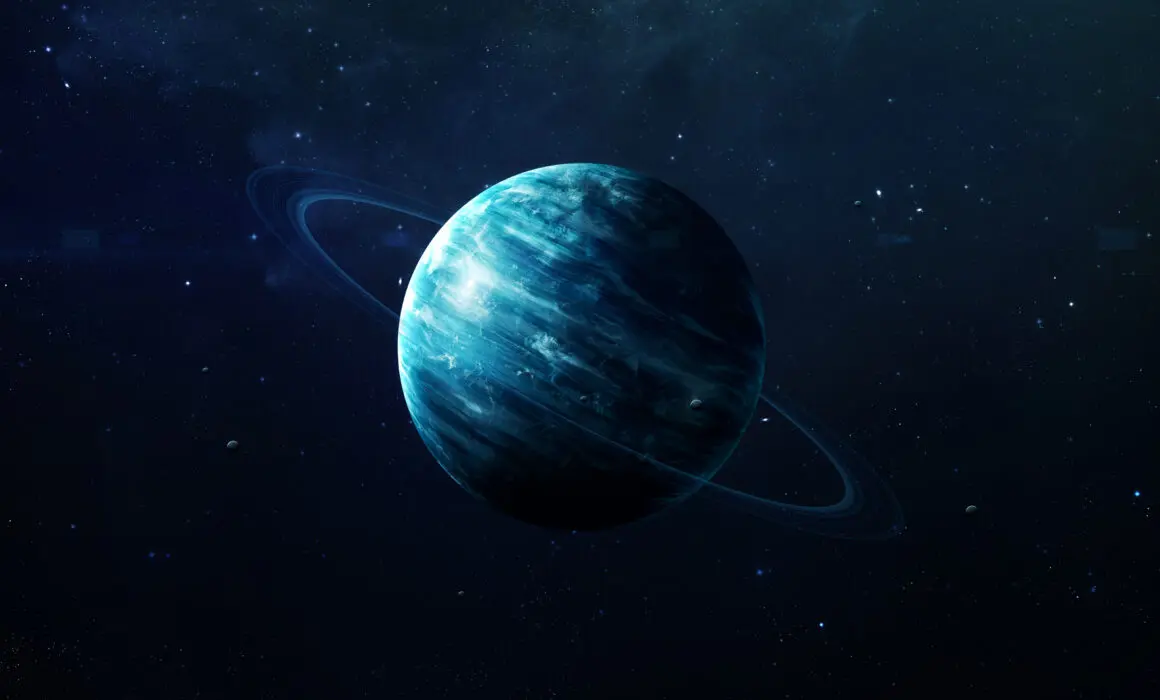
For decades, elementary students learned the same tale of the Solar System: first come rocky terrestrial planets such as Earth, followed by gas giants such as Jupiter and ice giants such as Neptune, with lovable Pluto bringing up the rear. Then 20 years ago, planetary scientists downgraded Pluto to a “dwarf planet.” And now, they say, it’s time to revisit our idea of Neptune and Uranus, too—for the so-called ice giants likely contain very little ice.
The term is “a little bit misleading,” says Ravit Helled, a planetary scientist at the University of Zürich. “We really don’t know what these planets are made of.” She and her colleagues do, however, have ideas, ranging from magma oceans to soups of icy methane.
Uranus and Neptune were first called ice giants because they orbit past the Solar System’s so-called ice lines: the points beyond which water, ammonia, carbon monoxide, and other volatile molecules exist as solids rather than gases. If this region abounded with frozen water during the early Solar System, then Uranus and Neptune’s interiors might consist mostly of water, squeezed by the pressure of the planets’ gravity into a hot “supercritical” soup.
Keep reading at science.org.
Expert commentary from Technion – Israel Institute of Technology Prof. Uri Malamud is featured in this article about several new theories that challenge age-old beliefs about Uranus and Neptune.
More High-Tech Future stories

Beyond the Breakthrough: Inside the Technion Labs Shaping Tomorrow’s Technologies