Rethinking Education in the Age of AI

We’re fundamentally rethinking what it means to be a computer scientist in the age of AI.”
Prof. Danny Raz
Artificial intelligence is not simply changing higher education — it is detonating old assumptions about how students learn and how professors teach. As universities worldwide grapple with how to respond, the Technion is working to confront the questions head-on.
Here, AI is not treated as a threat but a catalyst, prompting careful reexamination at every level. Curricula are being redesigned. Assignments are evolving. Faculty roles are shifting from transmitters of information to architects of thought.
“AI is not just another step forward. It’s a disruptive step, one that requires us to rethink how we prepare students for a rapidly shifting job market,” said Prof. Uri Sivan, president of the Technion.
For generations, Sivan explained, engineering education followed a predictable arc: A student spent four years mastering fundamentals, joined a company in a junior role, and gradually advanced by solving increasingly complex problems. But that apprenticeship model depends on the existence of beginner-level tasks. As AI absorbs that work, the training pathway fractures.
Entire job categories are already shifting or disappearing. Tasks once assigned to junior engineers can now be completed in seconds by AI. The traditional career ladder is being compressed, and the bottom rungs are vanishing.
“A gap is created in the engineer’s training,” Sivan said. “The more sophisticated AI becomes, the gap will grow larger and larger.”
The challenge is urgent: How do you graduate engineers who are prepared to operate at an advanced level — engineers who can tackle problems AI cannot solve? At the Technion, faculty are exploring how education might shift, not by competing with AI at routine execution, but by helping students move beyond it.
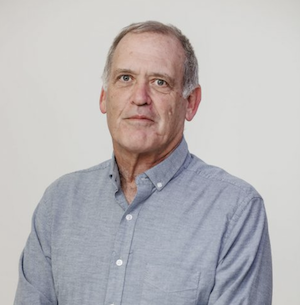
Prof. Danny Raz
Prof. Danny Raz, senior executive vice president of the Technion and former dean of the Henry and Marilyn Taub Faculty of Computer Science, is confronting this reality head-on in the Technion’s Introduction to Computer Science course. Traditionally, the course focused on teaching students to write basic programs from scratch. The philosophy was straightforward: Master the building blocks before attempting the tower.
But generative AI has upended that logic. Today, a student can prompt ChatGPT to produce a clean, functioning program in almost any language within seconds. Syntax is no longer scarce. The scarce skill is judgment.
Raz explained that students must now learn to interrogate AI-generated code. Does it truly solve the problem? Is the algorithm correct? Are there hidden inefficiencies or security flaws? In many leading technology companies, this evaluative role is already standard practice. Engineers prompt AI systems to generate code and then rigorously test and refine the output.
To prepare students for this new reality, the computer science faculty has introduced a new assignment. Students choose a generative AI platform and ask it to write a program in a language they have never studied. Then they dissect it, challenge it, and determine whether it works and why. The goal is not dependency, but mastery.
“In this way, we’re not just adding another skill. We’re fundamentally rethinking what it means to be a computer scientist in the age of AI,” said Raz.
AI’s shockwaves extend far beyond computer science. Prof. Efrat Lifshitz, dean of the Schulich Faculty of Chemistry, argues that AI is transforming not only what students must learn, but also how learning itself unfolds.
If information is instantly accessible from a dorm room, what is the purpose of a lecture? If AI can generate polished answers in seconds, what does a traditional exam truly measure? Traditional lectures and memorization may no longer be sufficient on their own.
The future of scientific education, Lifshitz believes, lies in dynamic, discussion-driven, collaborative approaches that cultivate active engagement and real-time intellectual exchange.
“Today, students need to do more than consume information,” she emphasized. “They need to question, analyze, and innovate.”
In a world where machines can execute the routine, the Technion is placing renewed emphasis on what makes humans indispensable: discernment, creativity, depth, and being daring. The goal is not to produce graduates who compete with AI. It is to help cultivate graduates who can work with it thoughtfully — and who are prepared to tackle the kinds of problems that still demand human judgment.
No institution has all the answers to what AI will bring. But by asking difficult questions now, the Technion aims to ensure its students are prepared not just for today’s technologies, but for tomorrow’s uncertainties.
More High-Tech Future stories
Beyond the Breakthrough: Inside the Technion Labs Shaping Tomorrow’s Technologies